RevisionDojo logoRevisionDojo logo
FeaturesSubjectsPricingSchools
Back to all posts
  1. Home
  2. /Blog
  3. /IB Psychology: Why More Students Should Study It

IB Psychology: Why More Students Should Study It

IB Psychology
RevisionDojo Team
•Last updated: 19 Jul 2026•5 min read
ShareShare on XShare on WhatsAppShare on LinkedInShare on Facebook
Add as a preferred source on Google
IB Psychology: Why More Students Should Study It

Join 650k+ students breezing through the IBReady to breeze through the IB?

Footer

General

  • Download apps
  • For parents
  • For schools
  • Pricing
  • Gift RevisionDojo
  • Tutoring
  • IB syllabus
  • MYP syllabus
  • Blog
  • Student Questions

Features

  • Question Bank
  • Test Builder & Exam Mode
  • Predicted Papers
  • Past Papers
  • Study Notes
  • Interactive Lessons
  • Flashcards
  • Jojo AI Tutor
  • Coursework Studio
  • View all features

Research

  • All research
  • Jojo AI vs leading AI study tools
  • 2026 State of Learning Survey
  • 2025 State of Learning Survey
  • IB Moderation Analysis
  • Jojo AI vs ChatGPT
  • Jojo AI vs Gemini
  • Jojo AI vs Perplexity
  • Jojo AI vs Claude
  • Jojo AI vs Poe

Platform

  • About RevisionDojo
  • RevisionDojo vs Others
  • Content philosophy
  • Trustpilot
  • Join usWe're hiring
  • Student Ambassador
  • Help center
  • Contact us
  • Terms of Service
  • Data & privacy
  • Privacy policy
  • Cookie policy
  • Trust Center

IB Subjects

  • Arabic A
  • Arabic A Lit
  • Arabic ab initio
  • Arabic B
  • Biology
  • Business Management
  • Chemistry
  • Chinese A Lang & Lit
  • Chinese B
  • Computer Science (CS)
  • Computer Science (First Exam 2027)
  • Design Technology (DT)
  • Design Technology (First Exam 2027)
  • Digital Society (DS)
  • Economics
  • English A Lang & Lit
  • English A Lit
  • English B
  • Environmental systems and societies (ESS)
  • French A
  • French A Lit
  • French ab initio
  • French B
  • Geography
  • German A
  • German A Lit
  • German ab initio
  • German B
  • Global Politics
  • History
  • History (First Exam 2028)
  • Mathematics Analysis and Approaches (AA)
  • Mathematics Applications & Interpretation (AI)
  • Philosophy
  • Physics
  • Psychology
  • Psychology (First Exam 2027)
  • Spanish A
  • Spanish A Lit
  • Spanish ab initio
  • Spanish B
  • Sports, exercise and health science (SEHS)
  • Theory of Knowledge (TOK)
  • World Religions

MYP Subjects

  • MYP Biology
  • MYP Chemistry
  • MYP Design
  • MYP English Lang & Lit
  • MYP Extended Mathematics
  • MYP History
  • MYP Individuals & Societies
  • MYP Integrated Sciences
  • MYP Physics
  • MYP Standard Mathematics
  • MYP Biology
  • MYP Chemistry
  • MYP Design
  • MYP English Lang & Lit
  • MYP Extended Mathematics
  • MYP History
  • MYP Individuals & Societies
  • MYP Integrated Sciences
  • MYP Physics
  • MYP Standard Mathematics
RevisionDojo logo

© 2022 - 2026 RevisionDojo (MyDojo Inc)

RevisionDojo was developed independently of the IBO and as such is not endorsed by it in any way.

Download on the App StoreGet it on Google Play
GDPR compliant

Related Articles

IB Psychology · Oct 11, 2026 · 11 min read

IB Psychology EE Topics Worth Researching Now

Explore feasible IB Psychology EE topics for fall 2026, with focused research angles, source checks, key concepts, and practical scoping advice.

IB Psychology · Oct 10, 2026 · 9 min read

IB Psychology First Term Struggles: The Big Shock

IB Psychology first term struggles often begin when recall is not enough. Learn how to apply research, evaluate evidence, and build first-term habits.

IB Psychology · Oct 9, 2026 · 9

IB Psychology Mock Exam Prep for November

Prepare for November IB Psychology mocks with a focused four-week plan covering content recall, research, essay writing, timed practice, and review.

IB Psychology · Oct 7, 2026 · 11

IB Psychology IA Criteria Explained: How It Is Marked

Understand the current IB Psychology IA criteria, mark bands, moderator expectations, common mistakes, and practical steps for improving each section.

IB Psychology · Oct 6, 2026 · 11

IB Psychology IA Topics That Actually Work

Explore feasible IB Psychology IA topics, replication ideas, variables, study models, syllabus changes, and ethics checks for a strong investigation.

IB Psychology · Oct 4, 2026 · 9

Cómo crear flashcards de Psicología del IB eficaces

Aprende a crear flashcards de Psicología del IB con repaso activo, repetición espaciada, ejemplos eficaces y un calendario de revisión práctico.

If you have ever walked into an exam feeling calm, then watched your brain suddenly turn into a weather system, you already know the real curriculum of school: human behavior.

That is why IB Psychology deserves more attention. It is not just another Group 3 subject. IB Psychology teaches you how people think, why memory fails under pressure, how culture shapes identity, and how research turns messy reality into evidence. For IB students preparing for exams, IB Psychology is both a subject and a study advantage.
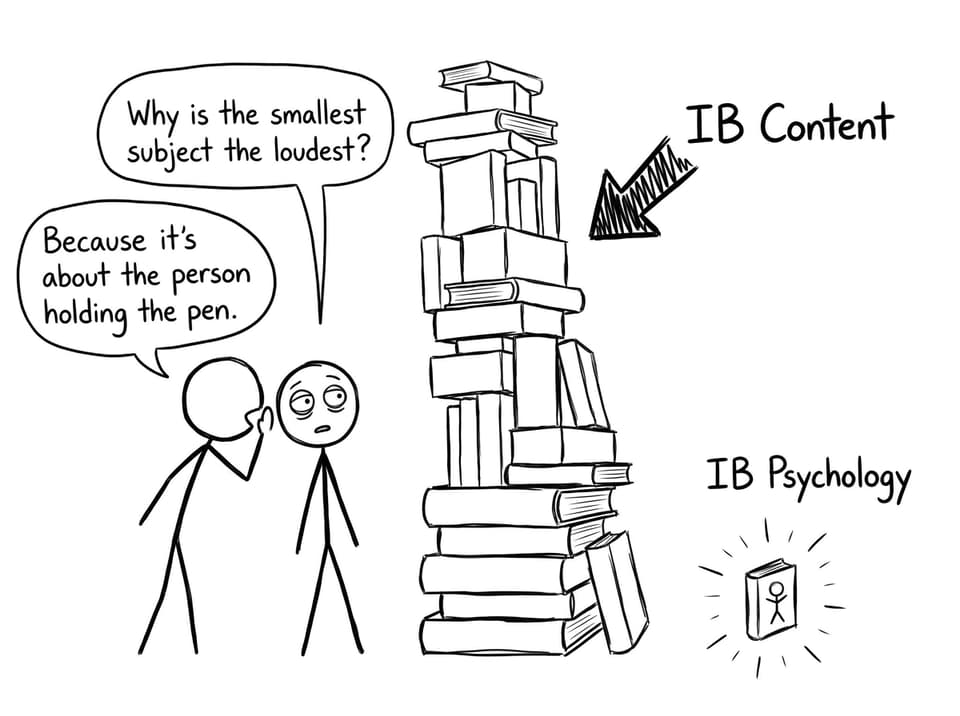
Comic about IB Psychology being the loudest subject

What IB Psychology Actually Trains You To Do

A lot of subjects reward knowing. IB Psychology rewards knowing plus judging. When you learn a study, you also learn how to evaluate it: ethics, sampling, bias, ecological validity, and whether conclusions go beyond the data.

Quick checklist for exam-focused IB Psychology revision:

  • Know the core approaches and key studies

  • Practice command terms (discuss, evaluate, to what extent)

  • Build evaluation “templates” you can apply quickly

  • Use timed practice to make recall automatic
min read
min read
min read
min read

A strong place to organise everything is the IB Psychology Resources hub, where you can move from notes to practice without losing momentum.

Why IB Psychology Should Be Studied More (Especially Before Exams)

IB Psychology builds exam writing that earns marks

In IB Psychology, the difference between a good answer and a top-band answer is usually structure and evaluation. That skill transfers everywhere: TOK, English, even sciences when you justify claims.

RevisionDojo makes that loop tighter with Questionbank practice and fast feedback, especially when you focus by syllabus slice (for example, Paper 3 support or targeted drills like the Paper 3 Questionbank).

IB Psychology improves self-awareness under pressure

Studying cognition, stress, and decision-making does something subtle: it turns panic into a phenomenon you can observe. In revision season, that matters.

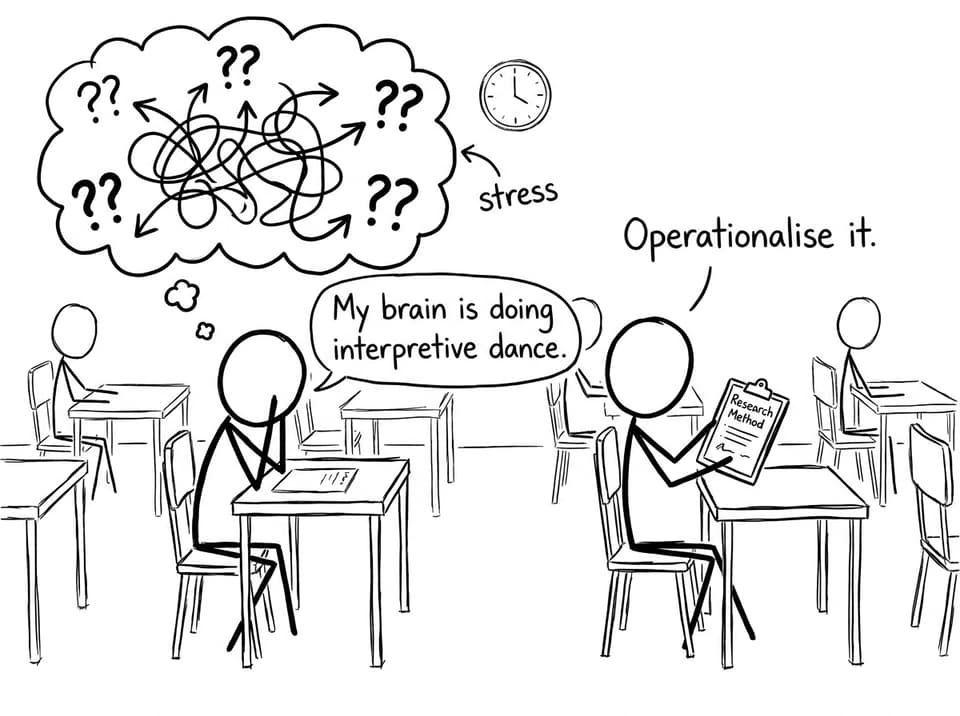
Comic about operationalising stress

Even basic research thinking helps: “What is my IV? What is my DV? What is the confounding variable?” Suddenly, your study routine becomes testable.

If you want a clean refresher on research design language, use Research Methods notes.

IB Psychology makes other IB subjects feel more connected

IB Psychology is a bridge subject.

  • It supports TOK because it constantly asks what counts as evidence and how we know. Start with IB Theory of Knowledge resources and notice how similar the thinking feels.

  • It complements Biology through brain-behavior links, and the The Brain and Behavior topic page makes those connections explicit.

  • It strengthens language subjects because you learn how social influence and identity shape communication.

How To Revise IB Psychology Without Drowning In Studies

The hidden trap of IB Psychology is collecting studies like trading cards. You do not need more studies. You need sharper use of the ones you have.

A practical system:

  • Use Study Notes to refresh the theory quickly (try the Individual and the Group notes).

  • Use Flashcards for definitions and study aims, then add one evaluation point per card.

  • Use AI Chat to test your explanation out loud and fix gaps.

  • Use Grading tools to learn what examiners actually reward.

  • Use Predicted Papers and Mock Exams to make your timing real (see IB Psychology Predicted Papers and the wider Predicted Papers library).

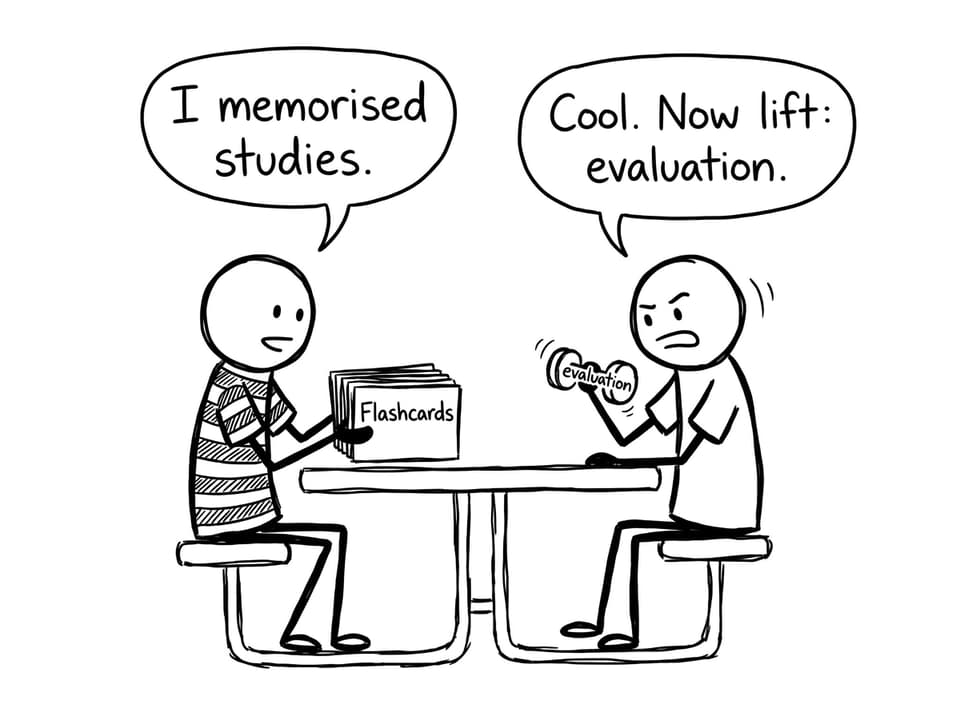
Comic about memorising studies vs evaluation

Conclusion: IB Psychology Is The Subject That Explains The Student

Schools often treat IB Psychology as optional. But for IB students preparing for exams, IB Psychology is practical knowledge: how minds work, how evidence is built, and how to write answers that survive pressure.

If you want to turn that into exam results, make RevisionDojo your home base for IB Psychology: Questionbank, Study Notes, Flashcards, AI Chat, Grading tools, Predicted Papers, Mock Exams, a Coursework Library, and Tutors when you need a human edge. Start with the IB Psychology Resources hub and build a revision system that understands you back.

How helpful was this article?
Add as a preferred source on Google

Continue studying with RevisionDojo

  • IB Coursework GraderCheck an IA, EE, or TOK draft against IB assessment criteria.
  • IB Coursework ExamplesLearn from high-scoring coursework across IB subjects.
  • IB Grade CalculatorEstimate an IB grade using session-specific boundaries.
  • IB Grade BoundariesExplore historical grade boundaries by subject and session.

Frequently Asked Questions