
The part of climate change that existed before us
If climate change were a mystery novel, humans would be a dramatic late chapter. But the earlier pages still matter. In IB Geography, examiners want you to understand natural factors that shape global climate change, because they explain why Earth’s climate has always moved in cycles, eveneven before industrial emissions accelerated warming.
The trick for strong IB Geography answers is balance: name the natural drivers clearly, explain the mechanism, then evaluate timescale and magnitude. That structure keeps your response calm, factual, and high-scoring.
Quick exam checklist (use this under time pressure)
When asked about natural factors influencing global climate change in IB Geography, cover:
-
Solar output: changes in incoming radiation
-
Volcanic activity: aerosols that reflect sunlight (short-term cooling)
-
Orbital variations (Milankovitch cycles): long-term changes in insolation distribution
-
Ocean-atmosphere interactions: ENSO shifting rainfall and temperature patterns
-
Evaluation: natural variability alone cannot explain recent rapid warming
For syllabus-aligned practice, pair this with RevisionDojo’s 2.1 Causes of global climate change resources.
Variations in solar output (the quiet baseline)
The Sun drives Earth’s energy budget, so even small changes in solar output can influence global climate patterns. In IB Geography, you can mention sunspot cycles as an example of natural variability that slightly alters incoming solar radiation.
What matters for marks is the logic chain: solar radiation changes to slight temperature shifts to climate variability. Also add evaluation: these changes tend to be gradual and are not considered large enough to account for the sharp modern trend.
If you want a clean way to link causes to impacts in essays, connect this topic to consequences using IB Geography 2.2 Consequences of Global Climate Change.
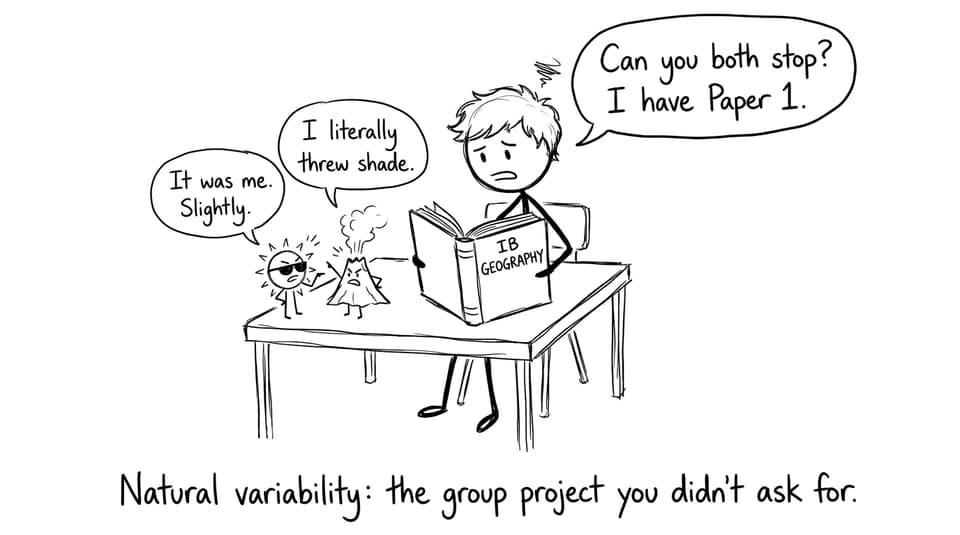
Volcanic activity (cooling by “throwing shade”)
Big eruptions can cool the planet in the short term. Volcanic ash and sulphur dioxide form aerosols that reflect incoming solar radiation, reducing the energy reaching Earth’s surface. The key phrase for IB Geography is short-term global cooling (often lasting a few years), depending on eruption size and where material reaches the stratosphere.
In exam answers, avoid overclaiming. Volcanic activity can interrupt warming temporarily, but it does not create a sustained multi-decade warming pattern.
To practise writing this as an explanation paragraph with clear chains of reasoning, use the Questionbank and ask RevisionDojo’s AI Chat to mark your PEEL structure (Point, Evidence, Explanation, Link).
Orbital variations (Milankovitch cycles) and ice-age timing
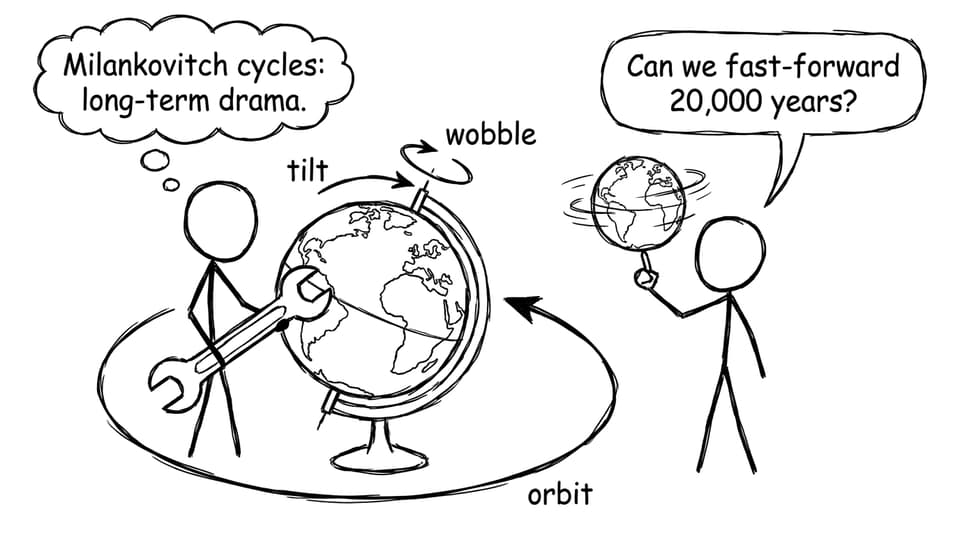
Orbital variations are the slow, powerful background rhythm of climate. Milankovitch cycles include changes in Earth’s orbit, axial tilt, and wobble. Together they alter how solar energy is distributed across latitudes and seasons over thousands of years.
In IB Geography, the high-value link is: orbital variation to insolation pattern changes to glacial/interglacial periods. This is why Milankovitch cycles are commonly used to explain ice ages, not last-century temperature spikes.
Ocean-atmosphere interactions (when the ocean moves the weather)
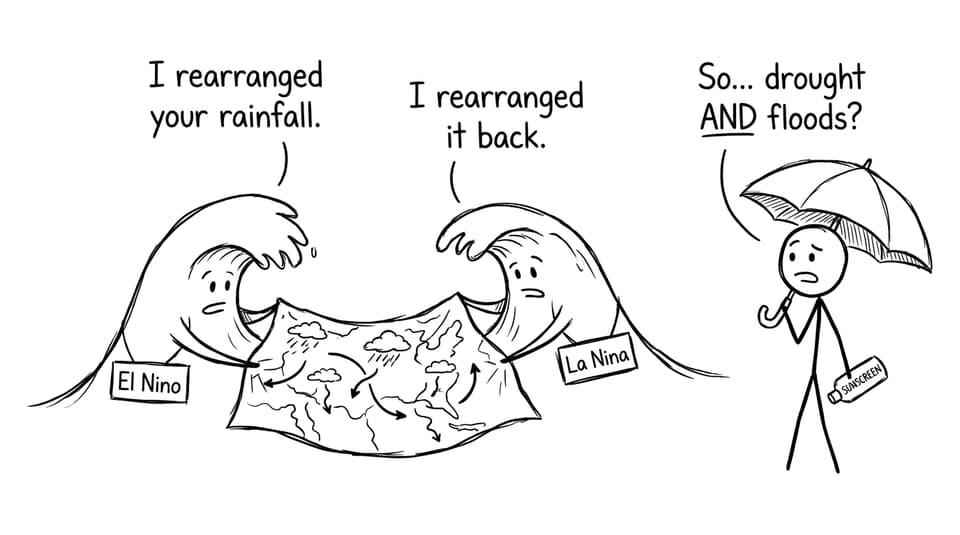
Oceans store and move heat, so ocean circulation affects climate at regional and global scales. In IB Geography, the most exam-friendly example is ENSO: El Niño and La Niña shift atmospheric circulation, changing rainfall, storm tracks, and temperature anomalies.
This matters because it shows climate as a system: ocean temperatures influence the atmosphere, which feeds back into ocean patterns. It also helps you explain why some years feel unusually wet, dry, hot, or stormy without claiming that every event is “caused” by climate change.
To connect natural variability to real-world vulnerability, read IB Geography: Climate Change, Food and Water Security.
How to write the evaluation line examiners love
A strong IB Geography conclusion sounds like this: natural factors explain historical fluctuations and short-term variability, but they do not fully explain the rapid, recent warming trend. That single sentence signals synthesis.
If you struggle to finish with evaluation under time pressure, build a template using IB Geography Case Studies: A Comprehensive Exam Guide and practise it with timed responses.
Closing: use natural factors to sharpen, not soften, your argument
Natural factors: solar variation, volcanic activity, orbital cycles, and ocean-atmosphere interactions are the background forces every IB Geography student should know. They make your answers more scientific, your evaluation more credible, and your essays less one-dimensional.
When you’re ready to turn knowledge into marks, RevisionDojo is built for it: syllabus-aligned Study Notes, Flashcards for active recall, a deep Questionbank, AI Chat for instant clarification, Grading tools for exam-style feedback, plus Mock Exams, Predicted Papers, a Coursework Library, and Tutors to close your final gaps.