
Population growth can feel like a graph you’re forced to memorise. But in IB Geography, the best answers don’t start with numbers, they start with people.
Picture a clinic that’s a day’s travel away. A family farm where children aren’t just loved, they’re labour. A mother who left school early and has little say over timing or spacing of births. Put those scenes together and you can explain why many low-income countries (LICs) experience high population growth rates, and you can do it in a way that earns marks.
IB Geography quick checklist: what to mention
Use this as a fast plan for a 6-10 mark response in IB Geography:
-
High fertility rate (high TFR)
-
Limited access to contraception and family planning
-
Falling death rates (especially infant mortality)
-
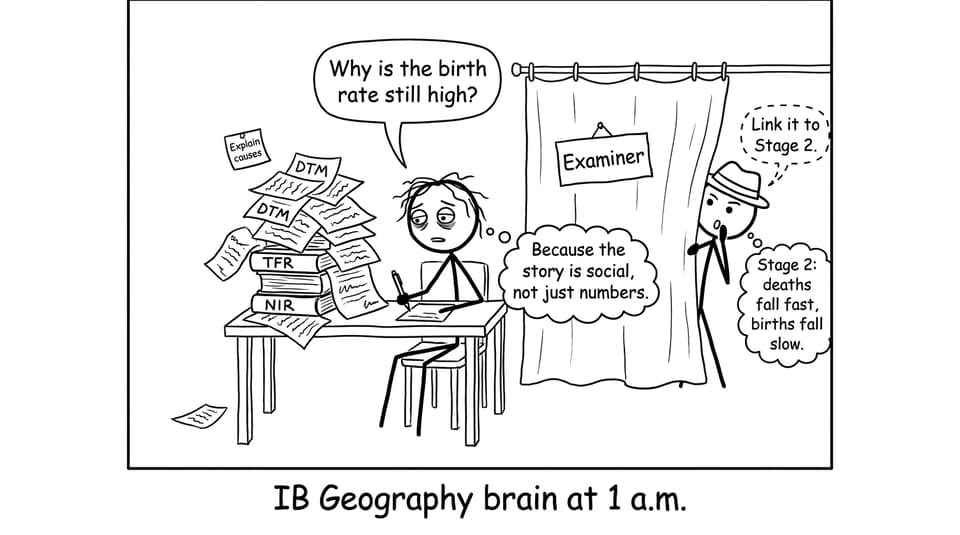
DTM Stage 2 conditions (deaths fall fast, births fall slow)
-
Low status of women (education, employment, decision-making)
For syllabus-aligned practice, start with IB Geography 1 Changing Population and then test yourself using the Changing Population Questionbank.
High fertility rates: when large families make sense
A common trap in IB Geography essays is writing “culture” and stopping there. Culture matters, but it’s often tied to incentives.
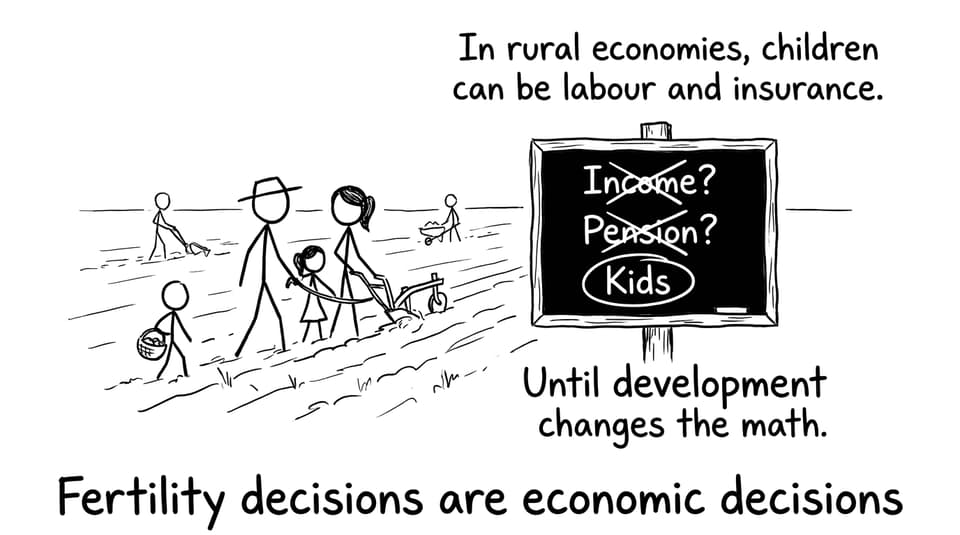
In many LICs, especially in rural or agricultural regions, children can contribute to household work. They may also represent security in old age when pensions and formal safety nets are limited. Add in social expectations, religious beliefs, and early marriage, and high fertility can become the default rather than the exception.
To write this sharply in exam conditions, define fertility using the language of the course (TFR) and connect it to development patterns from IB Geography 1.1 Population and Economic Development Patterns.
Limited contraception and family planning access
Even when families want fewer children, they may not have the tools to act on that preference.
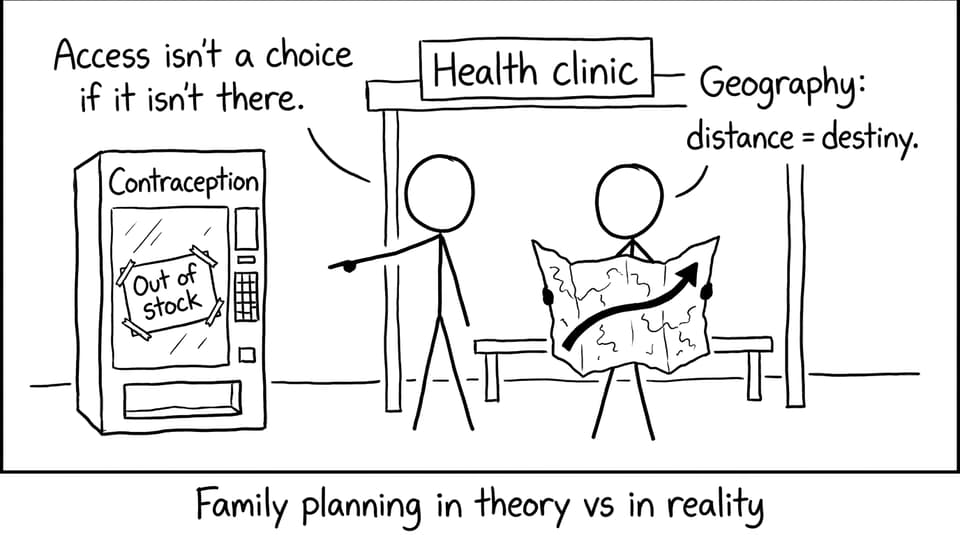
In LICs, contraception can be unavailable, unaffordable, or socially discouraged. Distance to healthcare, limited sex education, and stigma can all reduce usage. In IB Geography, you can frame this as a barrier created by uneven development and accessibility; a geographic problem as much as a medical one.
If you want a clean theory hook for this paragraph, revise DTM-linked content in Demographic Transition and Population Change (Topic 1.2.1).
Falling death rates: growth accelerates when survival improves
High population growth isn’t only about births. It’s about the gap between births and deaths (natural increase).
Many LICs have seen declining death rates due to improvements in vaccination, basic healthcare, sanitation, and food supply stability. Infant mortality often falls first. But birth rates can remain high for longer, creating a wide gap and rapid growth.
This is where linking to the Demographic Transition Model makes your IB Geography answer feel “examiner-ready.” A strong extension is to mention limitations too: countries don’t all follow the same pathway, and migration and policy can reshape outcomes.
For a focused refresher, use How the Demographic Transition Model Explains Population Change.
The DTM explanation: why Stage 2 grows fastest
Most LICs are typically described as being in Stage 2 of the DTM.
-
Death rates fall quickly (healthcare and sanitation improve)
-
Birth rates stay high (norms, limited family planning, need for labour)
That lag is the engine of rapid growth. In IB Geography, explicitly naming “Stage 2” can be a simple mark gain, especially when the question asks you to “explain” rather than “state.”
To practice using this model under timed conditions, try 1.2 Changing Populations and Places Questionbank.
Women’s status: the quiet factor behind many others
If you remember one evaluation point, make it this: fertility changes when choices expand.
Where girls have limited access to education and women have fewer employment opportunities, early marriage and high fertility are more likely. When women can stay in school, enter paid work, and access reproductive healthcare, family size typically falls over time. This isn’t just a “social issue” paragraph; it’s a core development mechanism that can shift a country from Stage 2 toward Stage 3.
To connect causes to responses (great for longer essays), see How Governments Manage Population Growth Effectively.
Bring it home: revise like an IB geographer
High population growth rates in LICs are rarely caused by one thing. In IB Geography, they’re best explained as a layered story: high fertility, barriers to family planning, falling death rates, and gender inequality, all fitting (imperfectly) into the DTM.
If you want this topic to feel easy on exam day, build your revision loop with RevisionDojo: learn the theory in IB Geography resources, practise with the Questionbank, lock in definitions with Flashcards, and polish responses using AI Chat and grading tools. That’s how IB Geography answers go from “correct” to convincing.