

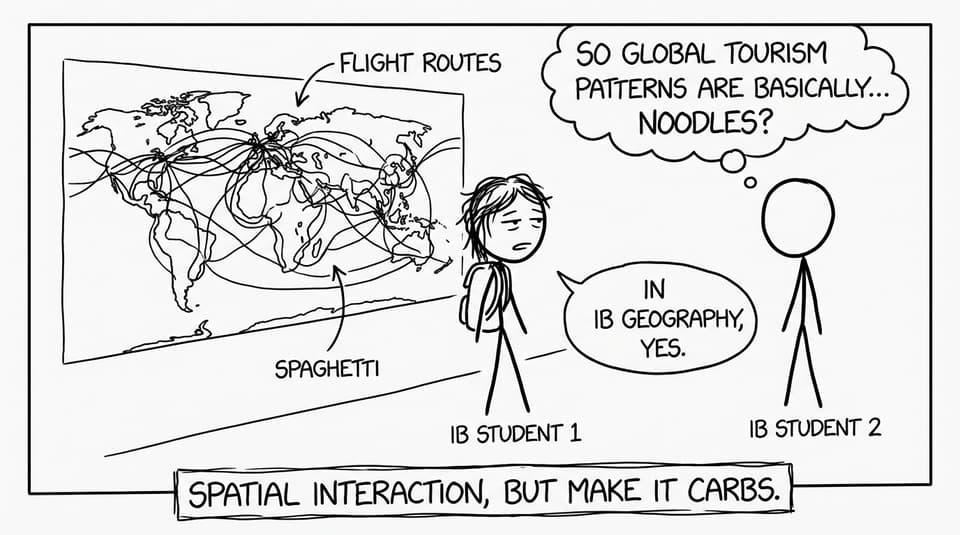
Global tourism is one of those topics that looks simple until you see it on a map.
A few arrows become thousands. A handful of popular places become global systems of money, jobs, culture, and carbon. In IB Geography, understanding the characteristics of global tourism patterns is less about memorising destinations and more about spotting repeatable spatial trends: who travels, where they go, and why those flows keep changing.
Quick IB Geography checklist: what examiners want
Use this mini-checklist to build fast, high-mark paragraphs in IB Geography:
-
Growth over time (and why it’s not perfectly smooth)
-
Uneven distribution of tourists and income
-
Core destination types (coasts, cities, heritage, climate)
-
Long-haul vs short-haul travel and the role of transport tech
-
Emerging markets changing outbound tourism flows
-
Seasonality and pressure on services
-
Diversification into niche tourism (eco, adventure, culture)
For syllabus-aligned coverage, anchor your revision in IB Geography Option E: Leisure, Tourism and Sport.
Growth is the headline characteristic of global tourism patterns
A defining feature of global tourism patterns is long-term growth. Rising disposable incomes, more paid leave, cheaper flights, and easier booking systems have expanded tourism from a luxury into something closer to a habit. Growth isn’t always steady (economic shocks and pandemics can interrupt it), but the broad trend remains upward.
In IB Geography, you can link this to globalisation and improved accessibility. If you want practice turning that into marks, try timed responses from the Option E Questionbank and compare how different command terms change what you write.
Global tourism patterns are uneven (and that inequality matters)
Tourism is not evenly spread across the world. Many tourists originate from higher-income regions (especially parts of Europe, North America, and East Asia) because people there tend to have higher disposable income, stronger passport mobility, and established transport networks.
Destinations also cluster. Global tourism patterns show repeated concentration in:
-
Coastal resorts (sun, sea, predictable leisure)
-
Historic cities (heritage, museums, architecture)
-
Favourable climates (winter sun, summer escapes)
-
Iconic landscapes (mountains, reefs, wildlife areas)
This unevenness is exactly where evaluation lives in IB Geography: who benefits, how much “leaks” out, and what costs are carried locally. Pair this with tourism’s social and environmental impacts to add balance to your essays.
Long-haul tourism is growing (with trade-offs)
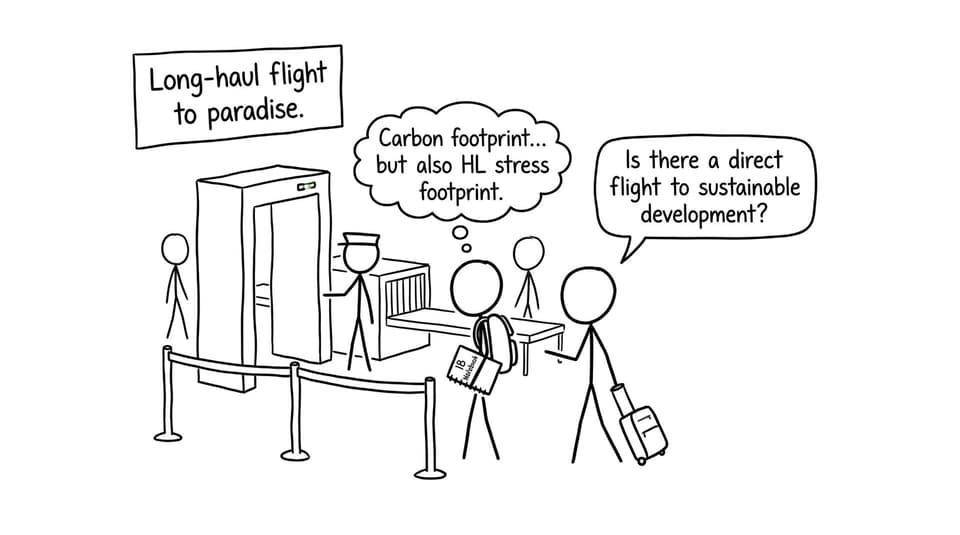
Another key characteristic of global tourism patterns is the rise of long-haul tourism. Faster and sometimes cheaper air travel has made faraway destinations feel “closer,” increasing flows to places like parts of Southeast Asia, the Caribbean, and regions in Africa.
But in IB Geography, every advantage has an opportunity cost. Long-haul travel typically increases emissions, pushing you toward discussion of sustainability, regulation, and behaviour change. RevisionDojo’s guide to sustainable tourism management is useful here because it gives you concrete tools (like carrying capacity and zoning) to move beyond vague solutions.
Emerging economies are reshaping IB Geography tourism flows
Global tourism patterns are changing because the “typical tourist” is changing. As incomes rise in emerging economies (often cited examples include China and India), outbound tourism grows quickly. That increases demand for new routes, services, languages, and destination marketing strategies.
In exam terms, this is a clean way to show change over time: not just more tourists, but different origin regions and different expectations, which can accelerate development in some destinations and intensify pressure in others.
Seasonality is the silent pattern behind the pattern
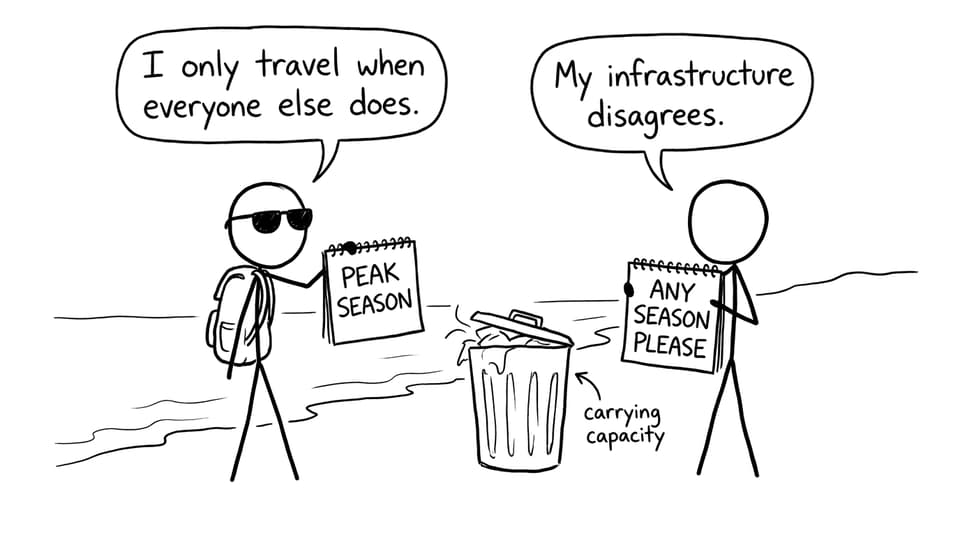
Seasonality is easy to forget until it shows up as a 6-mark question. Many destinations have peak periods linked to climate, school holidays, festivals, or migration calendars. Peak seasons can overload transport, water supply, waste systems, and housing, while off-seasons leave jobs insecure and infrastructure underused.
To revise the language that earns marks (like “multiplier,” “leakage,” “carrying capacity,” and “stakeholders”), run quick drills using Option E vocabulary practice and then reinforce definitions with Geography Flashcards.
How to turn global tourism patterns into exam marks
Here’s a simple method that works across Paper 2 and option questions in IB Geography:
-
Name the pattern (growth, uneven distribution, long-haul, seasonality, emerging markets).
-
Explain a driver (income, transport, climate, political stability, marketing).
-
Add an implication (economic gains vs environmental/social costs).
-
Evaluate using sustainability language.
If you want a structured path, start at the IB Geography resources hub and build exam stamina using Geography Predicted Papers alongside RevisionDojo’s Mock Exams and Grading tools.
Conclusion: learn the pattern, then earn the marks
The characteristics of global tourism patterns are surprisingly consistent: long-term growth, uneven distribution, clustered destinations, expanding long-haul travel, rising influence of emerging economies, and strong seasonality. In IB Geography, your goal is to describe these patterns clearly, explain the drivers behind them, and evaluate their sustainability.
When you’re ready to turn understanding into exam performance, RevisionDojo is built for it: Study Notes to clarify the syllabus, Flashcards to lock in definitions, Questionbank to train command terms, AI Chat to refine explanations, and Predicted Papers and Mock Exams to practise under pressure.