
Ocean management is one of those IB Geography topics that feels simple until you try to explain it under timed conditions. “Protect the ocean” is easy to say. But the exam wants the messy version: trade-offs, stakeholders, enforcement, and the uncomfortable truth that the same policy can rescue one ecosystem while squeezing one community.
In IB Geography (Option B: Oceans and Coastal Margins), ocean management sits at the intersection of food systems, biodiversity, and governance. It is basically geography’s way of asking: who gets to use the sea, how, and at what cost?
Ocean management: an exam-ready checklist (IB Geography)
Use this quick checklist to structure a 6-, 10-, or essay response in IB Geography:
-
Pressure: overfishing, pollution, shipping, offshore extraction, warming/acidification
-
Strategy: regulation (limits, bans), spatial zoning (MPAs), technology/monitoring, education
-
Effectiveness: does it measurably reduce damage?
-
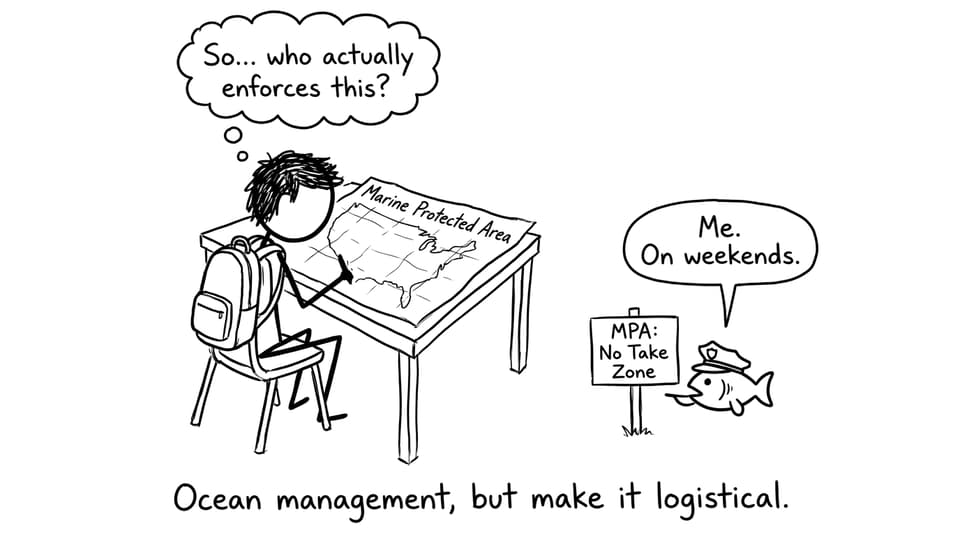
Enforcement: who monitors, who pays, what happens when rules are broken?
-
Winners and losers: fishers, tourism, local communities, ecosystems, global markets
For the full syllabus pathway, start with IB Geography Resources and then focus on Option B: Oceans and Coastal Margins.
Fisheries management: when “too many boats” becomes a food-web problem
Fisheries management is a classic IB Geography example because it links a human decision (catching fish) to system-level consequences (trophic cascades and reduced resilience). Overfishing can shrink populations below recovery thresholds, simplify food webs, and push ecosystems toward less productive states.
Sustainable approaches include catch limits, seasonal closures, and size restrictions. In exam evaluation, the key is not listing tools but explaining why they work: they reduce fishing mortality, protect breeding stock, and buy time for replenishment. Your counterpoint is enforcement and equity: industrial fleets often have better tech and legal support than small-scale fishers.
To practise how these ideas become mark-earning paragraphs, use the Option B Questionbank and then tighten recall with Option B Flashcards.
Marine protected areas (MPAs): protection that only counts if it’s real
MPAs are one of the most assessable tools in IB Geography because they invite both explanation and evaluation. By restricting activities in designated zones, MPAs can protect habitats and vulnerable species, allowing ecosystems to recover. Over time, biodiversity can rise and fish stocks may increase.
The high-mark detail is the spillover effect: when populations grow inside protected zones, some movement into surrounding areas can benefit nearby fisheries. But MPAs can fail if boundaries exist only on paper. If local communities are excluded from decision-making, compliance drops. If patrols and monitoring are underfunded, illegal extraction continues.
For topic coverage in one place, RevisionDojo’s Option B notes hub helps you keep definitions, examples, and evaluation lines together.
Pollution and shipping: slow damage, big cumulative impact
Pollution control is often where IB Geography answers become more nuanced. Plastics, chemicals, sewage, and agricultural runoff degrade habitats and harm organisms through ingestion, entanglement, and toxicity. Pollution also reduces ecosystem resilience, so other stresses (like warming) hit harder.
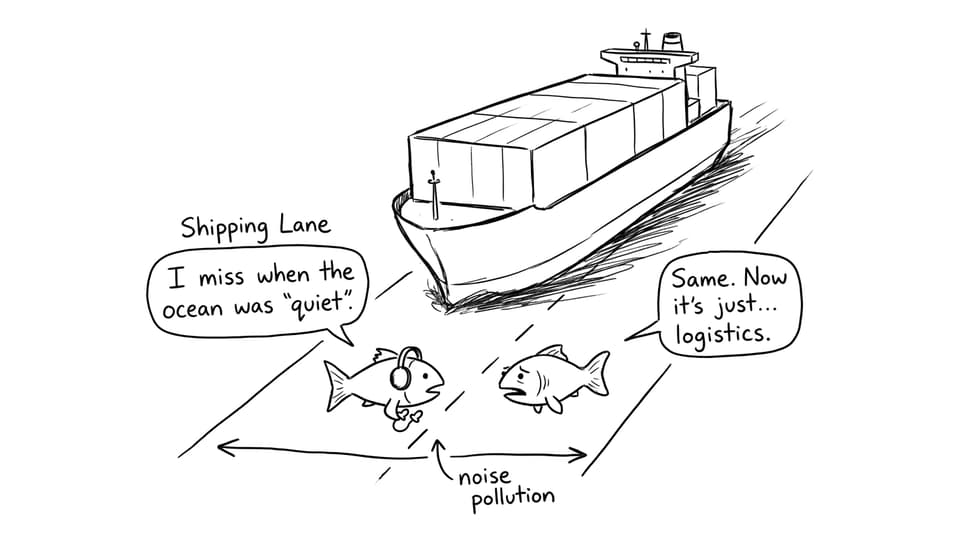
Shipping adds a different kind of pressure: habitat disturbance, accident risk, and noise pollution that can disrupt marine mammals. Ocean zoning can reduce conflict by separating shipping lanes from sensitive habitats, while environmental impact assessments can limit the worst harms.
To connect ocean management to climate-linked pressures, pair Option B revision with climate systems content and practise synthesis using tools like RevisionDojo’s AI Chat and grading features inside the main IB Geography area.
Climate change: global driver, local resilience
In IB Geography, climate change is the background stressor that makes ocean management feel urgent. Ocean warming, acidification, and coral bleaching shift ecosystems quickly. Local management cannot stop warming alone, but it can reduce compounding stresses. A reef has a better chance if overfishing and pollution are controlled; a fishery is more stable if habitat quality is protected.
This is a strong evaluation line: management is not just “fixing” ecosystems, it is buying resilience.
Conclusion: the real skill is judgement (IB Geography)
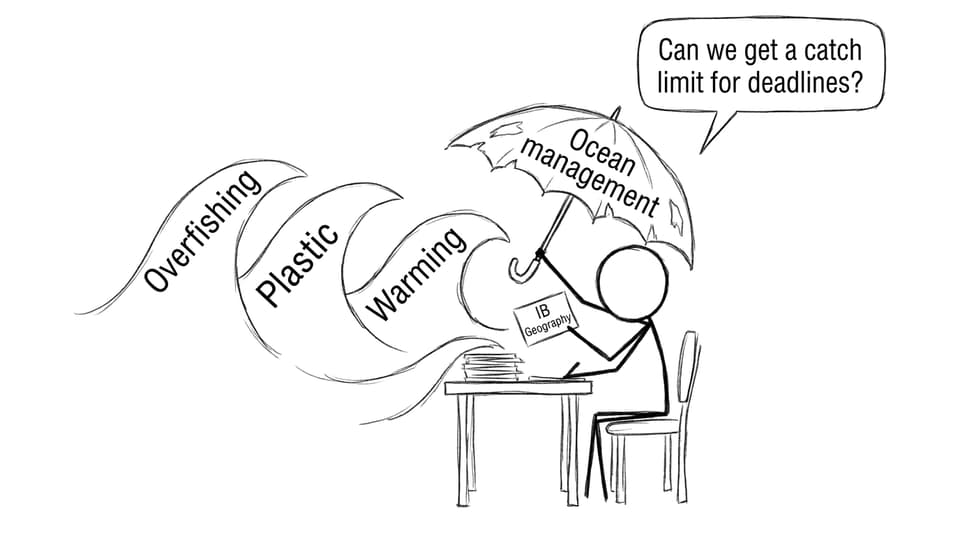
Ocean management is not a list of policies. It is a judgement call made under uncertainty, with ecosystems on one side and human livelihoods on the other. In IB Geography, the highest marks come when you show that you can balance both, explaining how strategies work, and why they sometimes fail.
If you want to turn this topic into fast, repeatable exam responses, revise it through RevisionDojo’s Option B: Oceans and Coastal Margins resources, practise with the Questionbank, and lock in key points using Flashcards.