The moment you stop guessing
There’s a specific kind of stress that shows up in IB Visual Arts: you look at your screens, your photos, your annotations, and you think, “Is this actually a 6… or am I just hoping?” Grade boundaries don’t remove the subjectivity of art, but they do remove one form of uncertainty: the mark ranges you’re aiming for.
This guide shares the official IB Visual Arts SL grade boundaries for 2025 (Timezone 0), plus a simple way to use them to plan your next edits. If you want the bigger picture across subjects, start at the IB Grade Boundaries hub.
Quick checklist before you compare your marks
Use this fast checklist to make the boundaries useful (not just interesting):
-
Decide which IB Visual Arts component can realistically move fastest this week.
-
Improve clarity first (labels, titles, clean layout), then depth (analysis, reflection).
-
Match every change to criteria language (not vibes). Use IB Visual Arts assessment criteria explained simply.
-
If you’re unsure what “experimentation” looks like in examiner terms, read How to show experimentation in your IB Visual Arts process portfolio.
IB Visual Arts SL 2025 grade boundaries (Timezone 0)
The IB Visual Arts SL course is assessed through three components. Here are the official grade boundaries for 2025 (Timezone 0).
Comparative Study (out of 30)
-
Grade 7: 27-30
-
Grade 6: 23-26
-
Grade 5: 19-22
-
Grade 4: 15-18
-
Grade 3: 10-14
-
Grade 2: 5-9
-
Grade 1: 0-4
Exhibition (out of 30)
-
Grade 7: 25-30
-
Grade 6: 20-24
-
Grade 5: 16-19
-
Grade 4: 11-15
-
Grade 3: 7-10
-
Grade 2: 4-6
-
Grade 1: 0-3
Process Portfolio (out of 34)
-
Grade 7: 26-34
-
Grade 6: 21-25
-
Grade 5: 15-20
-
Grade 4: 10-14
-
Grade 3: 7-9
-
Grade 2: 4-6
-
Grade 1: 0-3
Final IB Visual Arts SL grade boundaries (out of 100)
-
Grade 7: 80-100
-
Grade 6: 65-79
-
Grade 5: 49-64
-
Grade 4: 34-48
-
Grade 3: 22-33
-
Grade 2: 11-21
-
Grade 1: 0-10
You can also compare boundary shifts across sessions on the Visual Arts grade boundaries page.
How to use grade boundaries to lift your final score
In IB Visual Arts, big jumps usually come from small decisions repeated: tighter writing, cleaner selection, clearer reflection.
If your Comparative Study is stuck
Most students lose marks by describing instead of comparing. Your goal is to make every paragraph answer: so what? For structure and context, pair What is IB Visual Arts? with How to integrate cultural context into your IB Visual Arts comparative study.
If your Exhibition is close, but not a 7
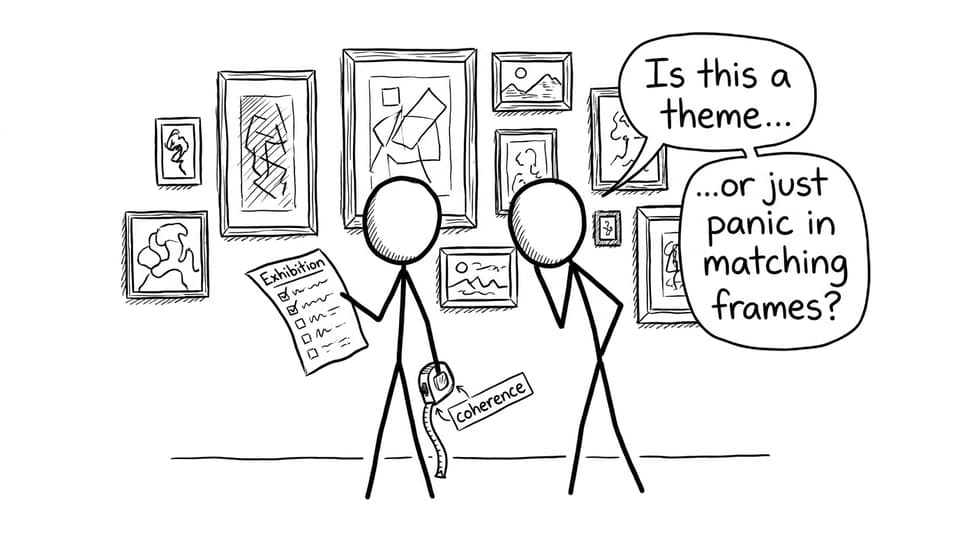
A 7-range exhibition often feels inevitable when viewed together: not identical works, but coherent ones. If you’re unsure what SL expects compared to HL, use How to succeed in the IB Visual Arts exhibition at SL vs HL and SL vs HL in IB Visual Arts: what’s the difference?.
If your Process Portfolio feels “busy”
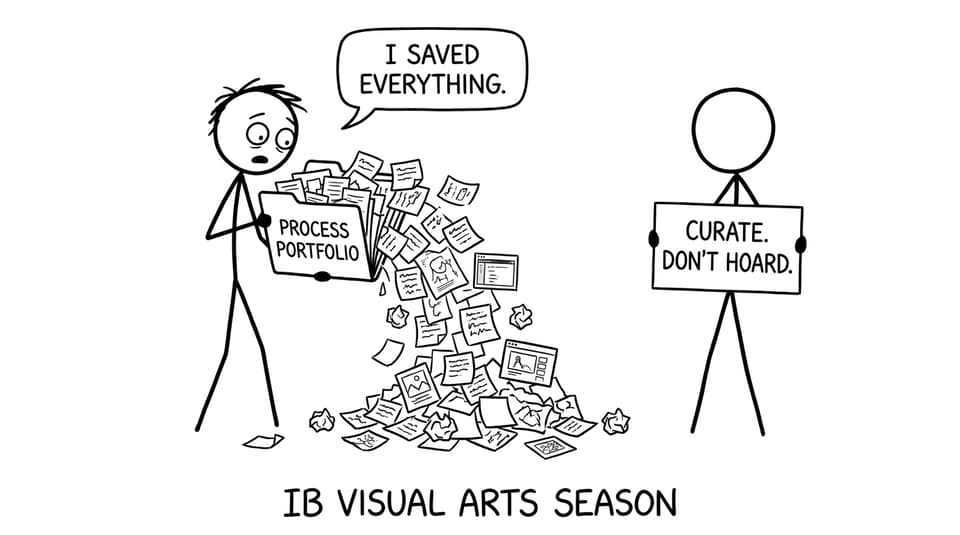
Busy is not the same as convincing. Examiners reward evidence of intention: tests, decisions, revisions, and reflection. For targeted feedback, RevisionDojo’s IB Visual Arts Process Portfolio Grader helps you see which rubric strands are underfed.
FAQ
Are these IB Visual Arts SL grade boundaries official for 2025 (Timezone 0)?
Yes. The tables above match the official IB Visual Arts SL grade boundaries for 2025 (Timezone 0) as published on RevisionDojo’s boundary resources. The key idea is that boundaries are session-specific, so 2025 thresholds are not guaranteed to match earlier years. That’s why comparing multiple sessions on the Visual Arts grade boundaries page can help you understand what “normal” looks like. Still, you should plan using the current session’s reality, not last year’s rumors. Boundaries are a planning tool, not a prediction of your personal outcome.
What’s the fastest way to improve in IB Visual Arts using these boundaries?
Start by identifying the component where you are closest to the next grade band, because small gains compound into the final mark. Then make changes that directly match the assessment criteria language, not just what feels more “artistic.” For many students, clarity upgrades are the quickest: better screenshots, cleaner layout, consistent labeling, and tighter writing. Next comes depth: show decision-making, reflection, and purposeful comparison. If you want a calm weekly system, use How to “study” IB Visual Arts effectively as your routine anchor.
How can RevisionDojo help if IB Visual Arts isn’t a typical exam subject?
IB Visual Arts is graded like evidence-based coursework: you still need structure, criteria awareness, and feedback loops. RevisionDojo helps by making those loops easier to run. Use the Coursework Library for exemplars and expectations, and the Grading tools to pressure-test your Portfolio and other components against rubric strands. When you feel stuck, AI Chat can help you turn vague reflection into specific, criteria-linked writing you can actually use. Flashcards can still work too: build mini-cards for artists, materials, key vocabulary, and comparison sentence stems. And if you want human guidance, Tutors can help you curate, tighten, and raise the ceiling of your work.
Final thought: turn boundaries into a plan
Grade boundaries are not a verdict; they’re a map. In IB Visual Arts, the students who score highest aren’t always the ones with the most spectacular single piece. They’re the ones who curate, explain, and document with discipline.
Use these IB Visual Arts SL grade boundaries for 2025 (Timezone 0) to pick one target this week, then build a feedback loop with RevisionDojo’s Study Notes, Flashcards, AI Chat, Grading tools, Coursework Library, and Tutors so your next submission is calmer, clearer, and harder to ignore.



