


Sample answers can feel like comfort reading. You open one, it sounds fluent, it uses the “right” studies, and you think: Okay, I get it.
Then you sit down to write your own IB Psychology Paper 1 response and everything vanishes. The structure blurs, evaluation dries up, and your studies turn into a rushed list.
That gap is the whole point of this guide. IB Psychology sample answers are not something you read for motivation. They are something you take apart like a watch, so you can rebuild the mechanism under timed conditions.
What Paper 1 is really testing in IB Psychology
Paper 1 rewards the same three skills again and again: accurate knowledge, clear application, and smart critical thinking. In practice, that shows up differently depending on the question type:
-
SAQs ask for tight focus, one relevant study, and clean linking back to the prompt.
-
ERQs/LAQs expect a broader argument, multiple pieces of evidence, and consistent evaluation.
If you need a bigger-picture map of the course and assessment, start with IB Psychology: Structure, Skills & Assessment (SL/HL). It makes the exam feel less like mystery and more like a system.
A quick checklist: how to use IB Psychology sample answers
Before you read any IB Psychology Paper 1 sample answer, set a purpose. Use this five-step checklist:
-
Identify the command term (explain, discuss, evaluate, to what extent).
-
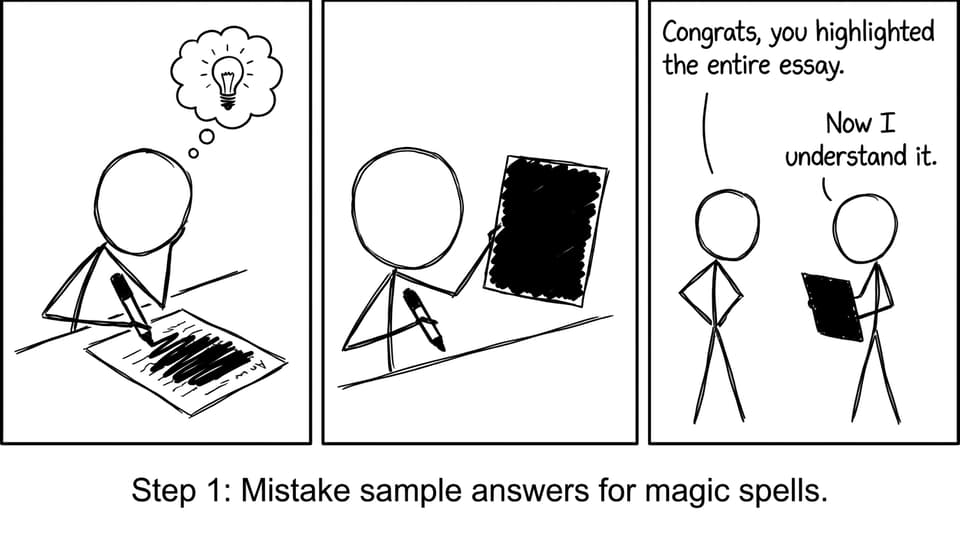
Highlight where the answer earns marks (not where it sounds “smart”).
-
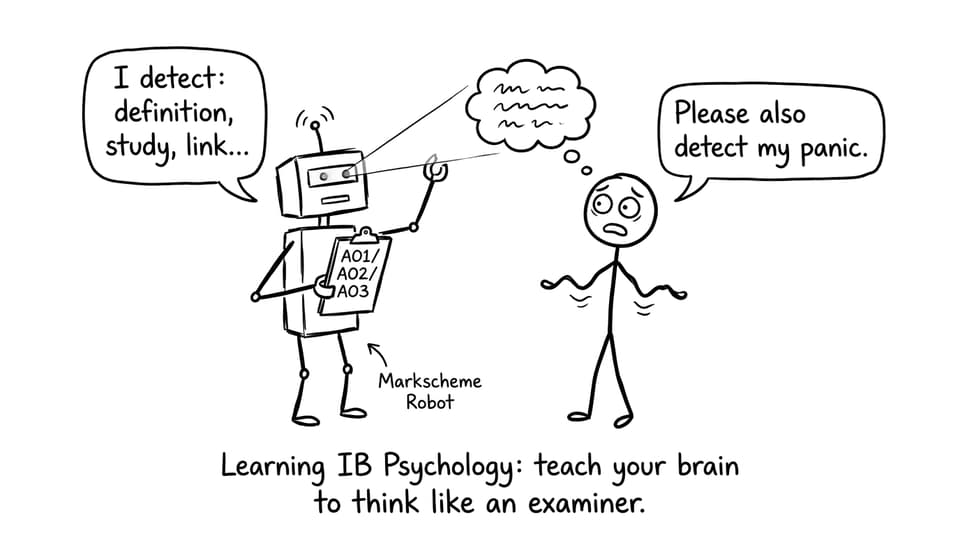
Label paragraphs as AO1 (knowledge), AO2 (application), AO3 (evaluation).
-
Extract reusable “moves” (linking phrases, evaluation frames, mini-conclusions).
-
Rewrite one paragraph from memory under a timer.
This turns sample answers into training data for your own writing.
Compare the sample answer to the markscheme (line by line)
The fastest way to improve in IB Psychology is to learn what the examiner is actually rewarding.
Read the markscheme beside the sample answer and ask:
-
Which sentence earns which mark?
-
What did the student do right before introducing a study?
-
How often do they link back to the question?
This is also where RevisionDojo becomes practical. If you’re practicing with the IB Psychology Questionbank, you can move from question to feedback quickly, instead of guessing what “good” looked like.
Break down structure you can repeat under pressure
A strong Paper 1 response is rarely original. It’s reliable.
For SAQs, use a repeatable mini-structure. If you want a dedicated blueprint, keep How to Write a Psychology SAQ (Short Answer Question) open while you practice.
For longer responses, structure matters even more. Most high-scoring IB Psychology essays feel like they are following invisible signposts: define, argue, evidence, evaluate, link, conclude. For a full strategy, use IB Psychology: How to Write a Top-Scoring LAQ.
Watch how strong answers “use” studies (not just mention them)
Weak answers treat studies like decorations. Strong IB Psychology answers treat them like evidence.
When you read a sample, underline the “job” each study is doing:
-
Is it supporting a claim?
-
Is it being challenged for methodology or bias?
-
Is it being compared to an alternative explanation?
Then practice building your own evidence bank from syllabus-aligned resources. RevisionDojo’s IB Psychology Resources hub makes it easy to jump between Study Notes, Flashcards, and targeted practice.
If you’re on the new syllabus, topic practice like IB Psychology 3.1 Health and Well-being Questionbank helps you see the same skills tested in slightly different ways.
Collect evaluation language (then make it your own)
Evaluation is where marks quietly disappear in IB Psychology.
As you read sample answers, keep a running list of evaluation stems you can adapt:
-
“A limitation is… which matters because…”
-
“This may not generalise because…”
-
“A strength is… increasing credibility because…”
Then practise using them with real content, not empty templates. RevisionDojo’s AI Chat and grading tools (especially when paired with Mock Exams and Predicted Papers) are useful here: you can test whether your evaluation is specific enough to your chosen study and question.
For exam-style rehearsal, use IB Psychology Predicted Papers or the broader IB Predicted Papers collection.
The move most students skip: rewrite under time
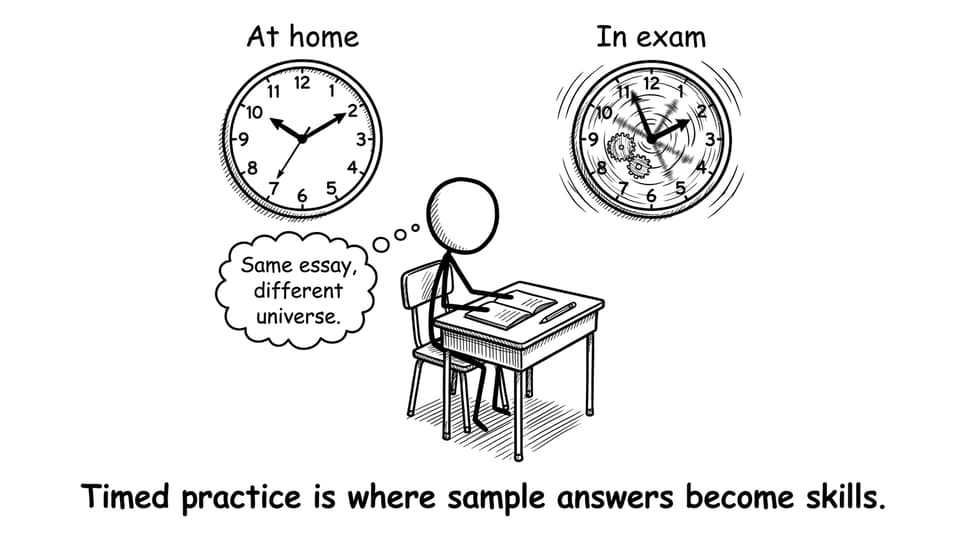
Here’s the uncomfortable truth: reading sample answers improves your taste. Writing under time improves your score.
Try this:
-
Read one IB Psychology sample answer.
-
Close it.
-
Rewrite the intro + one body paragraph from memory in 8 minutes.
-
Compare back to the sample and markscheme.
Do this twice a week and your writing starts to feel automatic.
Common mistakes when studying IB Psychology sample answers
-
Copying wording instead of copying logic. Examiners reward thinking, not memorised phrasing.
-
Ignoring the command term. “Explain” and “Discuss” demand different depths of evaluation.
-
Only reading top answers. You also need to recognise what makes a response drift into the mid-mark range.
If you want broader exam technique alongside content revision, How to Nail a 7 On Your Psychology Exam is a strong companion read.
FAQ
Where can I find reliable IB Psychology Paper 1 sample answers?
Start with your teacher, because they often have examiner-aligned exemplars and can tell you what matters for your cohort. After that, use trusted platforms that build answers directly around the current assessment criteria. RevisionDojo is particularly useful because you can pair model responses with a Questionbank and then immediately practice the same skill. That tight loop matters in IB Psychology because writing improves through feedback, not just exposure. If you’re also working on coursework, the same “learn from exemplars” habit transfers well to Psychology Exemplars. The key is to treat every sample answer as a template for decisions, not a script to recite.
Should I memorise IB Psychology sample answers?
Memorising full sample answers is risky, even if it feels efficient. If the question wording shifts, a memorised response can become irrelevant fast, and relevance is where marks are won or lost. In IB Psychology, you’re rewarded for selecting the right study for the specific prompt and explaining it with purpose. A better approach is to memorise flexible components: definitions, study outlines (aim, method, results, conclusion), and evaluation angles you can adapt. Then practise recombining those pieces across multiple questions. RevisionDojo Flashcards help with the repeatable knowledge, while timed writing and AI feedback help with adaptation. Over time, you end up with something better than memorisation: control.
How long should my Paper 1 extended response be in IB Psychology?
There isn’t a single perfect word count because quality is measured by focus, development, and evaluation. Many strong extended responses often land around 800-1,000 words, but it’s more important that every paragraph clearly answers the question. A useful test is this: can you point to a sentence in each paragraph that links back to the command term? If not, you may be writing extra content that doesn’t earn marks. Sample answers help you feel what “enough” looks like, but only timed practice makes it reliable. Use one timed attempt per week, then compare against a high-scoring model and the markscheme. That routine steadily improves pacing without turning your essay into filler.
Closing: turn sample answers into a scoring habit
If you’re studying IB Psychology Paper 1 sample answers the right way, you should feel slightly uncomfortable: you’re labelling, checking, rewriting, and timing yourself.
That’s good. Comfort is usually just passive reading.
For students who want that active loop built in, RevisionDojo brings everything together in one place: syllabus-aligned Study Notes, Flashcards for recall, a Questionbank for targeted practice, Predicted Papers and Mock Exams for exam simulation, AI Chat for quick clarification, and grading tools to spot what your writing is missing. Use sample answers as the spark, then let practice and feedback do the real work in IB Psychology.