


The IB Core is the part you feel at 11:47 p.m.
You can revise content. You can grind exam technique. You can even convince yourself you’ll “sort coursework later.”
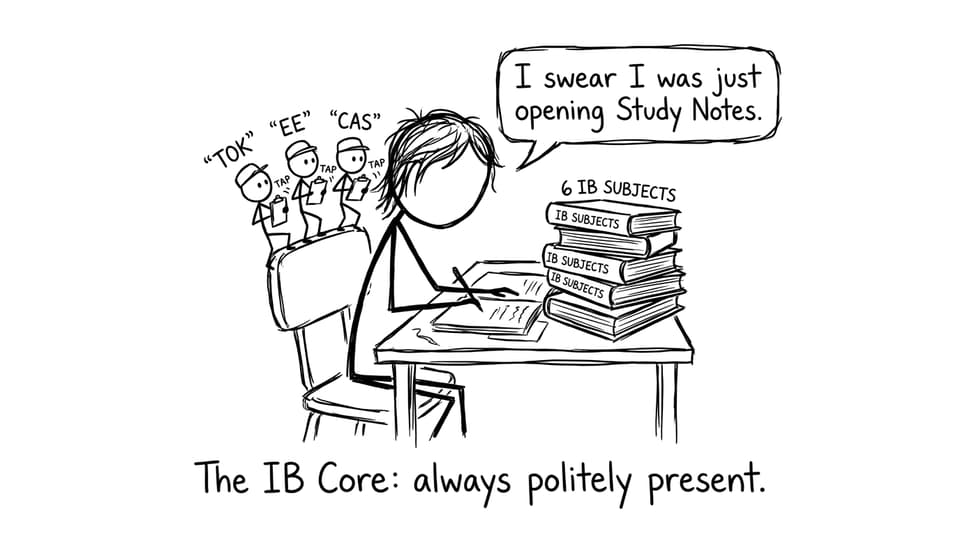
But the IB Core has a way of showing up anyway, quietly, repeatedly, and usually right when you’re trying to focus on your subjects. That’s because the IB Core isn’t a side quest. It’s the heart of the Diploma Programme: Theory of Knowledge (TOK), the Extended Essay (EE), and Creativity, Activity, Service (CAS).
If you complete it well, the IB starts to feel connected. If you ignore it, even strong exam preparation can feel shaky.
IB Core checklist (save this)
Use this as your quick mental model of the IB Core:
-
TOK: explores how knowledge is built, justified, and challenged
-
EE: a 4,000-word independent research paper
-
CAS: experiential learning across creativity, activity, and service (tracked and reflected on)
Two non-negotiables to remember: the IB Core is mandatory, and incomplete core requirements can block the diploma.
What are the three IB Core elements?
Theory of Knowledge (TOK): the “how do we know?” habit
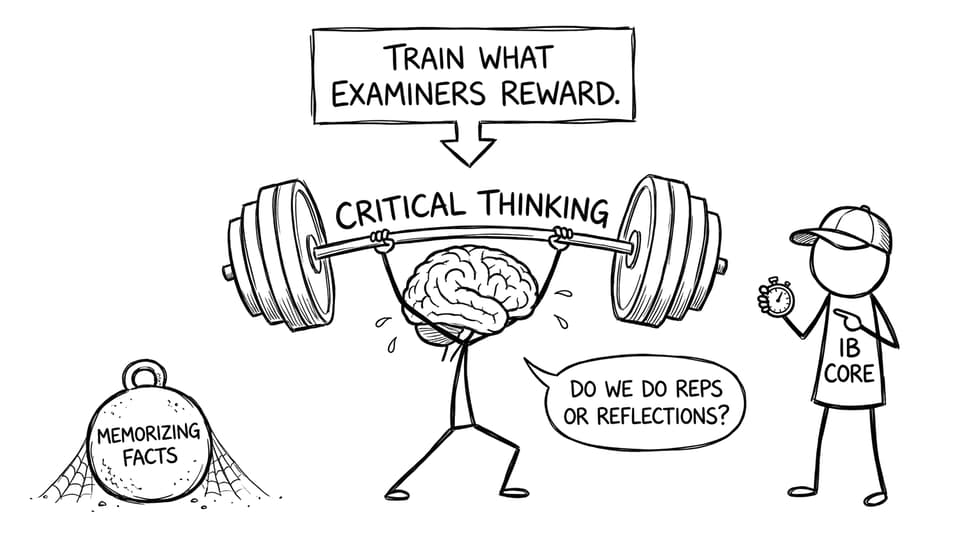
TOK is where the IB trains your thinking, not just your memory. You learn to make claims, test them with evidence, and take counterclaims seriously.
When exam season hits, TOK can actually help your subjects: it makes you better at explaining assumptions, evaluating sources, and writing sharper analysis.
If you need a clear course overview, keep the IB Theory of Knowledge (TOK) hub open while you study. For exam-style thinking, TOK Thinking and Skills is a strong reset.
Extended Essay (EE): proof you can think on your own
The EE is a long-form argument, not a long-form summary. At its best, it’s you learning to ask a precise question, follow a method, and defend a conclusion.
Start with the IB Extended Essay Guides hub and make your first win a better question: IB Extended Essay Research Question: 8 Proven Tips. If you’re rebuilding structure, use Mastering IB Extended Essays: How to Research, Write, and Revise.
CAS: consistency, evidence, reflection
CAS is not about being impressive. It’s about sustained engagement, balance across the strands, and honest reflection that shows growth.
If CAS feels like it competes with revision, read Balancing CAS With Real Life (Without Burning Out). For a simple grounding, start with What is CAS?.
How to excel in the IB Core (without sacrificing exams)
Here’s the calm strategy: treat the IB Core like a weekly system, not a heroic sprint.
-
One TOK block/week: outline one claim + counterclaim, then improve one paragraph.
-
Two EE blocks/week (45 minutes): write or analyze (not endless “research”).
-
Two CAS windows/week: do the experience, then reflect while it’s fresh.
RevisionDojo makes this easier because everything you need sits in one place: Study Notes for fast clarity, Flashcards for daily recall, and the Questionbank to turn understanding into marks. When you’re stuck, AI Chat helps you ask better questions quickly. As exams get closer, Mock Exams and Predicted Papers help you train timing and accuracy. For coursework, the Grading tools and Coursework Library reduce guesswork, and Tutors are there when you need a human to simplify the knot.
FAQ about the IB Core
Is the IB Core mandatory for the diploma?
Yes, every Diploma candidate must complete the IB Core elements: TOK, the EE, and CAS. This is not an “extra credit” layer; it’s a graduation requirement. The key practical point is that strong subject grades can’t compensate for missing core completion. That’s why it helps to plan small weekly actions early, even during heavy exam prep weeks. If you want a clean overview of what counts, use What Is the Core Requirement in IB? as your baseline. Once you accept it’s mandatory, the stress drops, because you stop negotiating with reality and start building a routine.
How is TOK assessed, and why does it matter?
TOK is assessed through two components: the essay and the exhibition, which combine into an overall grade band. That overall band then interacts with your EE band to determine up to three core points. In practice, TOK matters because it rewards a skill set that also improves exam writing: clarity, justification, and evaluation. Many students lose marks not from lacking ideas, but from not explaining why their examples prove the claim. Use the IB Theory of Knowledge (TOK) hub to keep requirements straight and avoid drifting. Treat TOK as training for judgement under uncertainty, which is also what most IB markschemes quietly reward.
Does CAS affect my final grade?
CAS does not add points directly to your final total, but it is still required to earn the diploma. That’s why CAS can feel annoying: it’s high-stakes without a numeric reward. The way to make CAS manageable is to pick experiences that are sustainable and easy to document, then write short reflections consistently. If you wait, the admin becomes the project. For a realistic approach during exam season, Balancing CAS With Real Life (Without Burning Out) is the most helpful mindset shift: keep it small, repeatable, and honest. When CAS is systemized, it stops stealing mental space from revision.
Closing: make the IB Core work for you
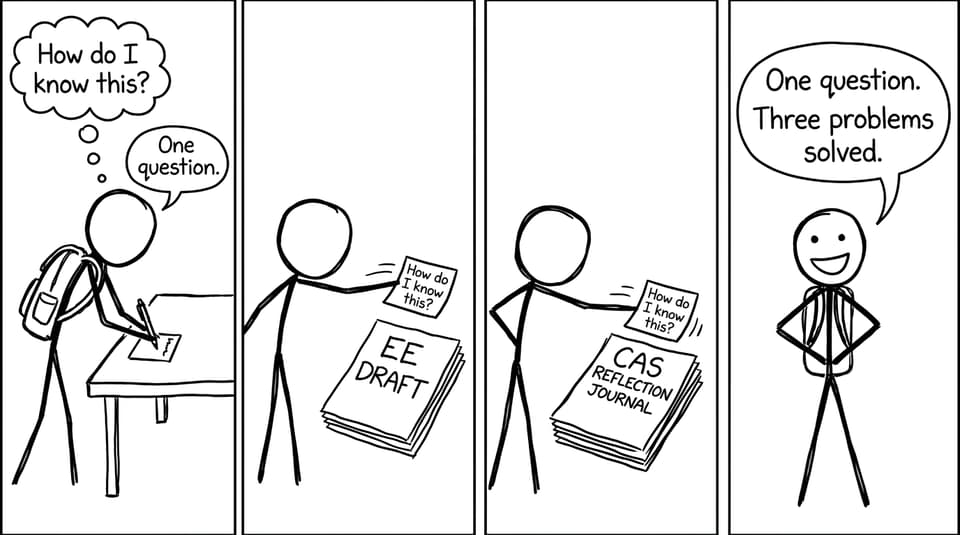
The smartest way to approach the IB Core is to stop seeing it as three separate obligations. It’s one skill set expressed in three places: thinking clearly (TOK), researching independently (EE), and reflecting honestly (CAS).
If you want the IB Core to feel lighter while your exam performance improves, build one connected routine in RevisionDojo: revise with Study Notes, practice with the Questionbank, lock in recall with Flashcards, get unstuck with AI Chat, and pressure-test timing with Mock Exams and Predicted Papers. Then use the Grading tools, Coursework Library, and Tutors when core deadlines tighten.