


When you open an IB Psychology Long Answer Question (LAQ), it can feel like your brain suddenly forgets every study you ever revised. Not because you don’t know the content, but because LAQs reward something rarer: controlled thinking under pressure.
In IB Psychology, the students who score highest aren’t the ones who write the most. They’re the ones who build a clear argument, choose evidence on purpose, and evaluate like they mean it. This strategy shows you how to structure an IB Psychology LAQ so your answer looks calm and examiner-friendly even when you don’t feel calm.
IB Psychology LAQs: what the examiner is really marking
An IB Psychology LAQ is an extended response worth 22 marks. It tests whether you can do four things repeatedly and reliably:
-
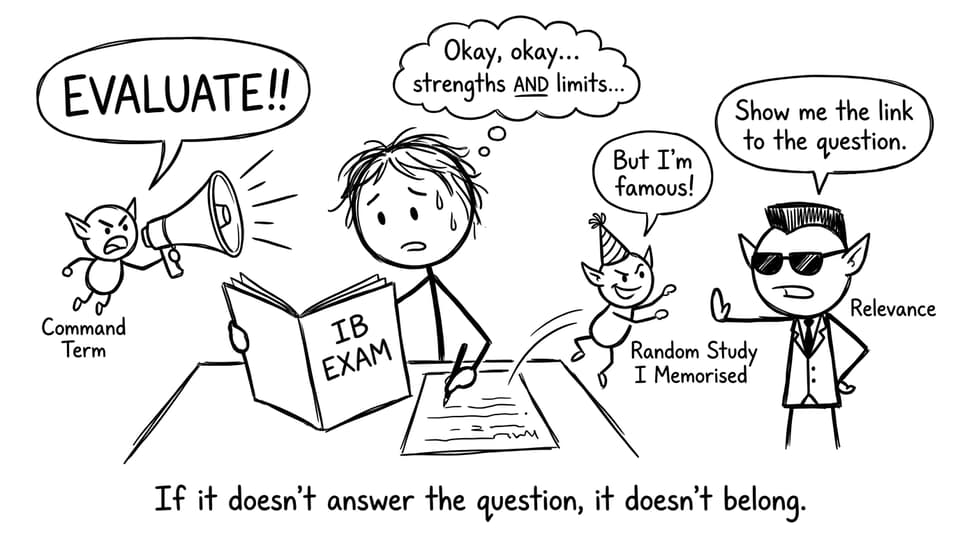
Stay focused on the question (and the command term)
-
Explain relevant psychology theory and concepts accurately
-
Use research studies as evidence (not decoration)
-
Evaluate: strengths, limitations, alternative explanations, and a reasoned judgment
LAQs appear across the course, so your structure needs to travel well between topics and papers. If you ever feel unsure about the bigger course map, keep IB Psychology Resources as your home base.
Quick checklist: the LAQ structure that keeps you on track
Before you write a single paragraph, commit to this simple structure for IB Psychology:
-
Intro (3-5 sentences): define, answer the question, roadmap
-
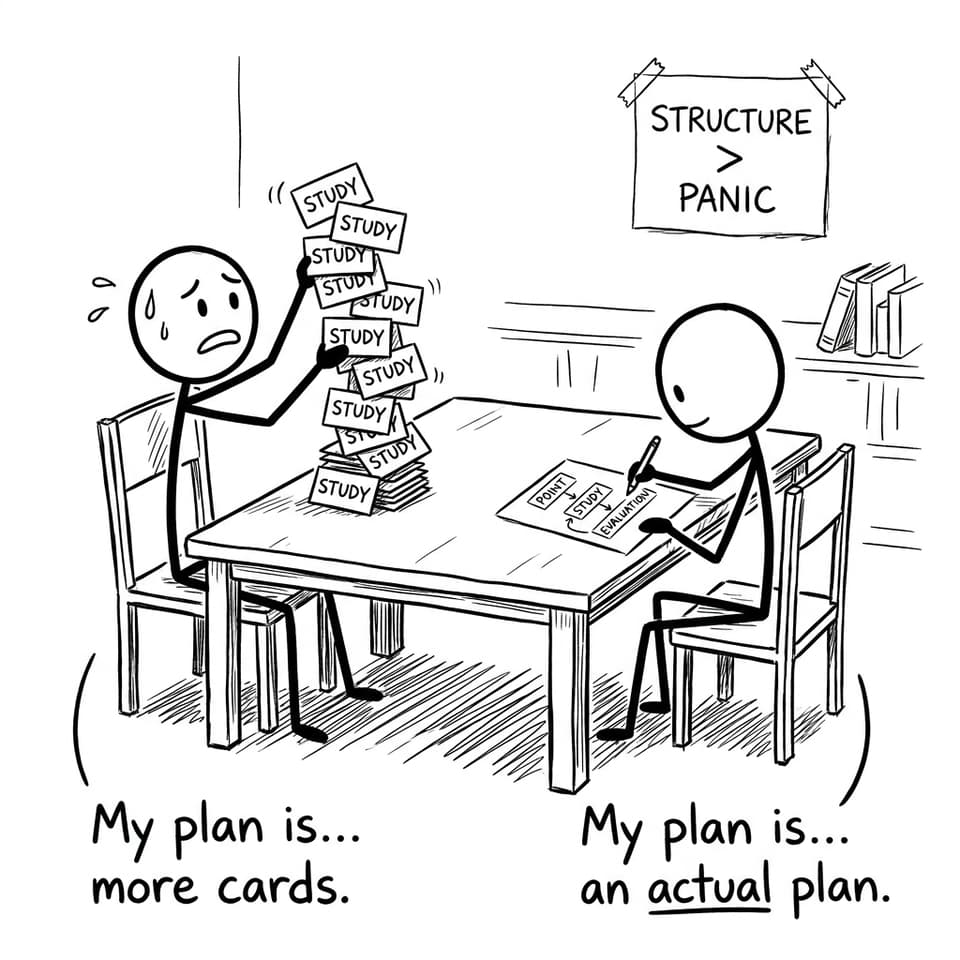
Body paragraph 1: point, study, explanation, evaluation, link back
-
Body paragraph 2: point: study, explanation, evaluation, link back
-
Optional body paragraph 3: nuance, counterclaim, or broader evaluation
-
Conclusion (3-5 sentences): judgment that matches the command term
This is the same logic RevisionDojo builds into its Questionbank and essay practice: every mark is easier to earn when the structure is predictable.
Start with the command term (your essay’s steering wheel)
Most LAQ stress comes from writing before you’ve decided what the question is asking you to do. In IB Psychology, the command term is the steering wheel. If you ignore it, you can write a beautiful essay that earns a surprisingly average mark.
Evaluate
In IB Psychology, evaluate means you must weigh strengths and limitations and end with a justified judgment. Description without criticism is not evaluation.
Discuss
Discuss means balanced arguments, often multiple perspectives. Your job is to show the debate, not just pick a side.
To what extent
To what extent requires a judgment about degree. You need a line like: “This explanation is useful to a significant extent, but…” and then the reasoning.
If you want examples of how examiners reward this, read IB Psychology Extended Response (ERQ) Rubric Explained. The rubric language translates directly into stronger IB Psychology LAQs.
The introduction: make it small, sharp, and obviously relevant
A high-scoring IB Psychology introduction is not a mini textbook. It’s a promise: “I understand the question, and here’s how I’ll answer it.”
Include:
-
A definition of the key concept in the question
-
A direct answer (even if it’s tentative)
-
A roadmap naming the theories or studies you’ll use
Example (generic template you can adapt in IB Psychology):
“This essay will evaluate ____ as an explanation for ____. ____ can be defined as ____. I will argue that ____ explains ____ because ____, supported by studies such as ____ and ____, but its explanatory power is limited by ____ and ____.”
Body paragraphs: the PEEL structure that examiners can follow
In IB Psychology, paragraphs score well when they behave like small arguments rather than study summaries.
Use a consistent pattern:
Point
Make a claim that answers the question. One sentence.
Evidence
Introduce one relevant study with only the details needed to support your claim (aim, method, key findings).
Explain
Explain how the findings support your point. This is where many IB Psychology students lose marks: they describe the study but don’t translate it into argument.
Evaluate
Evaluate the evidence. In IB Psychology this can include:
-
Methodological strengths and limitations
-
Ethical considerations
-
Bias (culture, gender)
-
Ecological validity and generalisability
-
Reductionism vs holistic explanations
-
Conflicting findings or alternative theories
Link back
End the paragraph by tying it explicitly to the question and command term.
If you want to see how RevisionDojo breaks studies into usable exam material, explore Study Notes and practise turning notes into PEEL paragraphs.
Choosing studies: depth beats name-dropping
A surprisingly common IB Psychology mistake is treating studies like collectibles. But examiners reward usefulness, not quantity.
Choose 2-3 studies you can explain and evaluate properly. Each should have a clear job:
-
Study A supports your main argument
-
Study B adds a second angle or supports another part of the argument
-
Optional Study C challenges the claim or adds nuance
A good way to build this skill is to practise by topic using RevisionDojo’s course pages, for example:
Time management that actually protects your evaluation
In IB Psychology LAQs, evaluation is often the first thing sacrificed when time runs out. So you need a schedule that protects it.
A practical split:
-
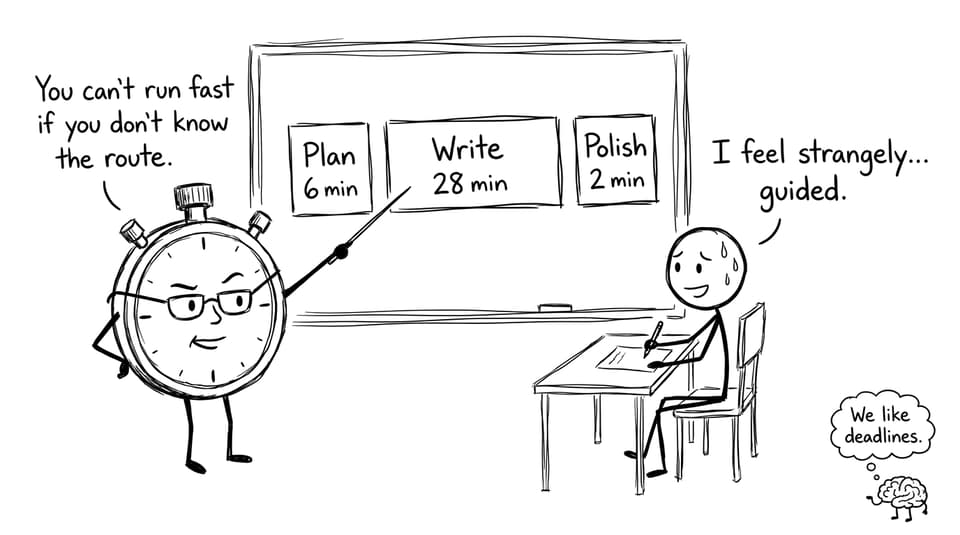
Plan: 6 minutes
-
Write: 28 minutes
-
Polish: 2 minutes
In planning time, write:
-
Your thesis (1 line)
-
Two body paragraph points (2 lines)
-
Which studies go where (2 lines)
-
Two evaluations you refuse to forget (2 lines)
Common LAQ mistakes in IB Psychology (and quick fixes)
-
Memorised essay syndrome: You write what you revised, not what was asked. Fix: underline the command term and key focus before planning.
-
Study dumping: You list procedure details without analysis. Fix: after every study, force one line starting with “This supports the argument because…”
-
Evaluation only at the end: You run out of time. Fix: build evaluation into each paragraph.
-
Conclusion adds new evidence: It feels smart but costs clarity. Fix: conclusion is judgment, not expansion.
For more pitfalls, see How to Write a Psychology LAQ (Long Answer Question) and practise correcting one mistake per attempt.
Closing: make your IB Psychology LAQ predictable (for you and the examiner)
A strong IB Psychology LAQ is basically a calm conversation with the examiner. You define the idea, make two clear claims, prove them with research, and evaluate like you’re weighing evidence instead of reciting it.
If you want the fastest way to make this feel automatic, practise with RevisionDojo’s Questionbank, Study Notes, Flashcards, AI Chat, grading tools, Predicted Papers, Mock Exams, and Coursework Library, and call in Tutors when you want personalised feedback. IB Psychology rewards the student who can think clearly on demand. Structure is how you get there.