



Introduction
The most stressful moment in IB Visual Arts is rarely making the sculpture. It’s the second you try to place it. Suddenly your work isn’t just “good” or “not good,” it’s too low, too wobbly, too close to someone’s backpack, and somehow lit like a crime scene.
Sculptures can elevate an IB Visual Arts exhibition because they force the viewer to move, pause, and look from more than one angle. But they also expose weak curation fast. The goal is simple: make your 3D work feel intentional, readable, and safe, so it strengthens your overall exhibition narrative.
Quick checklist for showcasing sculptures (save this)
-
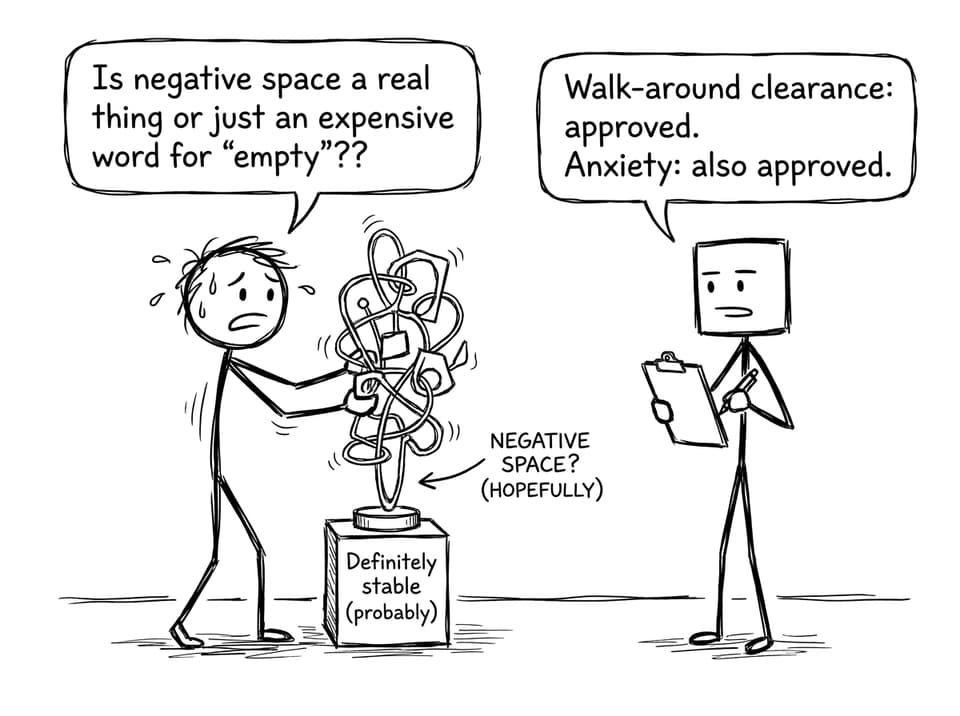
Can a viewer comfortably walk around the sculpture (or at least view 2-3 sides)?
-
Is the base/pedestal stable, level, and the right height?
-
Is lighting revealing form and texture (not hiding it)?
-
Does the sculpture “talk” to nearby works through theme, materials, or ideas?
-
Are labels consistent and easy to read?
If you want broader layout planning alongside these sculpture-specific decisions, pair this with IB Visual Arts Exhibition Setup Tips for High Marks.
Give your sculpture breathing room (curation is also composition)
In IB Visual Arts, negative space isn’t empty space. It’s a frame the room creates for your work.
Aim for one clear viewing zone:
-
Avoid corners where the piece becomes an afterthought.
-
Keep it out of heavy traffic lines (doorways, tight corridors).
-
Let viewers approach, pause, and step back without bumping into anything.
This is one of the most common layout errors, and RevisionDojo breaks it down well in Mistakes to Avoid in IB Visual Arts Exhibition Layout. In practice, “breathing room” is often the difference between “student work displayed” and “exhibition curated.”
Use pedestals and platforms like professional tools
A pedestal isn’t decoration. In IB Visual Arts, it’s part of presentation control.
Practical rules that usually work:
-
Choose a height with intention: eye-level details matter, especially for smaller forms.
-
Keep it consistent if you have multiple sculptures (unless contrast is part of the concept).
-
Stability first: if it wobbles during installation, it will wobble during viewing.
Your curatorial rationale can briefly justify these choices. If you’re unsure how to write that without sounding like you’re narrating the obvious, use How to Write the IB Visual Arts Curatorial Rationale as a structure guide.
Light for form, not vibes
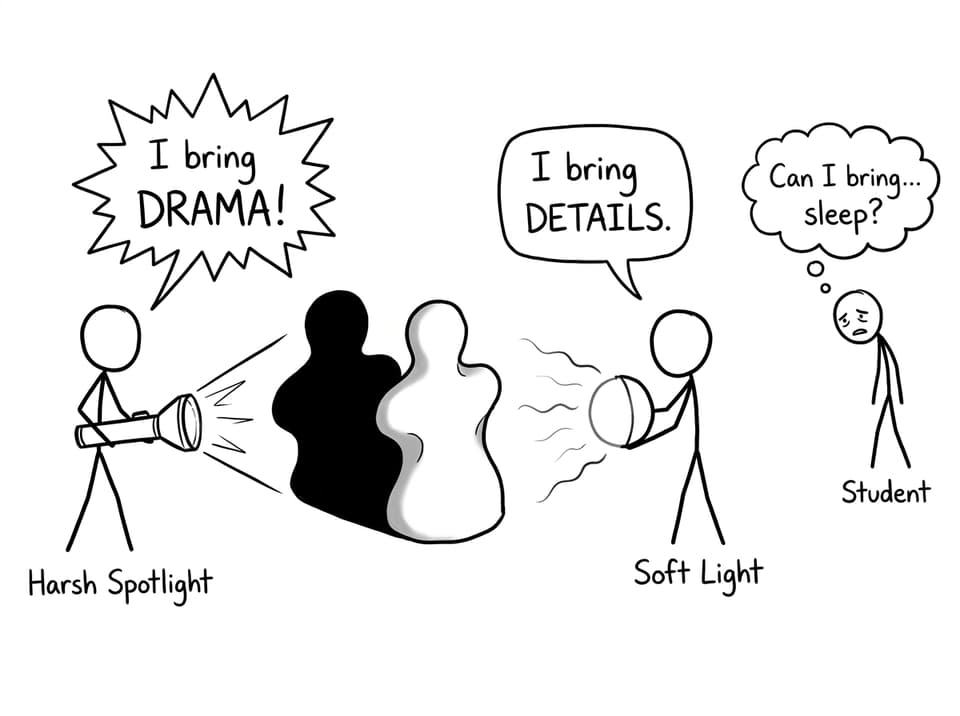
Lighting is where sculpture either becomes powerful or becomes confusing. In IB Visual Arts, examiners reward clarity of intention, and bad lighting hides intention.
Try this quick method:
-
Start with one main light to establish form.
-
Add a softer fill (even reflected light off a white board) to recover lost detail.
-
Watch for shadows that slice across important surfaces.
If you want a bigger picture of what examiners prioritize (including presentation), read How Examiners Grade the IB Visual Arts Exhibition.
Make the sculpture part of the exhibition “conversation”
The strongest IB Visual Arts exhibitions feel like one idea spoken in multiple languages. Your sculpture shouldn’t feel like the “3D requirement.” It should feel like a necessary sentence in the same paragraph.
Ways to connect it naturally:
-
Place it near 2D works that share motifs, materials, or research influences.
-
Use placement to create a mini-story: approach, reveal, reflection.
-
Echo textures or forms across pieces (rough/eroded surfaces, repeated silhouettes, recurring symbols).
If you’re still refining your overall direction, these guides help you tighten the whole exhibition thread: The Exhibition in IB Visual Arts: What You Need to Know and Best Themes for IB Visual Arts Exhibition.
Common mistakes (and quick fixes)
-
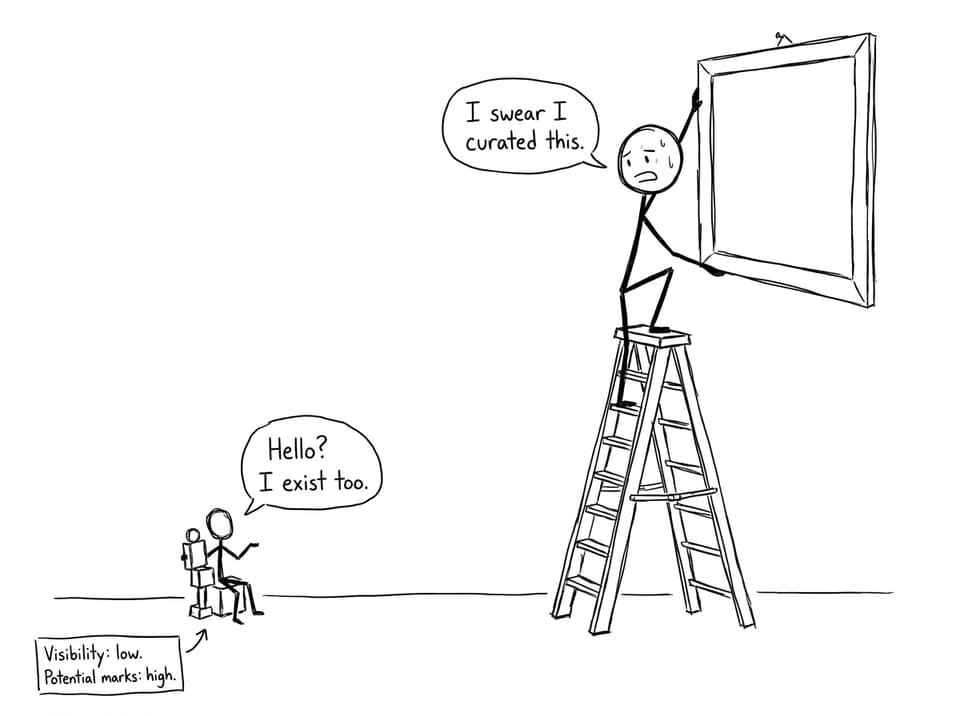
Hidden on the floor: elevate it or group small pieces so they read as a set.
-
Too close to traffic: move it back and create a clear viewing boundary.
-
Unstable stand: simplify. A plain, sturdy base beats a clever, risky one.
-
No link to theme: add a nearby work that bridges it, or clarify the connection in your rationale.
For a broader reminder of what counts as “resolved” and coherent in IB Visual Arts, you can also skim How to Succeed in the IB Visual Arts Exhibition at SL vs HL.
Conclusion: Treat the room like your final medium
The quiet trick of IB Visual Arts is that the exhibition space becomes one more material you control. Sculptures reward that control: spacing, height, lighting, and flow all change what your viewer understands.
If you want to tighten your choices quickly, use RevisionDojo as your studio partner: check your plan against the exhibition guides, pull examples from the Coursework Library, and use tools like Study Notes, Flashcards, and AI Chat to clarify criteria language and refine your curatorial rationale. Then test the setup, photograph it cleanly, and let your sculptures occupy the room like they belong there, because they do.