
If you have ever sat down to revise and felt like your calendar was quietly judging you, you are already close to the heart of this question: how is IB different from CBSE?
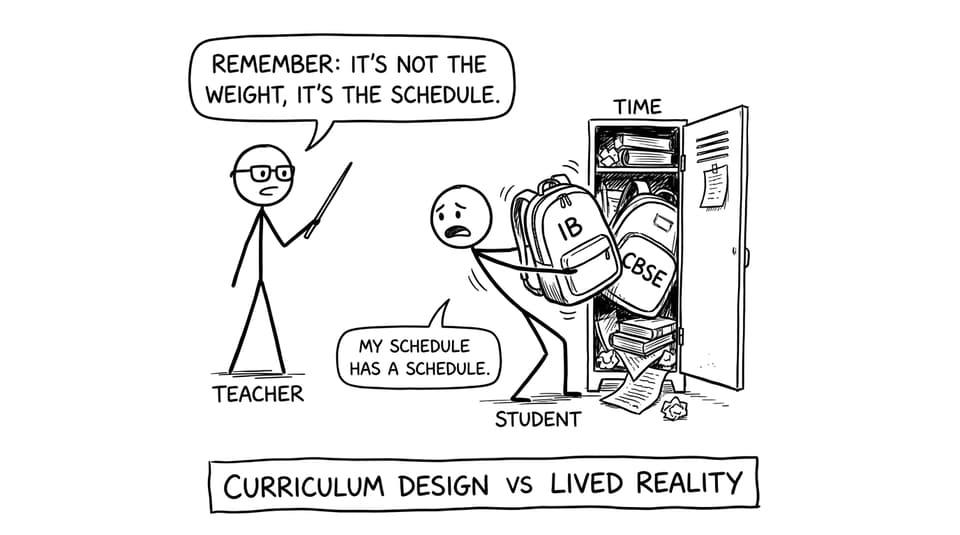
In the IB, the pressure rarely comes from one final exam alone. It comes from the way everything stacks: essays, reflections, internal assessments, and the strange feeling that you are always preparing for something that is both academic and personal. CBSE, by contrast, is often experienced as a clearer, straighter road: syllabus, practice, board-style performance.
For IB students preparing for exams, understanding these differences is not just interesting trivia. It tells you what kind of studying actually works. And it helps you avoid borrowing revision habits from CBSE friends that do not translate well to IB.
Quick checklist: IB vs CBSE at a glance
Use this as your fast mental model before we go deeper:
-
IB aims for breadth plus skills (analysis, writing, research, reflection).
-
CBSE aims for structured coverage and exam readiness within a national framework.
-
IB includes core components like TOK, EE, and CAS (in the Diploma Programme).
-
CBSE is typically more content-dense and linear, with strong alignment to Indian competitive exam pathways.
-
IB assessment mixes external exams with significant internal work (IAs, oral tasks, projects).
-
CBSE places heavier weight on standardized summative exams.
If you are revising for IB, the implication is simple: you need both knowledge and performance skills. That is why tools like the RevisionDojo Questionbank matter so much: they train recall and exam technique together.
The biggest difference: what “learning” means in IB
In CBSE, “learning” often means mastering a defined body of content, then showing you can reproduce it accurately under timed conditions. That is not a criticism. For many students, it is reassuring. You know what the book expects.
In the IB, learning is closer to building a toolkit. Yes, you still need content. But you are also graded on how you use it: how you justify claims, compare perspectives, evaluate sources, and communicate under constraints.
That is why IB students often feel like two people at once: a student and a junior researcher.
To see how RevisionDojo structures this kind of learning, the RevisionDojo for IB hub is a good overview of how questions, notes, flashcards, AI Chat, and grading tools fit together.
IB curriculum vs CBSE curriculum
IB curriculum: broad, balanced, and deliberately “connected”
The IB Diploma Programme is designed around six subject groups (languages, individuals and societies, sciences, mathematics, arts) plus a core that forces you to connect ideas.
The core is the part students underestimate until it is late:
-
TOK (Theory of Knowledge) teaches you to question what counts as evidence and why. RevisionDojo’s IB Theory of Knowledge resources can help you anchor this in clearer frameworks.
-
Extended Essay (EE) builds research and academic writing stamina.
-
CAS adds reflection and real-world engagement.
This is why the IB can feel like it “spreads out” the workload. It is not just exams. It is the ongoing requirement to think, write, and revise.
CBSE curriculum: structured, standardized, and exam-oriented
CBSE is more uniform across schools, with a syllabus that is typically more centralized and predictable. The subject structure is clear, and progression is usually linear: chapter builds on chapter.
It is also more explicitly aligned with national exam culture, which can be a major advantage if your near-term goal is competitive entrance preparation.
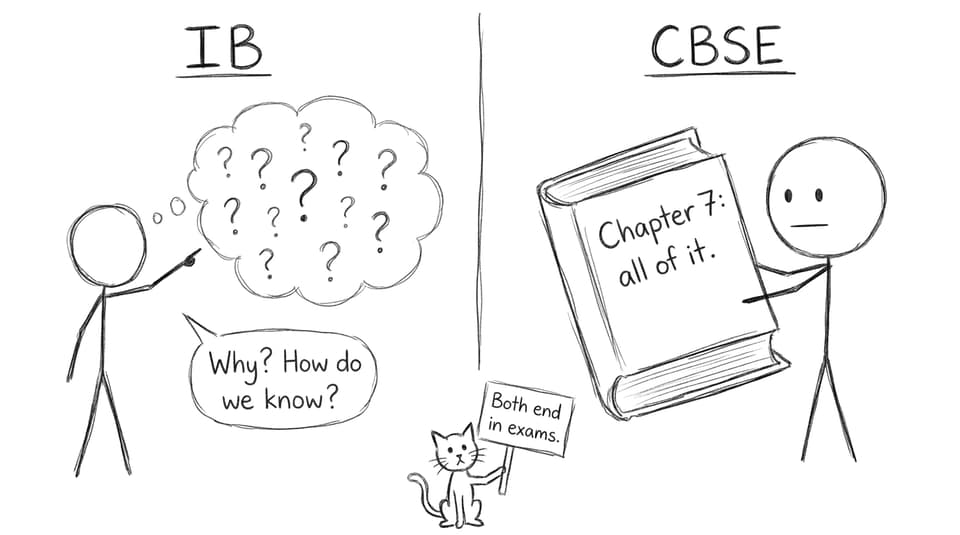
For an IB student, the takeaway is not “one is better.” It is that copying CBSE-style revision (pure repetition of content) is rarely enough for IB questions that demand explanation, evaluation, and structure.
Teaching style: facilitator vs lecturer (and why it matters for revision)
In IB classrooms
The IB tends to be student-centered: discussions, inquiry, collaborative tasks, and frequent feedback loops. Teachers often act like coaches, nudging you to defend claims and improve how you communicate.
This matters for exam prep because you cannot revise IB by memorizing alone. You must practice producing: short answers, structured essays, data analysis, and method-style explanations.
That is exactly where the Study Notes feature becomes useful: you can learn a concept quickly, then immediately convert it into exam performance through practice.
In CBSE classrooms
CBSE teaching is often more teacher-led and coverage-focused. That can be highly efficient for completing a large syllabus. It can also reward consistent repetition and standard problem-solving methods.
For an IB student switching from CBSE, the adjustment is usually this: you must start writing sooner. Not perfect writing. Just frequent writing.
Assessments: how IB grades you vs how CBSE grades you
IB assessments: mixed, criterion-based, and skill-heavy
IB assessment combines:
-
External exams (timed papers)
-
Internal assessments (IAs), practical work, investigations, oral components, and coursework-style tasks
Crucially, the IB is criterion-referenced. You are measured against descriptors and markbands, not against how everyone else performed.
For exam preparation, this changes your strategy: you are not hunting “tricks.” You are learning what examiners reward, then rehearsing it.
A strong workflow is:
-
Learn content with Digital IB Study Notes
-
Drill weak topics with the RevisionDojo Questionbank
-
Use Flashcards to keep definitions and processes alive
-
Use AI Chat when you get stuck and cannot afford a 40-minute spiral
CBSE assessments: more standardized and summative-weighted
CBSE places major emphasis on standardized exams, especially in key years. Questions tend to be more predictable in style, with clearer expectations around what a correct answer looks like.
This is why CBSE revision culture can be extremely repetition-driven. It often works because the exam rewards accurate recall and practiced methods.
In IB, repetition still matters--but it must be repetition of thinking patterns (explain, evaluate, compare, justify), not only repetition of facts.
Global recognition and university pathways
This is where the two systems naturally serve different audiences.
The IB is internationally recognized and commonly understood by universities across regions because it is built as a global program. Its mix of coursework, writing, and exams signals readiness for university-style thinking.
CBSE is deeply recognized in India and by Indian universities, and it supports national pathways well. International recognition exists, but requirements can vary by country and institution.
If you are an IB student preparing for exams with international applications in mind, your best investment is often clarity: clean writing, consistent practice, and a record of strong performance across components.
What this means for IB students preparing for exams
The quiet truth: the IB does not just test what you know. It tests how you behave under academic pressure.
Here is a practical mini-plan you can start this week:
Build “exam fluency” with short timed reps
Do not wait for motivation. Use 25-minute focused blocks:
-
Pick one topic in the Questionbank
-
Do 8--12 questions
-
Review markscheme logic immediately
If you want a bigger rehearsal, RevisionDojo’s IB Predicted Papers are designed to feel like real exam papers, without you needing to guess what a full sitting should look like.
Convert notes into daily recall
The IB punishes vague understanding. If you cannot retrieve it quickly, you cannot use it.
Use the Flashcards feature to keep high-frequency ideas active, especially definitions, key processes, and command-term responses.
Learn to think like the markscheme
The simplest way to score higher in IB is to stop answering like a human and start answering like an examiner for 90 minutes. That shift is learnable.
A good starting point is to understand the “why” behind tasks like TOK. RevisionDojo’s guide on Theory of Knowledge in IBDP helps connect reflection to scoring.
Closing: choose clarity, then practice like it matters
The difference between IB and CBSE is not just curriculum. It is a philosophy of what school is for. CBSE often rewards coverage and precision within a defined scope. IB rewards coverage plus interpretation: the ability to think, explain, and prove you understand under real constraints.
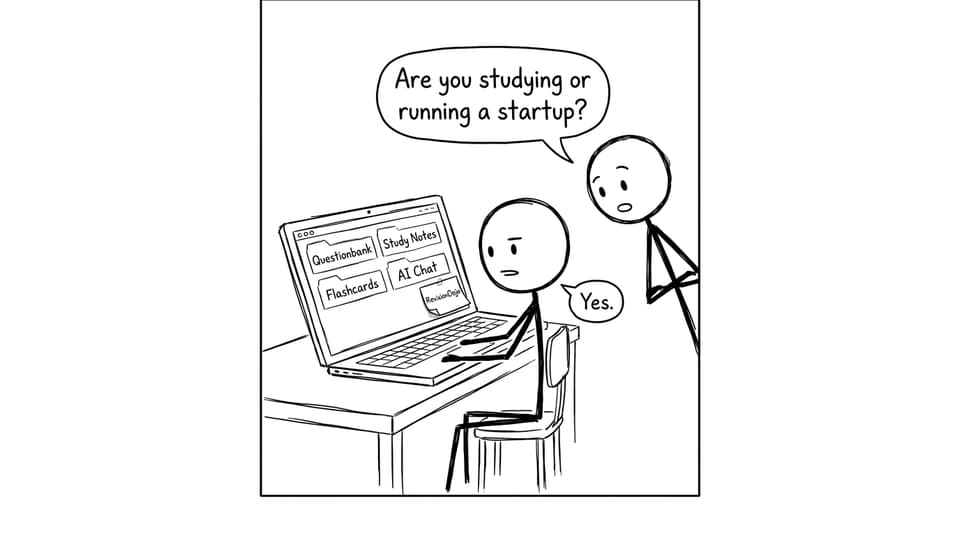
If you are in the IB right now, preparing for exams, the best move is to stop relying on willpower and start relying on a system. Build your daily recall with Flashcards, learn quickly with Study Notes, and convert understanding into marks with the Questionbank and timed paper practice.
When you are ready to make revision feel simpler (not easier, just clearer), start with RevisionDojo for IB and build your routine around one platform that was designed for how IB actually works.
