
Water rarely disappears. It just changes hands.
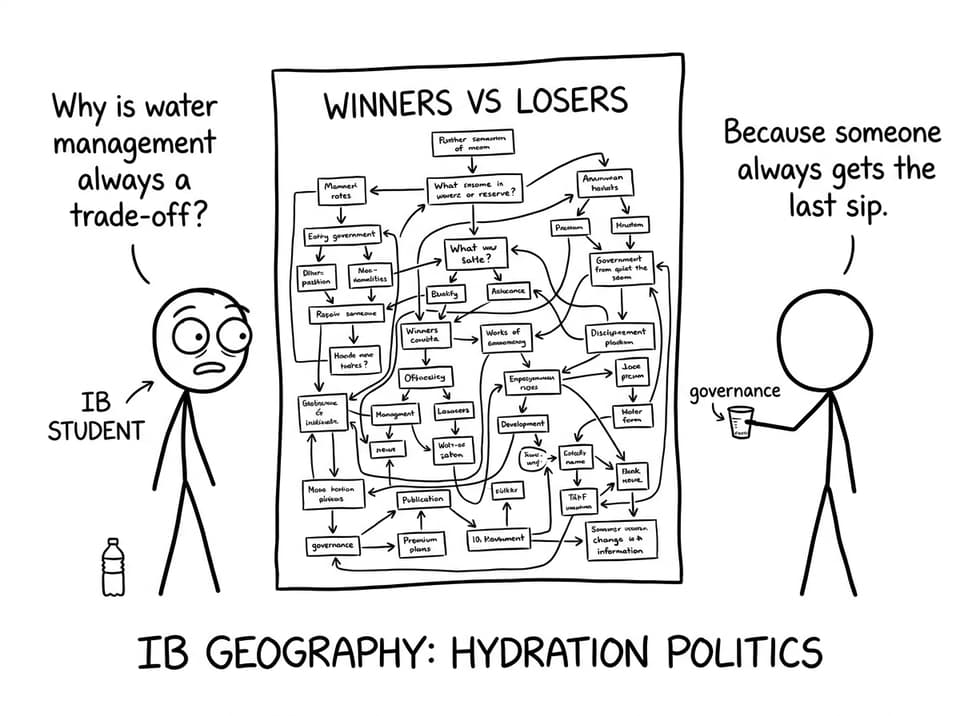
In IB Geography, water management is one of those topics that looks technical on the surface (pipes, dams, canals), but is really about decisions, and who gets protected, supplied, or heard. Every time a river is regulated or water is allocated, someone benefits faster, cheaper, or more reliably. Someone else pays in displacement, scarcity, or ecosystem decline. That is the heart of “winners and losers,” and it is exactly what examiners want you to evaluate.
Quick exam checklist for IB Geography
Use this mini-checklist when you write about winners and losers in IB Geography Option A (Freshwater: Drainage Basins):
-
Identify the management strategy (dam, abstraction, pricing, irrigation, treaty, restoration).
-
Name the winners (who gains access, energy, profit, protection).
-
Name the losers (who loses land, flow, quality, livelihoods, representation).
-
Explain why (power, wealth, location in basin, governance, time scale).
-
Add environmental impacts (sediment, habitats, water quality, long-term sustainability).
If you need the syllabus framing, start with IB Geography Option A: Freshwater: Drainage Basins.
How infrastructure creates winners and losers
Big projects create clear headlines: “new reservoir,” “hydropower,” “flood control.” In IB Geography, these are easy to label as “winners” because cities, industry, and commercial agriculture often gain a more reliable supply and reduced risk.
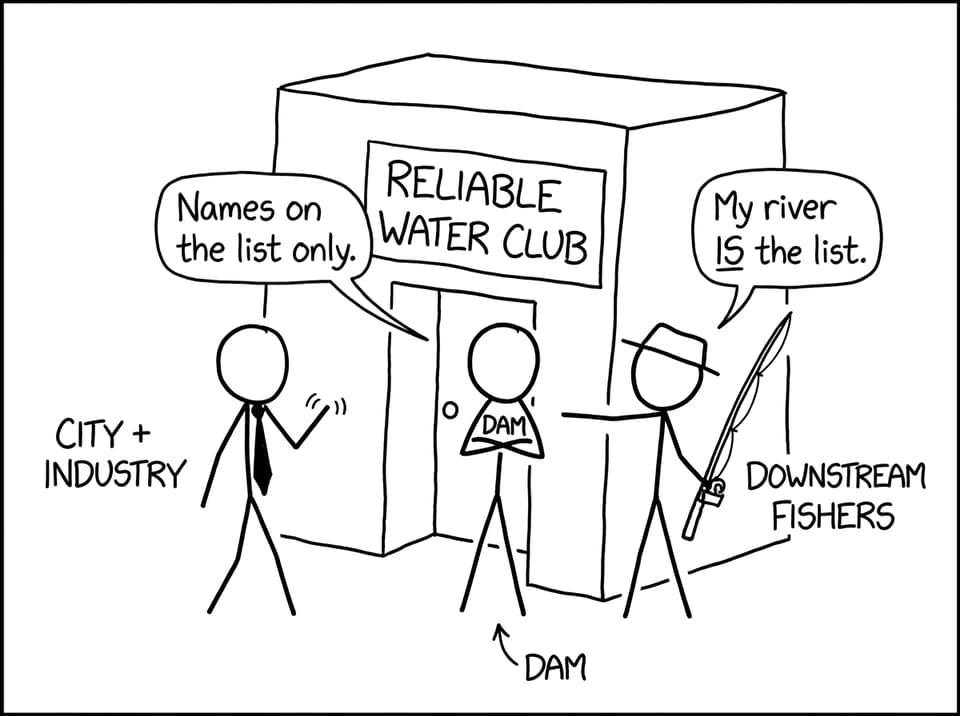
But the same dam can quietly manufacture “losers.” Upstream communities may be displaced by reservoir flooding. Downstream farmers and fishers can face reduced discharge, altered seasonality, and less sediment, which can reduce soil fertility and reshape deltas and coasts over time. For system links, revise stores and flows via How Do Drainage Basins Function as Systems?.
How inequality decides who gets safe water
A hard truth in IB Geography is that scarcity is not always physical. It can be economic: water exists, but access is blocked by infrastructure, pricing, or weak service delivery.
Large irrigation schemes can privilege export-oriented farming while smallholders receive less predictable supply. In cities, wealthier neighborhoods may enjoy reliable piped water while informal settlements depend on vendors, unsafe sources, or long collection times. Anchor your terminology with Notes for A.3.1 Physical and Economic Water Scarcity.
Governance and power: the invisible pipeline
Who sits at the decision table often matters more than rainfall totals. In IB Geography, governance is the mechanism that turns water into advantage: licensing, allocation rules, enforcement, compensation, and consultation.
Governments and corporations may prioritize growth and energy security, while marginalized groups have limited representation. That imbalance is why “winners and losers” is also an essay about justice. For a practical counterpoint, see community-led approaches in A.4.1 Community Participation in Water Management Notes.
Transboundary rivers: winners upstream, stress downstream
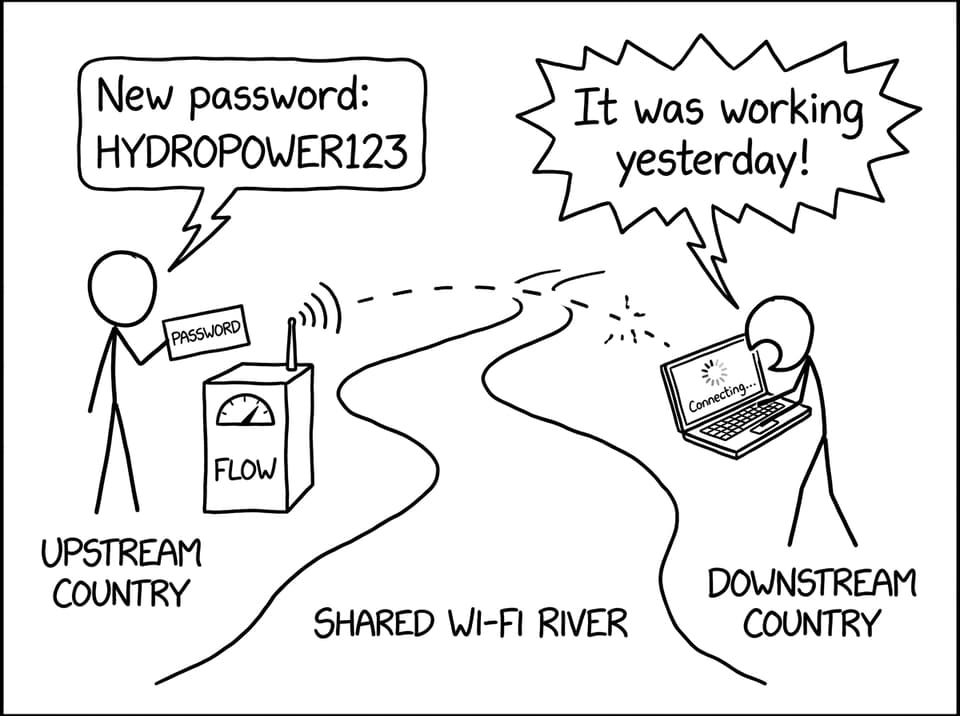
Across borders, the same river becomes a shared negotiation. Upstream states can gain leverage by storing or diverting flow, boosting irrigation and hydropower. Downstream states may experience reduced quantity or altered timing, raising insecurity and political tension.
In IB Geography, this is where you add synthesis: treaties, data sharing, and conflict resolution can turn a zero-sum dynamic into cooperation. Build examples using Notes for A.3.4 Shared Water Resources and Conflict.
Conclusion: make the trade-off explicit
The exam-winning move in IB Geography is stating the trade-off clearly: water management doesn’t just move water, it moves risk, opportunity, and voice. If you can identify who benefits, who loses, and why governance makes that uneven, you can turn any drainage-basin example into a sharp, evaluative response.
To lock it in, revise the core content in A.4 Water Management Futures and then drill exam-style prompts using RevisionDojo’s Questionbank, Flashcards, Study Notes, AI Chat, and Grading tools. That is how IB Geography answers become confident: one stakeholder, one mechanism, one judgement at a time.