
Trade doesn’t just move goods. It moves leverage.
Think of a simple object on your desk: a phone, a hoodie, even a chocolate bar. Each one is a trail of decisions about who gets paid most, who takes the biggest risks, and who gets a seat at the table when rules are written. In IB Geography, that is the heart of the question: how does trade influence global power relations?
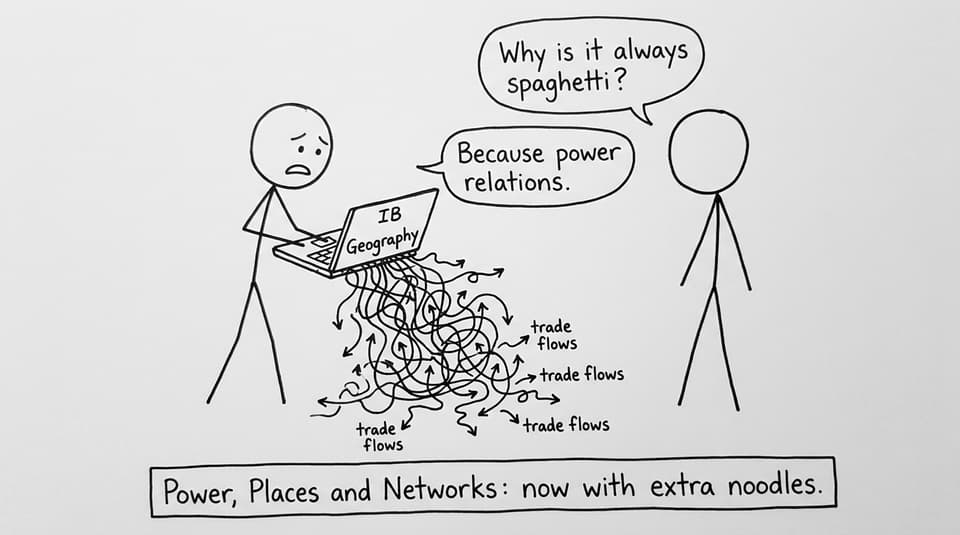
IB Geography snapshot: what to look for in exam answers
Use this quick checklist to structure any IB Geography response on trade and power:
-
Who controls high-value exports (finance, tech, pharmaceuticals, advanced manufacturing)?
-
Who relies on primary commodities (minerals, crops, fossil fuels)?
-
What rules shape trade (trade agreements, tariffs, standards, blocs)?
-
Where does value get added along the supply chain (design vs assembly)?
-
How do you evaluate winners and losers over time?
If you want the syllabus framing for this, start with Power, Places and Networks and its topic notes.
How trade concentrates power in global networks
In IB Geography, trade is rarely “neutral.” Countries that dominate trade networks often dominate decision-making too.
High-income economies tend to specialise in high-value activities: branding, R&D, finance, logistics, and IP-rich manufacturing. That positioning matters because it captures the biggest share of profit per unit sold. Meanwhile, many lower-income economies export primary commodities with volatile prices. When the price drops, national income drops, and political room to manoeuvre shrinks.
A useful way to write this in IB Geography terms is: trade shapes power by creating dependency (reliance on a narrow export base) and influence (ability to set prices, standards, and rules).
For supply chain examples and language you can borrow, see TNCs and Global Supply Chains Notes.
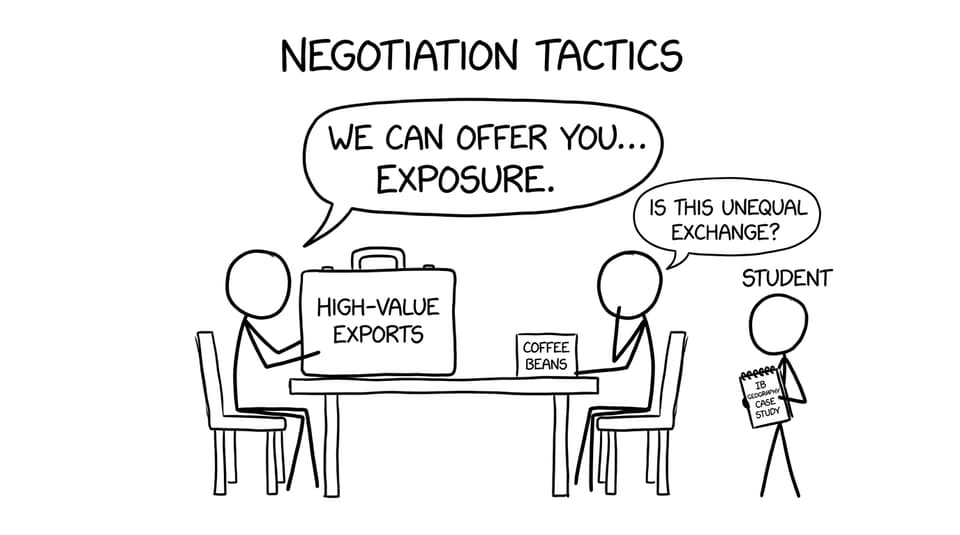
Unequal exchange: the quiet engine of imbalance
Unequal exchange is one of those IB Geography concepts that sounds academic until you notice it everywhere.
It describes a pattern where a country exports large volumes of low-value goods (or raw materials) and imports smaller volumes of expensive manufactured products and services. Over time, wealth and bargaining power drift toward the places where value is added and prices are controlled. This is why essays that mention “trade” but ignore “value capture” often feel unfinished.
To practise turning this into evaluation, try an essay prompt from the Power, Places and Networks Questionbank or the Global networks and flows Questionbank.
Trade rules, blocs, and the power to set the terms
Trade agreements and economic blocs can amplify power because rules are never evenly negotiated.
Larger economies can push for standards that match their industries, protect strategic sectors, or lock in market access. Membership in influential blocs can increase trade volume and diplomatic weight. Exclusion can mean weaker access to markets and less say in global governance.
To connect this to wider course language, pair your trade analysis with what counts as influence today in What Defines Global Power in the 21st Century?.
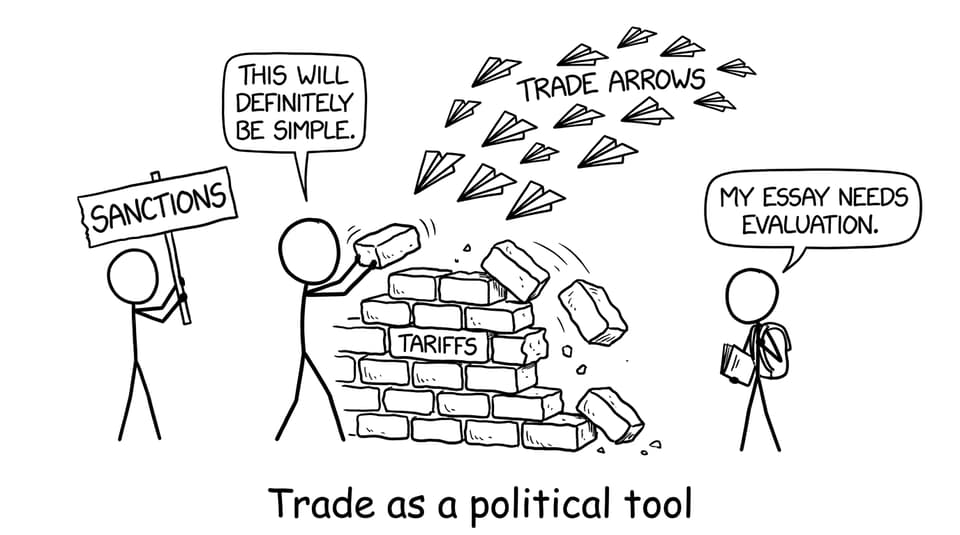
Trade as a political tool: sanctions, tariffs, and resilience
In IB Geography, trade is also a toolkit for coercion.
Sanctions, tariffs, and restrictions can pressure governments, disrupt employment, and rewire alliances. But they do not affect all states equally. Countries with diversified economies, multiple trade partners, and strong domestic industries are more resilient. Countries dependent on one export or one major buyer are far more exposed.
An easy evaluation move: explain that trade tools can create short-term pressure but may also trigger long-term adaptation (new partners, local industrialisation, rerouted flows).
How to revise this efficiently with RevisionDojo
When you revise IB Geography, it helps to move from concepts to exam performance fast:
-
Use IB Geography Resources to jump between Study Notes, Questionbank practice, and lessons.
-
Build recall with Geography Flashcards (great for definitions like unequal exchange, FDI, TNCs, global hubs).
-
Stress-test timing with IB Predicted Papers by IB Examiners (Free) or IB Geography Predicted Papers.
-
Then refine responses with RevisionDojo’s AI Chat and Grading tools, plus Mock Exams and the Coursework Library when you need examples that read like top-band work.
If you want more topic-specific reading, browse All IB Geography Posts.
Closing: trade is the map of modern influence
Trade shapes global power relations because it decides who captures value, who sets the rules, and who can absorb shocks when the world changes. For IB Geography, your edge comes from explaining the network, and then evaluating who benefits, when, and why.
If you want to turn this into confident exam writing, use RevisionDojo’s Study Notes, Questionbank, Flashcards, AI Chat, Grading tools, Predicted Papers, and Mock Exams to practise the exact skills examiners reward.