
A quiet problem that becomes a loud crisis
The first time you really feel resource scarcity isn’t in a definition. It’s in the moment a system stops working: taps run dry, prices spike, power cuts hit, or food becomes a choice between “less” and “none.” In IB Geography, resource scarcity is more than a topic; it’s a lens for understanding why sustainable development can stall even when a country is trying to improve lives.
At its core, resource scarcity happens when demand outpaces supply, or when access is unequal. Sustainable development asks a harder question: can we meet today’s needs without shrinking tomorrow’s options? When scarcity enters the picture, that balance becomes fragile.
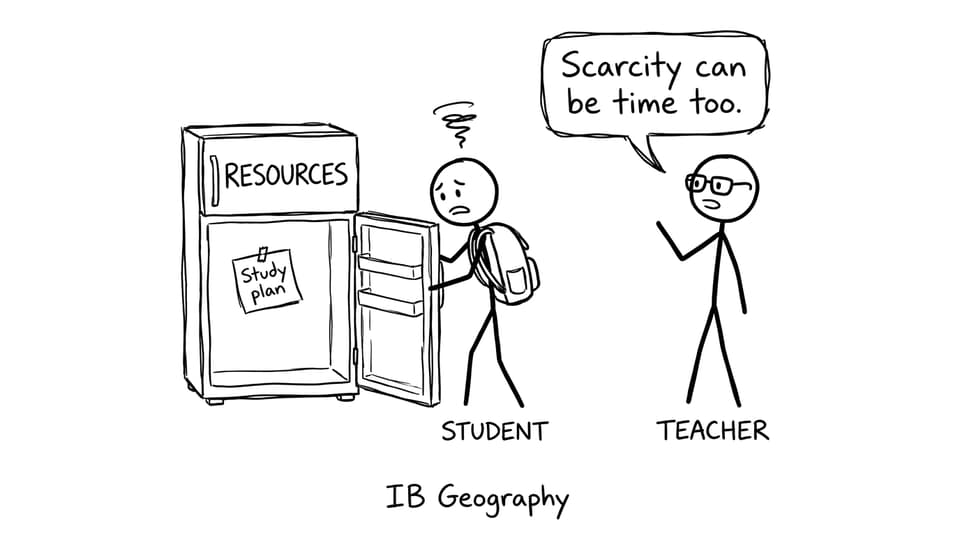
Quick exam checklist (use this for any 10-marker)
In IB Geography, your best answers usually follow a clear chain:
-
Define resource scarcity (physical vs economic/political)
-
Link scarcity to sustainable development (social, economic, environmental)
-
Use the WFE nexus to show interdependence
-
Add a risk angle (inequality, conflict, instability)
-
Evaluate responses (stewardship, governance, technology, demand management)
If you want a structured syllabus map before revising, start with IB Geography Resources and the unit overview for Global Resource Consumption and Security.
How resource scarcity blocks sustainable development in IB Geography
Water scarcity turns development goals into trade-offs
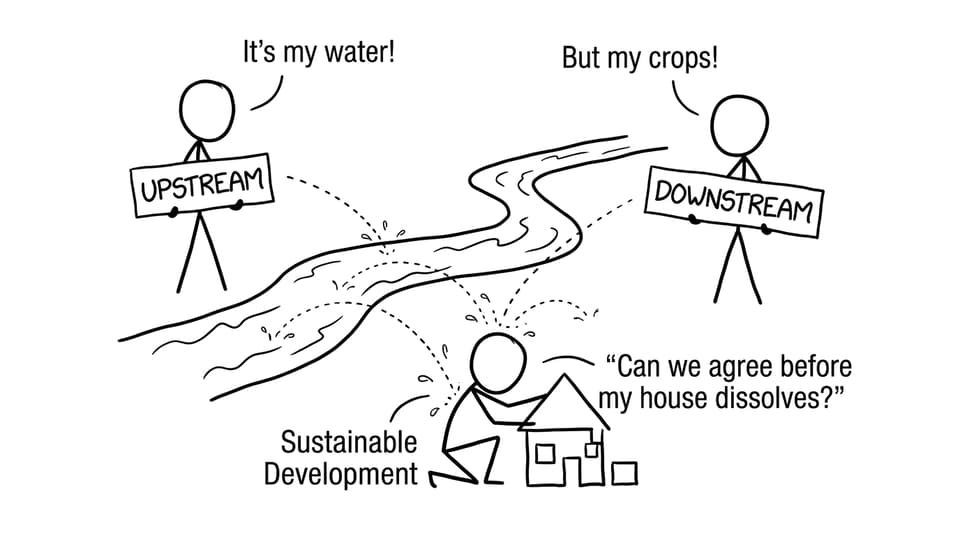
Water scarcity limits drinking water and sanitation, but it also quietly reduces agricultural yields and energy generation. That means health outcomes worsen and economies slow. In IB Geography, this is where you can separate strong answers from average ones: show how one shortage multiplies into many.
To tighten definitions and causes, revise Physical and Economic Water Scarcity Notes.
The Water-Food-Energy nexus magnifies scarcity
Scarcity rarely stays in one box. Less water can reduce food supply; higher energy costs can raise food prices; biofuels can compete with cropland. This is exactly why IB Geography emphasises the nexus: it explains why single-sector “solutions” can backfire.
Build your examples using What Is the Water-Food-Energy Nexus? and practise exam phrasing with Topic 3.2 Questionbank.
Energy scarcity deepens inequality and environmental damage
Reliable energy supports industry, hospitals, schools, and infrastructure. When energy is scarce or expensive, growth slows and inequality widens. Some communities fall back on biomass and informal fuels, accelerating deforestation and indoor air pollution, a development setback that also harms ecosystems.
Food scarcity undermines human development
Food insecurity increases malnutrition and reduces productivity, trapping households and regions in vulnerability. In IB Geography, connect this to population growth, climate stress, and changing consumption patterns. For a clean “drivers of demand” paragraph, see Why Is Global Resource Consumption Increasing?.
Scarcity increases instability, which scares away investment
Competition over scarce resources can intensify tensions within and between states, especially in shared basins and border regions. Instability discourages investment, disrupts trade, and weakens governance, all of which makes sustainable development harder to plan and finance.
Where RevisionDojo fits into your exam prep
The trick in IB Geography is not just knowing ideas, but writing them under time pressure. RevisionDojo helps you do that with:
-
Questionbank practice for resource security and the nexus
-
Study Notes for accurate definitions and evaluation points
-
Flashcards for fast recall (Geography Flashcards)
-
AI Chat to test chains of reasoning and case-study deployment
-
Grading tools to sharpen PEEL structure and command-term focus
-
Predicted Papers and Mock Exams for realistic timing practice
-
Coursework Library and Tutors when you need targeted help
If you’re building flexible examples, use this as a base: Comprehensive Guide to Geography Case Studies for IB Exams.
Conclusion: turn scarcity into a clear exam argument
Resource scarcity threatens sustainable development because it forces impossible choices between health, growth, and environmental protection, and then punishes countries that choose poorly by shrinking future options. In IB Geography, the highest-scoring responses show the chain reaction: scarcity hits water, food, and energy together, deepens inequality, and can destabilise governance.
If you want to turn that chain reaction into marks, revise the notes, then practise timed responses in RevisionDojo’s Questionbank, lock in key terms with Flashcards, and finish with a Mock Exam or Predicted Papers to make your writing calm under pressure.