
The moment the atmosphere became your syllabus
There’s a specific kind of panic an IB Geography student knows: you open a question on climate change and realize it’s not asking for a list. It’s asking for a chain of cause and effect. Not “what,” but “how.”
Human activities contribute to climate change by increasing greenhouse gas concentrations, strengthening the greenhouse effect, and shifting Earth’s energy balance. Natural factors matter over long timescales, but the rapid warming since the Industrial Revolution is best explained by what people do at scale: energy, land use, food systems, and the way we build cities.
A quick IB Geography checklist (exam-ready)
Use this quick structure in IB Geography essays and 6-mark responses:
-
Name the activity (e.g., burning fossil fuels)
-
Name the gas (CO2, CH4, N2O)
-
Explain the mechanism (enhanced greenhouse effect)
-
Link to development (HICs, MICs, consumption)
-
Add one evaluative point (responsibility, justice, uncertainty)
For topic-aligned practice, see IB Geography 2 Global Climate - Vulnerability and Resilience.
Burning fossil fuels: the biggest lever humans pull
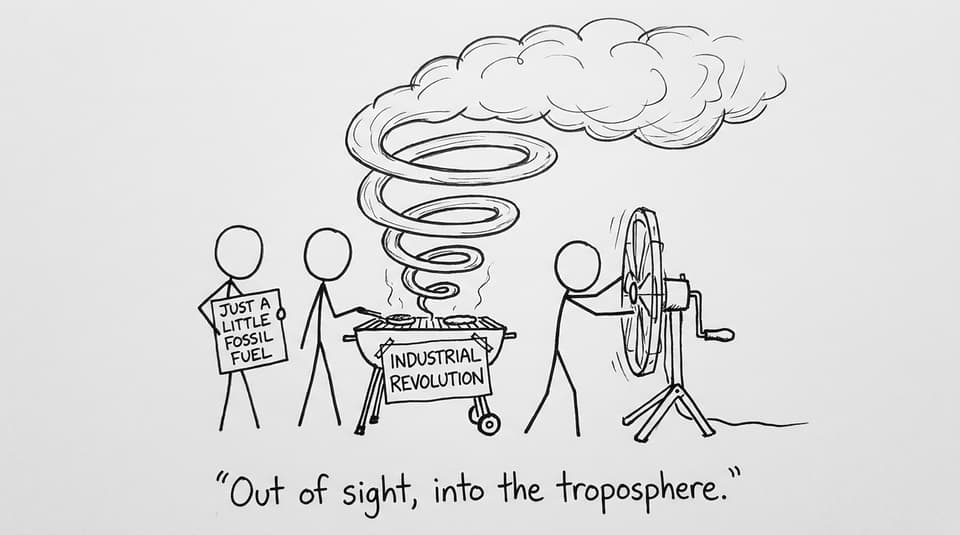
In IB Geography, the core story is simple: coal, oil, and natural gas power electricity generation, transport, and industry. When burned, they emit carbon dioxide (CO2). CO2 absorbs outgoing longwave radiation, trapping heat and enhancing the natural greenhouse effect.
What makes this exam-friendly is the clarity of the causal chain: more energy demand and industrial output leads to more combustion, which leads to more CO2, which strengthens warming.
To drill the markscheme language, use 2.1 Causes of global climate change Questionbank and the broader IB Geography Resources.
Deforestation: emissions plus a weaker carbon sink
Deforestation contributes to climate change in two connected ways, and IB Geography examiners love that you can show both.
First, clearing forests (often by burning) releases stored carbon as CO2. Second, fewer trees means less future CO2 uptake via photosynthesis. So the atmosphere gets a pulse of emissions now, and loses a key carbon sink for later.
Tropical rainforests matter especially because they store large amounts of carbon in biomass and soils. When land is converted for agriculture, logging, or settlement, that storage is disrupted.
For impacts and adaptation links, pair causes with C.4.4 Climate Change Impacts and Adaptation and the supporting C.4.4 notes.
Agriculture: powerful gases in everyday systems
Agriculture is an underestimated contributor in IB Geography because it’s not just CO2.
-
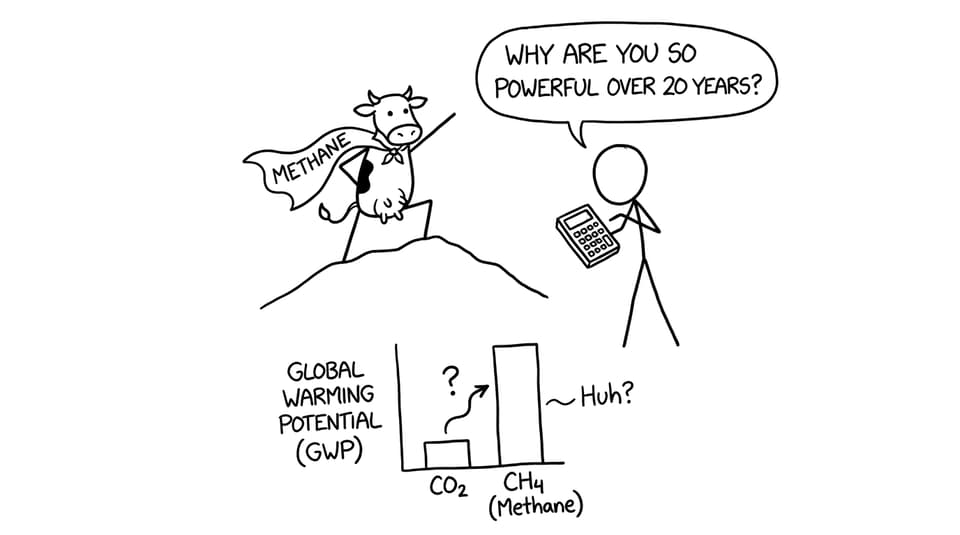
Livestock (especially ruminants) produce methane (CH4) through enteric fermentation.
-
Rice paddies can emit methane due to anaerobic conditions.
-
Fertilisers and manure management release nitrous oxide (N2O), a potent greenhouse gas.
The exam skill is to link agriculture to rising global food demand and changing diets, then evaluate trade-offs: food security vs emissions reduction.
Industry and urbanisation: cement, energy use, and heat islands
Industrial processes add emissions beyond fuel use. Cement production releases CO2 through chemical reactions as well as energy consumption. Meanwhile, urbanisation concentrates energy demand: transport networks, heating/cooling, construction, and consumption.
Cities also create urban heat islands, raising local temperatures. Heat islands don’t “cause” global climate change on their own, but they are an important IB Geography link between built environments and climate-related vulnerability.
If you want to connect causes to consequences and evaluation, use IB Geography 2.2 Consequences of Global Climate Change and the companion 2.2 Learn page.
Who is responsible? The development lens you need
A strong IB Geography response doesn’t stop at processes. It adds context.
Historically, many high-income countries produced a large share of cumulative emissions during early industrialisation. Today, rapidly industrialising middle-income countries contribute large annual totals, often tied to manufacturing and urban growth. That gap fuels debates about climate justice, finance, and differentiated responsibilities.
To extend this into governance and shared risk, read Why is international cooperation essential for global resilience?.
Conclusion: turn causes into marks (and minutes into progress)
Human activities contribute to climate change through fossil fuel combustion, deforestation, agriculture, and industrial-urban systems that increase greenhouse gas concentrations and intensify the greenhouse effect. In IB Geography, your advantage comes from explaining mechanisms clearly, then evaluating them through development and responsibility.
When you’re ready to turn understanding into exam performance, RevisionDojo is built for it: targeted Questionbank practice, concise Study Notes, rapid Flashcards, AI Chat for tricky chains of reasoning, Grading tools for essays, plus Predicted Papers, Mock Exams, a Coursework Library, and Tutors for 1-to-1 clarity. Start with the IB Geography Topic 2 Questionbank and make IB Geography feel predictable again.