



If you have ever stared at your subject choices and thought, “I can do one more science… as long as it’s SL,” you are in very normal IB territory.
Because in IB Sciences, the hardest part often is not the content. It is the structure: what the diploma allows, what universities expect, and what your own week can realistically hold when TOK reflections and IA deadlines start piling up.
The good news is simple: you can mix Standard Level and Higher Level within Group 4. The better news is that with the right pairing, you can make IB Sciences feel strategic instead of suffocating.

Quick checklist: the rules you must satisfy
Before you debate Biology HL vs Chemistry SL, lock in the non-negotiables:
-
You take 6 subjects total.
-
You need at least 3 HL and at least 3 SL to earn the diploma.
-
You must take at least one Group 4 subject (one of the IB Sciences).
-
You can substitute Group 6 (the Arts) with an additional subject from Groups 1-4, depending on your school.
-
Your school timetable can still limit what is possible, even if the IB rules allow it.
When you are unsure how Group 4 fits into the full IB structure, it helps to zoom out using the IB subject group overview.
What counts as Group 4 in IB Sciences?
Group 4 is the experimental sciences group. Schools vary slightly, but common Group 4 options include:
-
Biology
-
Chemistry
-
Physics
-
Computer Science
-
Design Technology
-
Environmental Systems and Societies (ESS)
-
Sports, Exercise and Health Science (in some schools)
If you want a clean summary of what each subject involves, start with What Subjects Are in Group 4? A Guide to the IB Sciences. It is the simplest way to compare workload and focus areas without relying on rumors.
Can you mix SL and HL within IB Sciences (Group 4)?
Yes. You can take one science at HL and another at SL, or even take two sciences at different levels. There is no rule that says your Group 4 subjects must match levels.
Examples that are completely allowed:
-
Biology HL + Chemistry SL
-
Physics HL + ESS SL
-
Chemistry HL + Computer Science SL
The diploma requirement is about your total number of HL and SL subjects, not about forcing Group 4 to be “all HL” or “all SL.”
The real constraint: time, not permission
In practice, mixing levels in IB Sciences is less about what is allowed and more about what you can sustain.
HL sciences usually demand more depth, more unfamiliar problem-solving, and more stamina during revision. If you want a reality check on weekly workload, use What Is the Best Study Schedule for IB Group 4 Sciences alongside How Long Should You Spend Studying Each IB Science Subject.
A useful way to think about it:
-
Choose one “anchor” science you can imagine revising even when tired.
-
Add a second science only if it directly supports your university path or your strengths.
-
Decide SL vs HL based on the cost in hours, not the ego boost.
Best IB Sciences combinations (HL + SL) by goal
Your best combination depends on what you want your sciences to signal.
IB Sciences combinations for medicine and life sciences
If you are aiming for medicine, biomedical science, or related fields, you usually want at least one “core” lab science at HL.
Strong pairings:
-
Biology HL + Chemistry SL (balanced life-science signal with manageable load)
-
Chemistry HL + Biology SL (often stronger for chem-heavy programs)
-
Biology HL + ESS SL (works when a program is flexible and you want breadth)
To plan Biology HL revision early, build a habit around a consistent hub like IB Biology Resources so your notes, flashcards, and practice stay aligned.
IB Sciences combinations for engineering and physics-heavy degrees
Engineering and physical sciences tend to reward Physics HL, often alongside strong math.
Strong pairings:
-
Physics HL + Chemistry SL (classic engineering combo)
-
Physics HL + Computer Science SL (good for CS-adjacent engineering or tech)
-
Physics HL + Biology SL (balanced, but less direct for engineering)
For Physics, it helps to start with a single topic and prove you can revise it well. Try IB Physics A.1 Kinematics Notes as a baseline, then scale.
IB Sciences combinations for environmental and interdisciplinary paths
ESS is the wildcard students overlook until they realize it can simplify their schedule.
Good options:
-
ESS SL + another science at HL (keeps an interdisciplinary lens while still showing depth)
-
ESS SL as your only Group 4 (common for non-science university paths)
If you are considering ESS, check IB Environmental systems and societies Resources to see the topic spread and whether it fits how you like to study.
ESS rules (the part students get wrong)
ESS is different in three important ways:
-
It is only offered at SL.
-
It can count as Group 3 or Group 4 depending on how your school registers it.
-
It blends science with individuals-and-societies style evaluation.
That means ESS can be a strategic choice if you want to keep IB Sciences present in your diploma without committing to two lab-heavy courses.
If you want to preview the style, Old Topic Foundations of ESS Revision Notes (SL/HL) shows the systems-thinking approach students either love or hate.
University expectations: what matters most
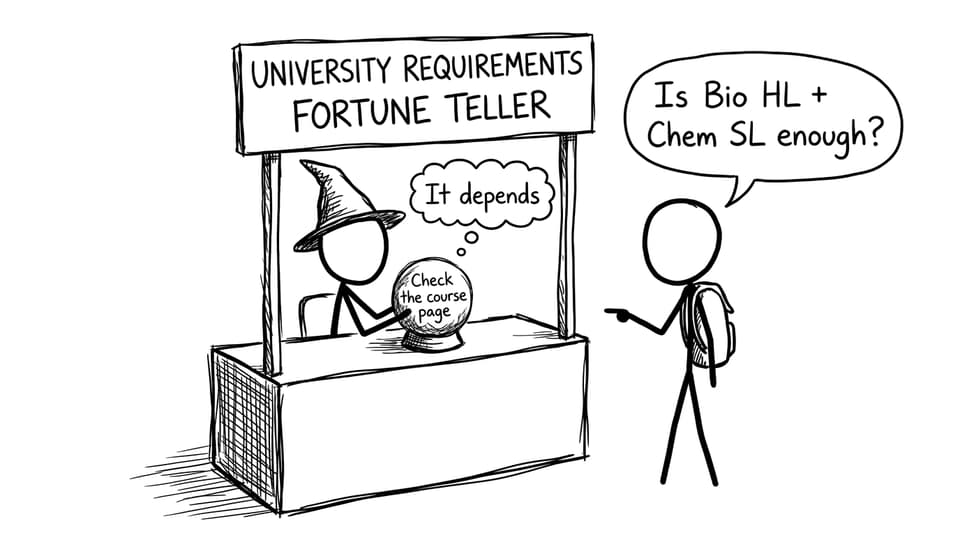
University requirements vary by country and program, so always check the specific course page. But patterns are common:
-
Many medical pathways prefer or require Chemistry HL, and sometimes Biology.
-
Engineering commonly expects Physics HL and strong math.
-
Environmental programs may accept ESS or Biology, depending on focus.
-
Business, law, and liberal arts rarely require an HL science, but a well-chosen SL science can still strengthen your profile.
Exam prep strategy when you mix IB Sciences levels
Mixing HL and SL is not only a timetable decision. It is a revision decision.
Here is a simple approach that works:
-
Use HL time for depth and difficult questions.
-
Use SL time for coverage and consistency.
-
Practice both with exam-style prompts early, not just at the end.
RevisionDojo is built for this kind of split. You can revise your IB Sciences with Study Notes and Flashcards for daily momentum, then switch into heavier exam-mode practice with:
-
Questionbank for targeted practice and feedback loops
-
Mock Exams to rehearse timing and stamina
-
Predicted Papers to stress-test coverage and confidence
-
AI Chat to clarify misunderstandings fast
-
Grading tools for written answers and lab-style explanations
-
Coursework Library for examples and structure
-
Tutors when you need a human to spot the pattern you keep missing
If you like “learn one concept, then immediately test it,” try a topic-specific bank such as IB Biology Cell Biology Questionbank.
Closing: choose IB Sciences like a strategist
Mixing SL and HL in Group 4 is not a loophole. It is one of the IB’s most useful design features.
When you choose IB Sciences thoughtfully, you protect your time, signal your strengths, and walk into exams with a plan you can actually execute. Start by confirming your school’s timetable constraints, checking university requirements, and then building a revision routine that matches your levels.
If you want to make the mix work in real life, not just on paper, use RevisionDojo to keep everything in one place: Questionbank practice, Study Notes, Flashcards, AI Chat, Grading tools, Predicted Papers, Mock Exams, Coursework Library, and Tutors when you want fast clarity. Your subject combination is the decision. Your daily system is the difference-maker.
IB Sciences will still be challenging. But it does not have to be chaotic.