
When an IB predicted grade feels like a door closing
The first time it happens, it can feel strangely personal.
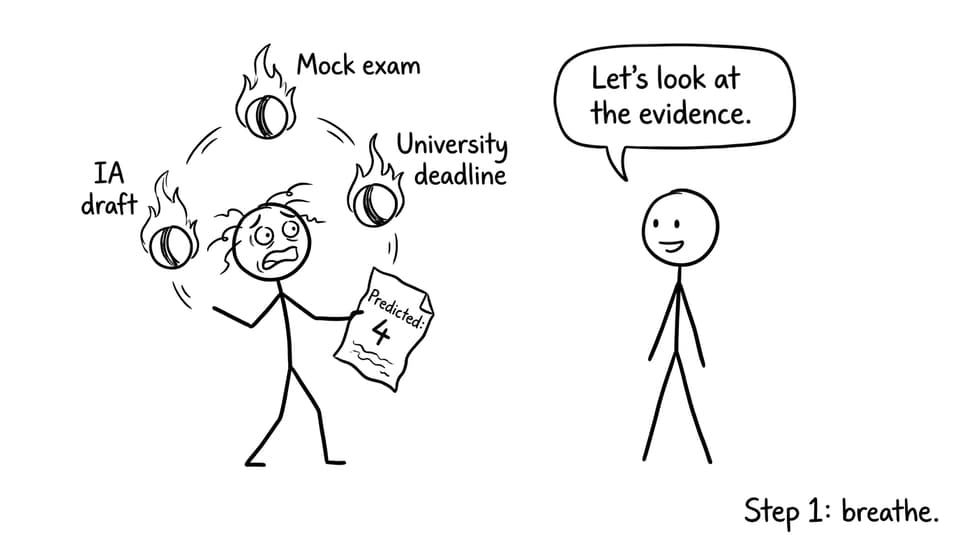
You open the message, scan the numbers, and your stomach does the quiet math before you do: This is lower than what I’ve been working toward. In the IB, predicted grades aren’t your final results, but they often shape university offers, scholarships, and how adults talk about your future. So when your IB teacher under predicted your grades, it’s normal to feel angry, embarrassed, or panicked.
Then comes the part most students miss: the fastest way to get a fair outcome is to treat this like a professional problem, not an emotional one. In the IB, evidence travels further than intensity.
A quick IB checklist before you do anything else
Use this short checklist to get control of the situation quickly:
-
Write down your current IB predicted grade for each subject (and core, if your school predicts TOK/EE).
-
Ask: What evidence was used? (mocks, timed tasks, tests, IA drafts, participation trends)
-
Identify whether this is one subject or a pattern across your IB timetable.
-
Find the deadline: when does your school finalize and submit IB predicted grades?
-
Decide your goal: raise the prediction, strengthen your application strategy, or both.
If you want a reality check on how your current marks convert to an estimated diploma total, use the IB Grade Calculator.
Understanding predicted grades in the IB (and why teachers go conservative)
In the IB Diploma Programme, predicted grades are teacher estimates of the final 1-7 grade a student is likely to achieve, usually submitted during DP2. Universities use them for admissions decisions and conditional offers, which is why schools treat them carefully.
Teachers typically build a predicted grade from multiple data points: mock exams, timed writing, topic tests, your Internal Assessment (IA) progress, and trends over time. There is no single global formula, and professional judgment plays a real role. That judgment can skew conservative when your recent evidence looks inconsistent, when exam technique is shaky, or when a department has been “burned” before by overpredicting.
If you want to understand the mechanics more clearly, read How Are IB Predicted Grades Calculated? and keep it open when you prepare your case.
What counts as being under predicted in IB?
Being under predicted in IB doesn’t mean “I feel like a 7 student.” It means the prediction conflicts with strong, recent evidence.
Examples:
-
Your timed mock scores sit securely in a 6 range, but you were predicted a 4.
-
Your IA drafts are consistently strong (against the rubric), but the prediction ignores them.
-
Your trajectory is upward, but the prediction is anchored to older, weaker results.
The key word is evidence. In the IB, fairness is usually a paperwork problem.
How to talk to your IB teacher (without making it worse)
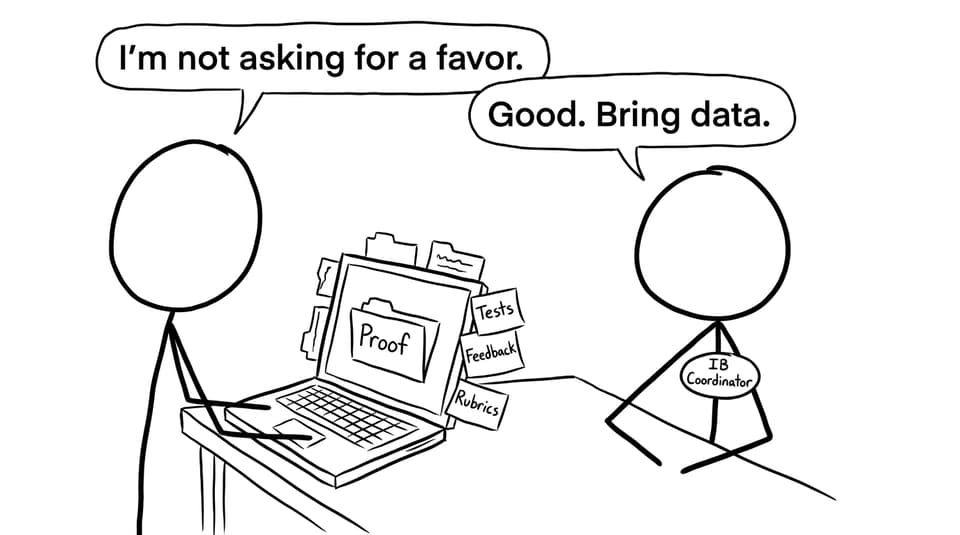
Your goal is not to “win.” Your goal is to make it easy for your teacher to justify a higher IB predicted grade with visible, recent proof.
Gather the right evidence
Bring a short, clean bundle:
-
Mock exam mark breakdowns (by paper, not just total)
-
Recent timed assessments
-
IA feedback and rubric-based scores (even approximate)
-
A trend line: how your results changed over time
-
Any missing-mark issues (absences, unrecorded grades, clerical mistakes)
To translate practice marks into likely grade bands, check How to Calculate My Predicted Grade in IB?. It helps you speak the language your IB teachers already use.
Ask for the method, then ask for the gap
In the meeting, try this structure:
-
“Could you walk me through the evidence used for my IB predicted grade?”
-
“Which assessment(s) pulled it down most?”
-
“What would you need to see, specifically, to reconsider it before the deadline?”
That last question is quietly powerful. It turns the conversation from disagreement into conditions.
If you need a formal review (and how to keep it professional)
If the informal conversation doesn’t change anything, move to process.
Check your school’s policy
Schools often have an internal appeal or review route for IB predicted grades. Your IB coordinator or counselor can tell you what’s allowed and what’s realistic. Some schools permit department-level moderation; others allow a second marker or a review meeting.
Write a calm, structured appeal
Keep it short:
-
State the current IB predicted grade and why you believe it is misaligned
-
List your best evidence in bullet form (with dates)
-
Ask for a review, not a guarantee
-
Include the deadline pressure clearly
Can IB predicted grades be changed after submission?
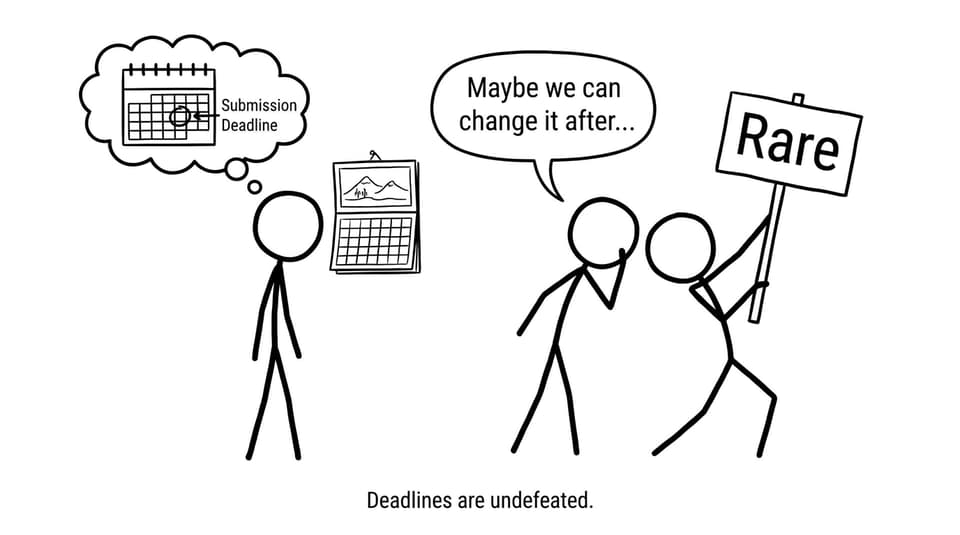
Sometimes, but rarely.
Schools can adjust IB predicted grades before final submission deadlines. After submission, changes usually require exceptional circumstances, such as a clear clerical error or missing data. Students also typically cannot appeal directly to the IB for predicted grades; predicted grades are a school-submitted estimate, not an externally moderated result.
So if your IB predicted grade is genuinely wrong, time matters more than the perfect argument.
Protect your final IB outcome: build new evidence fast
Here’s the uncomfortable truth: even a fair appeal may not move the number. The most reliable path is to create new, undeniable proof.
This is where RevisionDojo becomes more than a “study site.” It’s an evidence factory for IB students.
-
Use Study Notes to tighten one weak topic quickly.
-
Drill that topic in the free Questionbank until your accuracy stops fluctuating.
-
Convert key content into spaced repetition with IB Cheatsheets and your own Flashcards.
-
Run one timed session weekly using mock-style practice (RevisionDojo’s Mock Exams and Predicted Papers are built for exam realism without relying on copyrighted exam files).
-
Get fast feedback with AI Chat and Grading tools, especially for structured responses and essays.
-
If you need human eyes, use Tutors for targeted correction on the exact paper skills you keep losing marks on.
If you want a simple routine for turning disappointment into progress, read IB Predicted Grades: Interpret Them and Improve Fast and IB Predicted Grades Don’t Define You (Here’s What Does).
Closing: your IB predicted grade is a snapshot, not a verdict
If your IB teacher under predicted your grades, you’re not powerless. But the path forward is rarely a single dramatic conversation. It’s a calm meeting, a clean evidence file, a clear understanding of deadlines, and a decision to produce better proof than anyone can argue with.
That’s exactly what RevisionDojo is built to support: Study Notes that clarify fast, Flashcards that make recall automatic, a Questionbank that trains exam technique, AI Chat and Grading tools that speed up feedback, plus Mock Exams, Predicted Papers, a Coursework Library, and Tutors when you need sharper guidance. In the IB, fairness often follows evidence. Start generating it today.