
If you’ve ever opened a syllabus document and felt your brain quietly try to close the tab for you, you’re not alone. But the IB Computer Science 2025 syllabus changes are the kind you actually want to notice early. They don’t just reshuffle topics -- they reshape what “good preparation” looks like for exams from 2025 onward.
The comforting part: the core spirit of IB Computer Science (algorithms, systems, databases, programming) is still here. The new part: the course now asks you to speak more fluently about modern computing, including machine learning and ethics, while adapting to a streamlined exam structure.
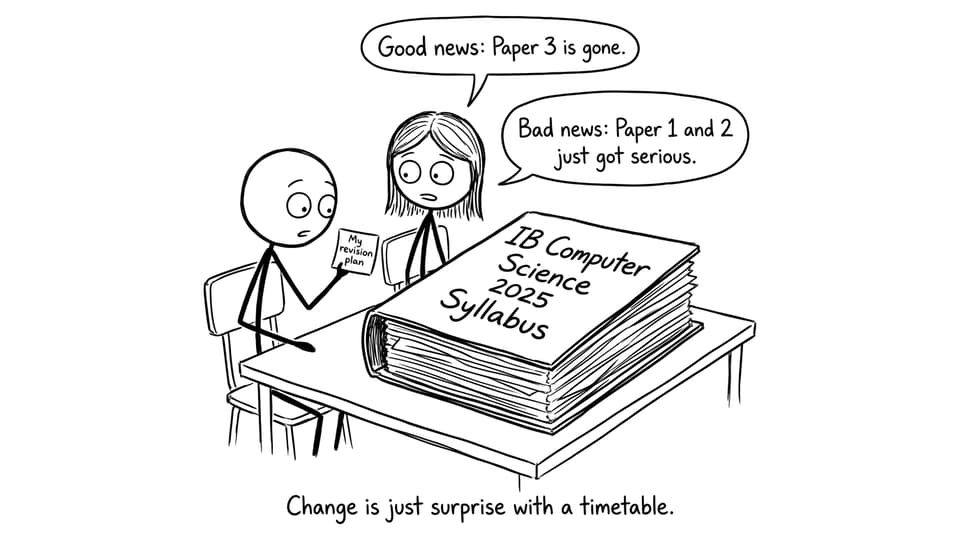
Quick checklist: the 2025 changes you must know
Use this as your fast mental map before you revise IB Computer Science seriously:
-
Paper 3 is removed for HL.
-
Paper 1 now includes a case study component for SL and HL.
-
Paper 2 places more weight on computational thinking and programming in language-specific tracks (Java or Python).
-
Machine learning concepts are added (at an IB-appropriate level).
-
Data ethics, bias, and real-world impacts are emphasized more explicitly.
If you want a central place to orient your revision, start by bookmarking the IB Computer Science hub.
The biggest shift: assessment is leaner, not easier
The removal of Paper 3 sounds like a gift. In practice, it’s more like someone clearing a third plate off the table and then quietly serving more food on the remaining two.
For HL, assessment weight shifts so that Papers 1 and 2 carry more importance, and the IA still matters significantly. For SL, the structure stays familiar, but Paper 1’s case study addition changes how you should prepare.
What this means for IB Computer Science revision: you can’t “compensate later” with a separate paper. You need steady competence across theory, application, and explanation.
A practical way to train that balance is to rotate: Study Notes (clarity) --> Questionbank (pressure) --> review mistakes (patterns). RevisionDojo is designed around that loop with Study Notes, flashcards, and exam-style practice.
Paper 1 case study: new pressure, clearer strategy
Paper 1 now includes a case study element for both SL and HL. That changes the feel of the paper: it’s not only “what do you know?” but also “can you apply it to a scenario, and discuss implications clearly?”
To prepare for IB Computer Science, treat the case study as a reading-and-framing skill:
-
Skim for the system context: users, data, constraints.
-
Identify likely syllabus hooks: networks, databases, security, ethics.
-
Practice writing short, structured paragraphs that use correct terminology.
If you want a bigger-picture sense of how the course is assessed, keep Mastering IB Computer Science Assessments open while you plan.
Paper 2: computational thinking plus your language track
Paper 2 now tests computational thinking and programming more directly, and it does so through language-specific tracks (typically Java or Python). This isn’t about picking the “best” language. It’s about choosing the one you can reason in quickly under time pressure.
That’s the real exam skill in IB Computer Science: turning a vague problem into a clean algorithm, then expressing it with readable logic.
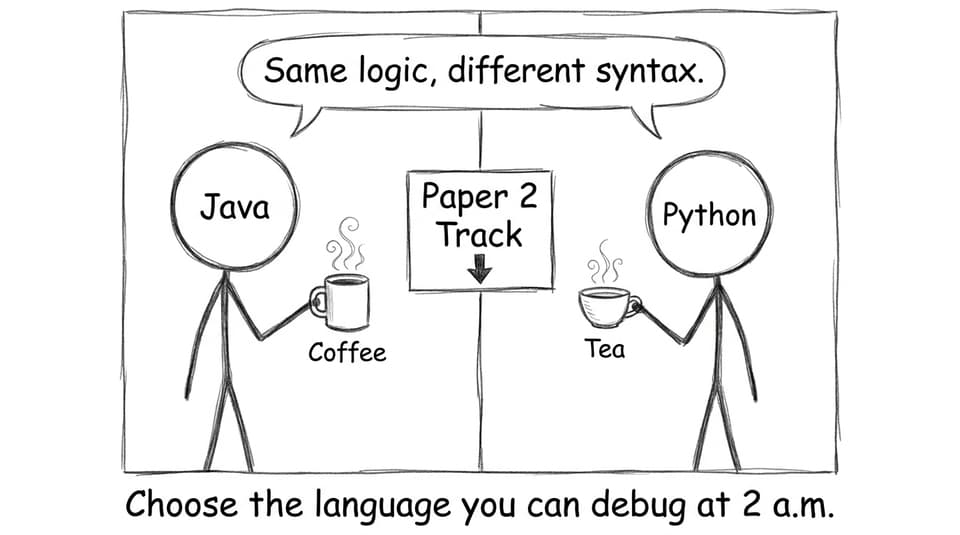
To sharpen Paper 2 performance, build a tiny daily routine:
-
10 minutes of handwritten pseudocode.
-
One timed question set from a Questionbank.
-
A quick “why I lost marks” note.
For last-minute structure, How to Pass IB Computer Science in 1 Week is surprisingly useful even if you’re not cramming -- because it forces prioritization.
Machine learning and ethics: the syllabus grows up
The 2025 syllabus introduces machine learning ideas, including training data, bias, and algorithmic decision-making. The key is that IB Computer Science isn’t asking you to build complex models. It’s asking you to explain what they are, how they behave, and why they can fail in human ways.
That’s where ethics comes in: privacy, fairness, accountability, and the social impact of automated decisions.
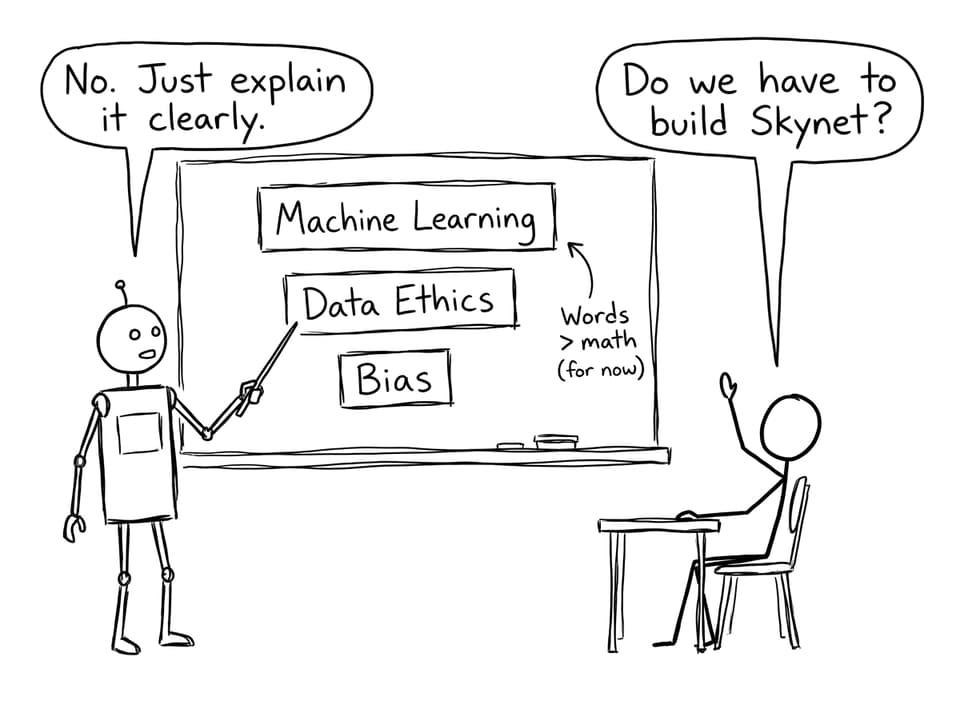
A good test of readiness is: can you explain bias without sounding like you memorized a definition? If not, practice writing examples (hiring, policing, medical triage) using precise terms.
Databases and data management: same tools, higher expectations
Databases remain core to IB Computer Science: ER diagrams, normalization concepts, and SQL reasoning still matter. The shift is in framing: more emphasis on responsible data handling and security-minded thinking.
If you want targeted practice by topic, RevisionDojo’s structured practice is useful for drilling specific gaps, like the Databases Questionbank and other topic sets.
How RevisionDojo helps you revise the 2025 syllabus
The fastest way to feel calm in IB Computer Science is to remove uncertainty: know what’s assessed, practice it in the right format, and get feedback quickly.
RevisionDojo supports that with:
-
Questionbank practice for exam-style repetition
-
Study Notes and Flashcards for fast recall
-
AI Chat to get unstuck when your explanation is fuzzy
-
Grading tools to see what marks actually reward
-
Predicted Papers and Mock Exams for realistic rehearsal
-
Coursework Library and Tutors when your IA needs structure, not panic
Explore the Computer Science Predicted Papers when you’re ready to simulate full exam conditions.
Closing: make the new syllabus work for you
The IB didn’t change IB Computer Science to make it harder for you personally. It changed it because computing changed -- and now your exam answers have to show that you understand both the technical core and the human consequences.
Start early: learn the new assessment shape, practice Paper 1 case study thinking, build Paper 2 algorithm confidence, and treat machine learning and ethics as “explainable concepts,” not scary buzzwords. When you’re ready to revise with structure, head to the IB Computer Science Resources page and build your loop: notes --> questions --> feedback --> timed rehearsal. That’s how RevisionDojo helps you turn syllabus change into exam confidence.
