
If you have ever watched two students revise for the same week and realized they are living in different realities, you already understand the spirit of the IBCP.
One student is deep in textbook theory, chasing clean definitions and perfect command terms. The other is doing that too--but also building something: a project, a portfolio, a practical qualification, a set of professional skills that feel closer to real life than school life. The IBCP exists for that second student, and for anyone who wants academic challenge without pretending the world ends at the exam hall.
The IB Career-related Programme (CP) is an International Baccalaureate pathway for students aged 16--19 that blends academic study with career-focused learning. For IB students preparing for exams, understanding the IBCP is not just about choosing a programme--it is about learning how assessment, workload, and study strategy will actually feel week to week.
Quick checklist: Is the IBCP a good fit?
Use this fast scan before you dive into details. The IBCP is often a strong match if:
-
You learn best by doing, not only by memorizing.
-
You want career-related learning alongside IB academic subjects.
-
You still want the credibility of IB courses (and the discipline they build).
-
You are motivated by projects, portfolios, and real-world contexts.
-
You want options: university, apprenticeships, employment, or entrepreneurship.
If that feels like you, the next step is understanding the structure--because the structure is where your time goes.
What is the IBCP, in one clear definition?
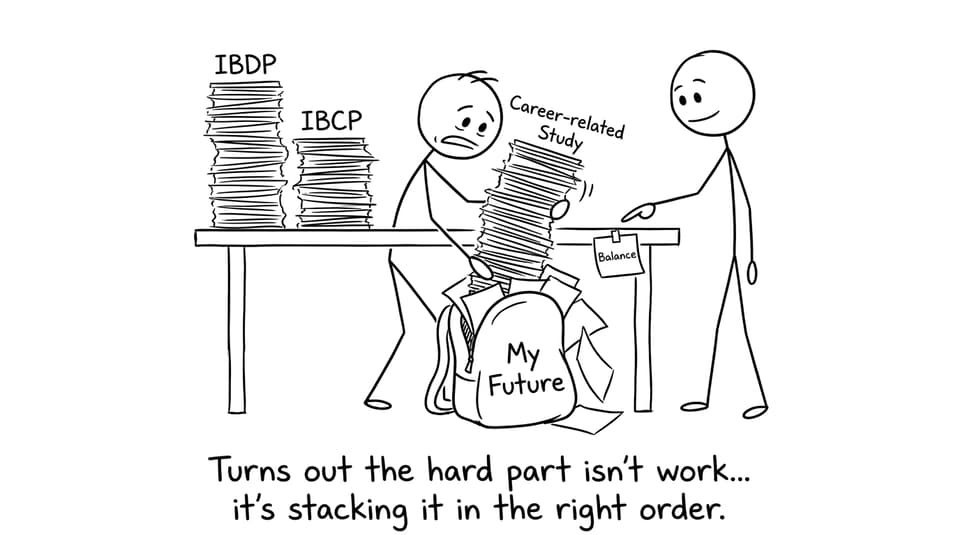
The IBCP (IB Career-related Programme) is a two-year IB programme that combines:
-
At least two IB Diploma Programme (DP) courses
-
A Career-related Study (CRS) (an approved vocational or professional pathway)
-
The CP Core (four components that develop reflection, language, service, and professional skills)
Unlike the full DP, the IBCP is designed to connect learning to a professional direction while preserving the IB emphasis on international-mindedness, ethical thinking, and academic quality.
If you want a companion read that digs into the differences, see IBCP vs IBDP: What’s Different and Which Fits You?.
The IBCP structure (and how it shows up in your calendar)
The cleanest way to picture the IBCP is as three parallel tracks that occasionally collide during deadline season.
DP courses: your academic engine
Every IBCP student takes a minimum of two DP subjects. These are assessed like any other DP course, including internal assessment and external exams (where applicable). In practical terms, this means:
-
You still need syllabus coverage
-
You still need exam technique
-
You still need to write in the style the IB rewards
This is where RevisionDojo is most obviously useful: you can learn content quickly with RevisionDojo’s all-in-one IB platform workflow, then drill exam behavior with the Questionbank and lock recall with Flashcards.
Career-related Study (CRS): the practical spine
The CRS is the part of the IBCP that makes it feel different from traditional academic programmes. Schools choose an approved career-related study route (often through external providers or accredited courses) that aligns with real industry skills.
Common CRS areas include business, IT, design, hospitality, sports, health, and creative fields. The exact provider varies by school, but the purpose stays consistent: you build practical competence and often earn an additional certification.
If you want examples of what schools can offer, read What Career-related Studies Can Schools Offer in the IB Career-related Programme.
The CP Core: what turns “career prep” into IB
The CP Core is where the IBCP becomes more than a vocational add-on. It is four interconnected components that develop transferable skills and reflective depth:
-
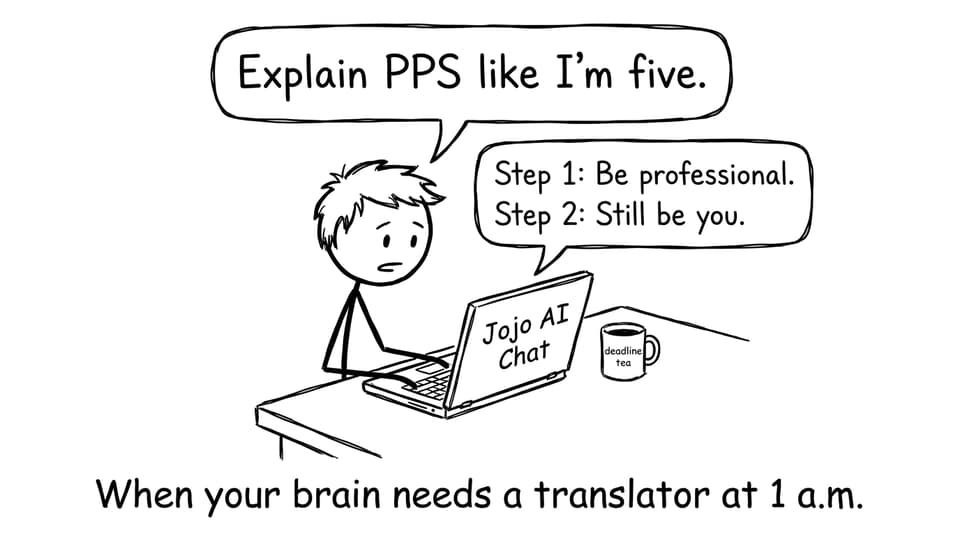
Personal and Professional Skills (PPS)
-
Language Development
-
Community Engagement (service learning)
-
Reflective Project
These are not random extras. They are the glue that connects academic learning to career context, and they are often the reason CP graduates sound unusually mature in interviews.
Why the IBCP matters for exam-focused students
It is easy to assume the IBCP is “less exam-heavy,” and sometimes that is true in feel. But exam preparation still matters because your DP courses are real DP courses.
The difference is psychological: in the IBCP, exams are one part of a broader performance picture. Many students find that practical learning reduces the mental fatigue that comes from living entirely inside abstraction.
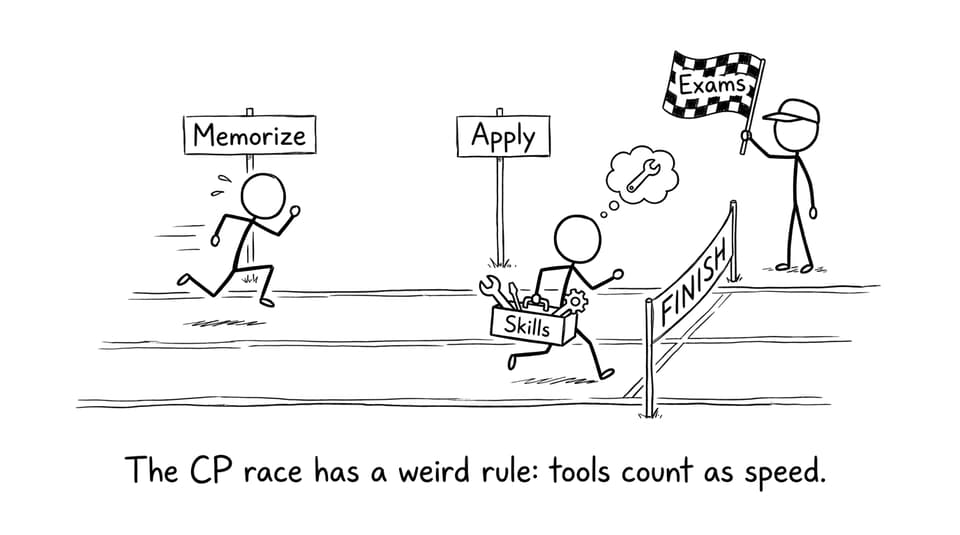
Here is the deeper advantage: applied learning can make studying more efficient. When you understand why a concept matters in a workplace context, you remember it differently. You stop revising to survive. You revise to use.
For a CP-specific view of assessment, keep this bookmarked: Assessment and Grading in the IB Career-related Programme (CP).
IBCP vs traditional vocational pathways
Some students ask a fair question: “Why not just do vocational training?”
The best answer is that the IBCP is designed to be portable. Traditional vocational programmes can be excellent, but they sometimes focus narrowly on job-specific competence. The IBCP adds:
-
academic rigor through DP courses
-
ethical reflection and research through the Reflective Project
-
international-mindedness and language growth
-
a broader skill set that translates across industries
For a detailed comparison, see IB Career-related Programme vs Traditional Vocational Education.
Pathways after the IBCP
The IBCP is intentionally flexible. After finishing, students commonly move into:
-
University (recognition varies by country and institution, so check early)
-
Apprenticeships and professional training programmes
-
Employment in fields connected to the CRS
-
Entrepreneurship for students who used projects to test real ideas
The practical advice: treat recognition like part of your revision plan. Just as you would not “hope” a topic is not on the exam, do not “hope” a university understands your pathway. Ask, confirm, document.
How to study effectively in the IBCP (without burning out)
The workload in the IBCP is not automatically lighter than the DP. It is simply different: more moving parts, more deadlines, and more chances to fall behind quietly.
A study strategy that works for many CP students looks like this:
Use a two-loop system: marks loop + meaning loop
Marks loop (DP courses):
-
Learn one subtopic with Study Notes
-
Practice immediately in a question bank
-
Review mistakes and write a short error log
-
Retest under time
Meaning loop (CRS + Core):
-
Keep evidence of skills (notes, screenshots, reflections, feedback)
-
Turn experiences into reflective writing early, not the night before
-
Map what you are doing to PPS outcomes so it is easier to explain later
When you need a sustainable routine, pair this article with How to Study for IB Exams Without Burning Out and keep your practice grounded with IB Predicted vs Specimen Papers: What They Mean.
Use RevisionDojo like a control center
The best part of an all-in-one platform is not convenience. It is continuity. When your tools connect, you waste less energy switching contexts.
A practical IBCP setup inside RevisionDojo:
-
Study Notes to clarify DP concepts fast
-
Flashcards for daily recall (especially definitions, processes, and command terms)
-
Questionbank to build exam technique by topic
-
AI Chat to get unstuck and improve explanations instead of spiraling
-
Grading tools for rubric-aware feedback on written work
-
Predicted Papers and Mock Exams to practice timing under pressure
-
Coursework Library to reduce uncertainty about what strong work looks like
-
Tutors when you want human coaching and accountability
If you want the high-level system view, read How RevisionDojo's All-in-One Platform Can Simplify Your Study Routine.
The Reflective Project: the most “IB” part of the IBCP
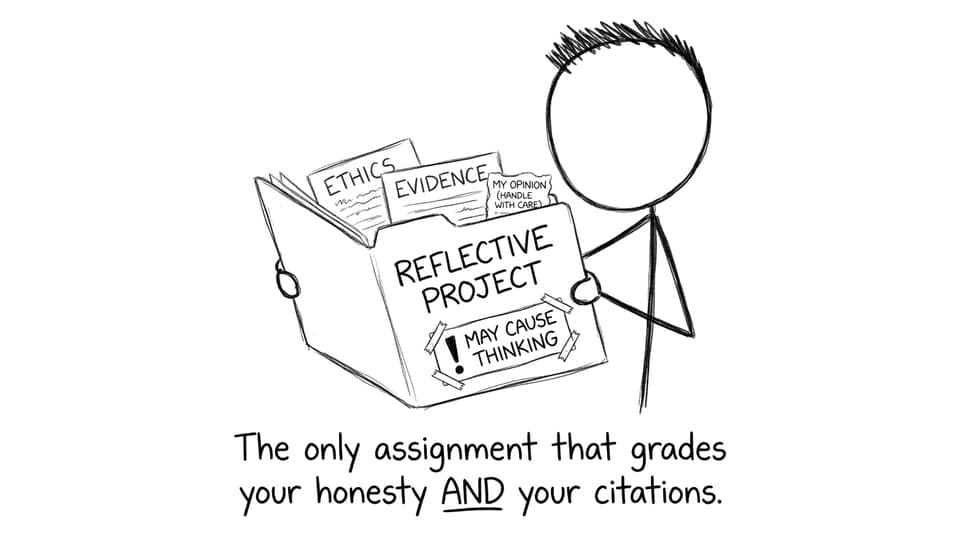
The Reflective Project is a substantial piece of work (often around 3,000 words or equivalent) where you explore an ethical issue linked to your career-related study. Students sometimes underestimate it because it is not a DP subject exam.
But it asks for something exams often cannot measure well: mature thinking over time.
You will typically need:
-
a clearly defined ethical dilemma
-
research and evidence
-
balanced perspectives
-
reasoned conclusions
-
honest reflection that stays academic
If you want a step-by-step guide, read Understanding the IB Career-related Programme Reflective Project.
Conclusion: The IBCP is a pathway, not a compromise
The best way to understand the IBCP is this: it is not a softer version of the IB. It is a different promise.
The promise is that you can be academically serious and still build a life outside the syllabus. You can sit exams and still learn how to work with people, serve a community, think ethically, communicate professionally, and translate classroom knowledge into something useful.
If you are in the IBCP (or considering it), build your study system early. Use RevisionDojo as your home base--Study Notes, Flashcards, Questionbank, AI Chat, Grading tools, Predicted Papers, Mock Exams, Coursework Library, and Tutors--so your effort turns into results instead of stress.
And when you feel torn between “school work” and “real work,” remember: in the IBCP, they are supposed to be the same thing.