Not in a dramatic speech. More like a tired confession between homework tabs, half-finished notes, and the sense that no matter how hard you work, the to-do list keeps growing.
If you’re an IB student preparing for exams, that thought can feel like a door slamming. But it’s often the opposite: it’s your brain asking for a different kind of plan. This guide will help you figure out what’s really happening, what choices you actually have, and how to reset without panic.
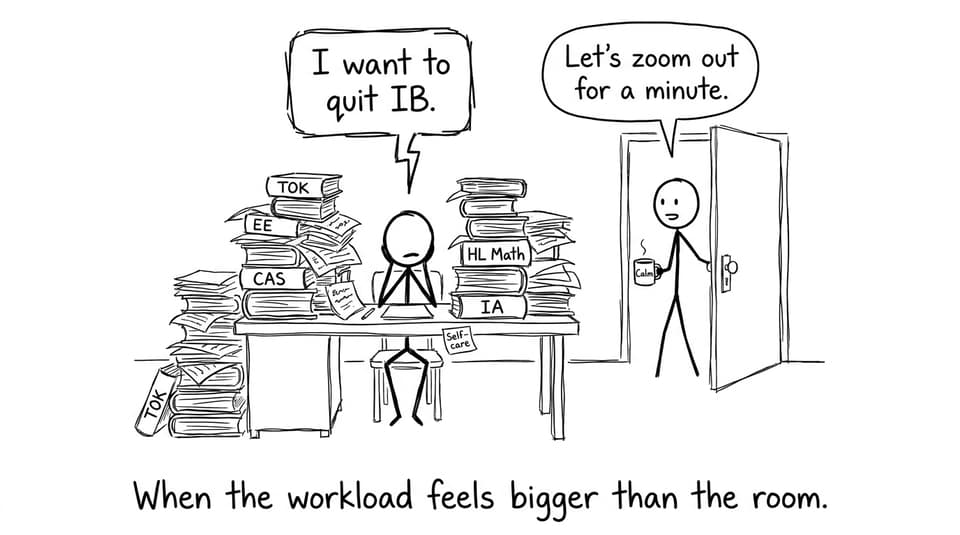
Student buried under IB workload, parent offering calm
A quick IB reality-check (before you decide anything)
When you want to quit IB, it helps to slow the moment down. Use this checklist first:
Name the problem clearly: is it one subject, one teacher, one deadline cycle, or the whole IB structure?
Check your body first: sleep, appetite, headaches, panic, numbness. These are data.
Separate “behind” from “hopeless”: being behind is solvable; hopelessness is usually burnout.
Ask what you need next week (not next year): a smaller workload, different study method, more feedback, or a formal change.
Get outside perspective: talk to your coordinator, teachers, or a tutor before making irreversible moves.
If your revision resources feel scattered, start by consolidating your workflow in one place: RevisionDojo for IB.
Why IB students reach the “I want to quit” point
IB pressure rarely comes from a single source. It’s the stacking effect.
You start with six subjects. Then add deadlines. Then add internal assessments. Then add TOK and the extended essay. Then add comparison: friends in other programs who seem to have evenings again.
At some point, your brain does a simple calculation: “If this is the price of IB, I’m out.”
Common reasons IB students preparing for exams want to quit include:
Workload overload (too many simultaneous deliverables)
Burnout (chronic stress with no real recovery)
A mismatch in goals (IB may not serve your next step as well as you thought)
Anxiety or low mood that makes everything feel heavier
Technique problems (you’re studying hard, but not in a way IB rewards)
That last one matters more than most people realize. Some students don’t need to quit IB. They need a system that converts effort into marks.
Burnout vs. misfit: the IB decision that changes everything
Here’s the dividing line:
Burnout says: “I can’t do this anymore.”
Burnout is usually about capacity. You might still care about IB, but you can’t access your usual focus. Everything takes longer. You reread notes and retain nothing. Timed practice feels terrifying.
If this is you, the best first move is not quitting. It’s reducing friction and rebuilding momentum with proof-based practice.
Misfit is different. You might be functioning fine, but IB doesn’t match your learning style, mental health needs, or future plans. Even when you’re “on track,” you feel wrong inside the track.
In that case, exploring options is not weakness. It’s good planning.
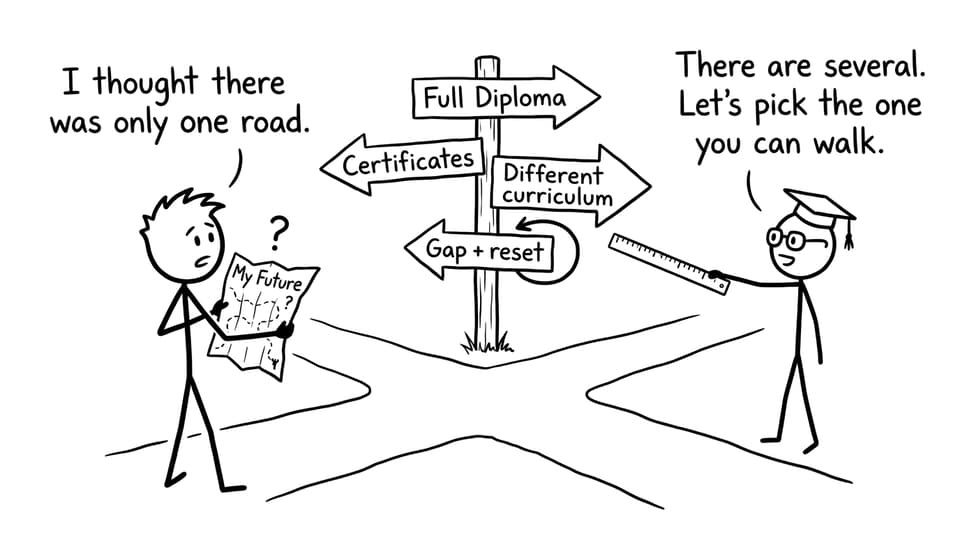
A signpost of pathways: diploma, certificates, different curriculum
If you’re staying in IB: a calmer strategy for exam season
Most students who say they want to quit IB don’t actually want to quit learning. They want the pressure to stop.
Here’s a strategy that makes the pressure smaller:
Build an “evidence loop” (not a motivation speech)
If you’re tempted to quit IB because your grades feel stuck, it helps to measure progress objectively with the IB Grade Calculator. Sometimes you’re closer than your emotions suggest.
If you’re considering leaving IB: choices that aren’t “all or nothing”
Quitting IB isn’t one decision. It’s a menu of decisions.
Depending on your school, you may be able to:
Shift from the full Diploma to certificates
Change subject levels (HL to SL)
Rework your support plan (access arrangements, counseling, tutor support)
Move to a different curriculum pathway
The smartest version of this process is slow and informed. Speak to your IB coordinator and teachers. Get clarity on timelines, university requirements, and what credit you keep.
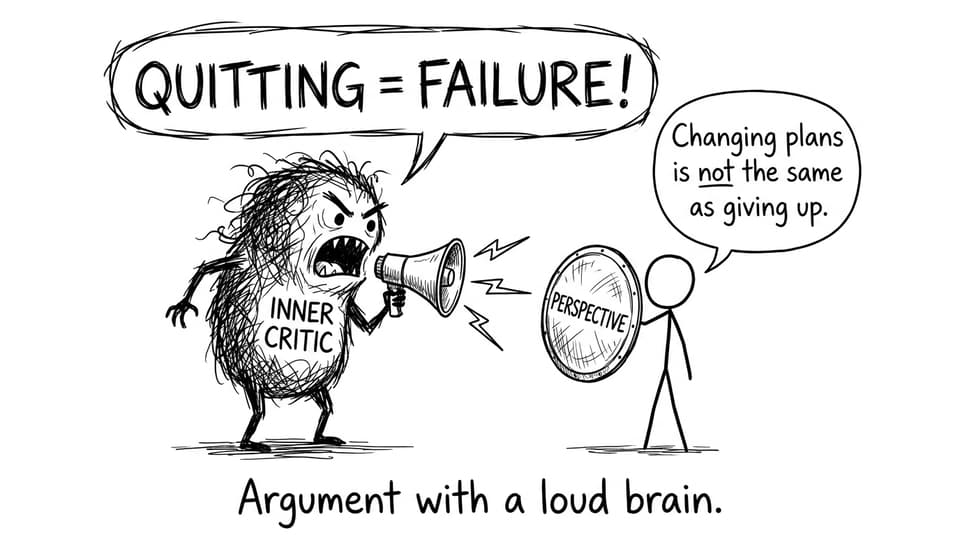
And protect your self-respect while you do it: switching paths is not the same thing as failing.
IB is demanding by design. But when it starts to feel like it’s swallowing your whole life, the right response isn’t shame. It’s strategy.
Whether you stay in IB or change direction, make the next step a thoughtful one: get support, gather evidence, and choose the path that protects your future and your health.
If you are staying and you want the workload to feel lighter without lowering standards, RevisionDojo is built for that moment: Study Notes, Flashcards, Questionbank, AI Chat, Grading tools, Predicted Papers, Mock Exams, a Coursework Library, and Tutors that help you turn stress into a plan. IB gets easier when your effort finally starts showing up as progress.