

In IB Computer Science, databases are supposed to feel boring. You tap “pay,” the screen loads, and your balance updates. No drama.
But behind that calm interface is a high-stakes promise: even if the Wi‑Fi drops, two users click at once, or the server panics, the database won’t quietly corrupt itself. That promise is delivered through transactions and the ACID properties.
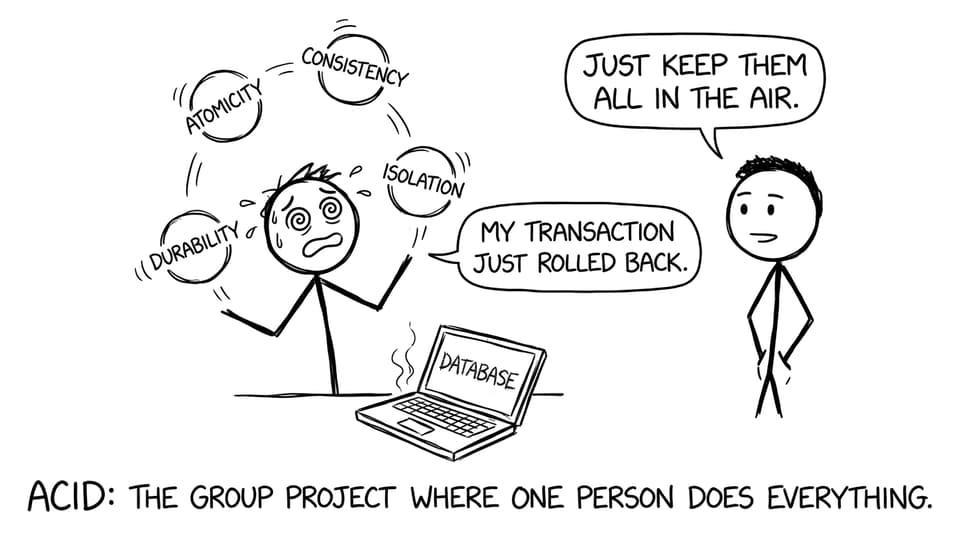
If you’re revising IB Computer Science, ACID is one of those topics where marks come from explaining why each property matters, not just expanding the acronym.
Transaction basics (the examiner-friendly checklist)
A transaction is a sequence of database operations treated as one unit of work.
For full-credit IB Computer Science phrasing, remember:
-
It either commits (all changes saved)
-
Or rolls back (no changes saved)
-
It protects the database from partial updates and invalid states
To ground this in the syllabus, pair this with the A.1.2 Transactions and Data Consistency notes and then test yourself using the A.1 Basic concepts Questionbank.
ACID in IB Computer Science: what each property really means
Atomicity (all-or-nothing)
Atomicity means the transaction is indivisible: every step succeeds, or the whole thing is undone.
A classic IB Computer Science example is a bank transfer:
-
Debit Account A
-
Credit Account B
If the credit step fails, atomicity forces a rollback so Account A is not debited “for nothing.” This is how transactions prevent the dreaded “half-finished” database.
Consistency (rules stay true)
Consistency means a transaction moves the database from one valid state to another valid state.
“Valid” in IB Computer Science is usually about constraints and integrity rules, such as:
-
primary keys remaining unique
-
foreign keys not pointing to missing records
-
validation rules (e.g., grade is 1–7)
Consistency is where you can connect concepts: if you struggle to separate “consistency” from “integrity,” read IB Computer Science: Data Integrity vs Consistency and borrow its contrast sentence style for your exams.
Isolation (safe concurrency)
Isolation means concurrent transactions don’t interfere. Each transaction behaves as if it ran alone, even when many users act at the same time.
In IB Computer Science, isolation is the bridge to concurrency problems like:
-
dirty reads (reading uncommitted data)
-
lost updates (one user overwrites another)
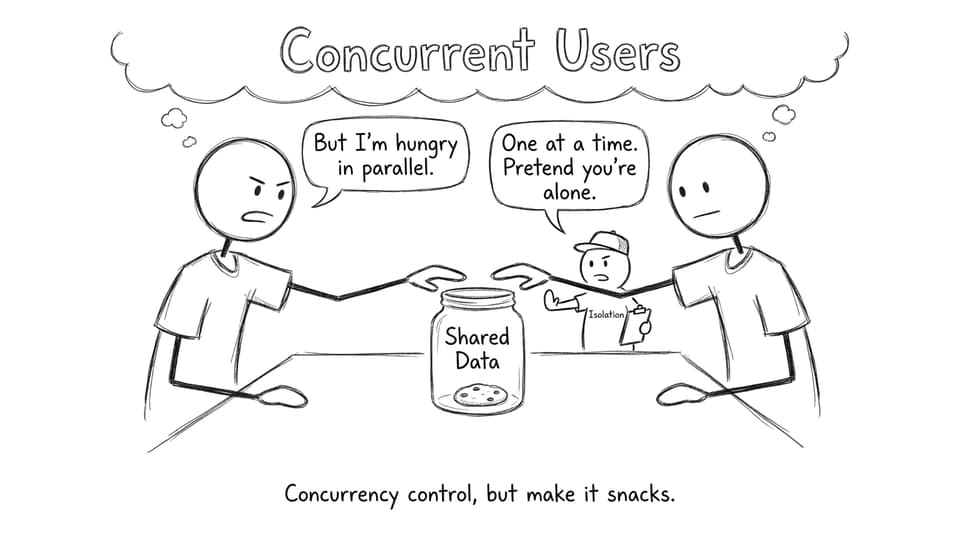
To make this exam-ready, practice with Concurrency Problems: Lost Updates and Dirty Reads and then explain how isolation prevents each issue.
Durability (committed means permanent)
Durability means once a transaction commits, the result is permanent, even if there’s a crash or power failure right after.
Databases achieve durability through mechanisms like:
-
logging
-
backups and recovery systems
-
reliable storage
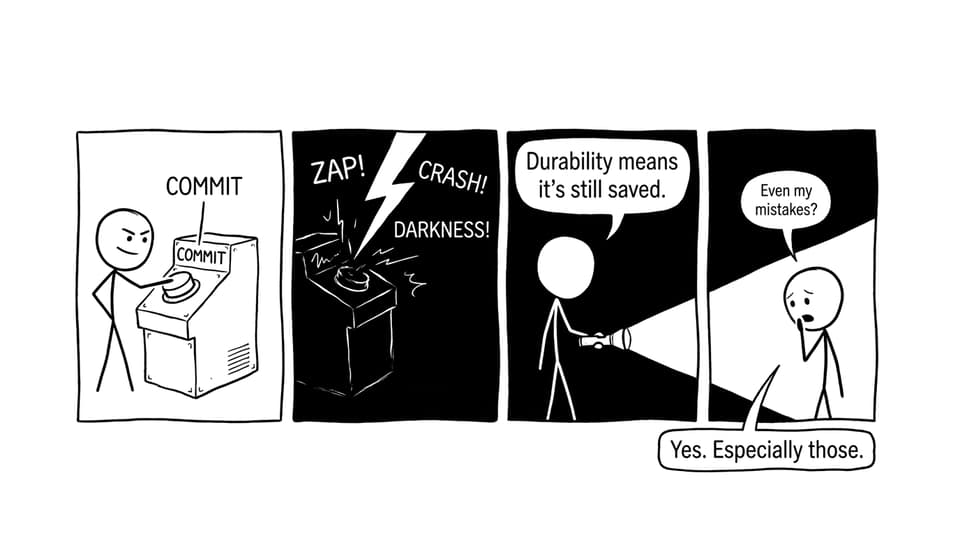
Durability is also a neat place to mention DBMS features in IB Computer Science answers. See A.2.1 DBMS and RDBMS notes for examiner-friendly vocabulary.
How ACID shows up in IB Computer Science exam questions
Examiners often ask you to define, then apply. A strong structure is:
-
Define transaction
-
Name the ACID property
-
Describe the failure it prevents
-
Tie it back to the scenario
For broader revision planning, use The Best Way to Revise Databases for IB Computer Science and keep the IB Computer Science Topic A3: Databases hub open as your “home base.”
Closing: ACID is trust, written in rules
In IB Computer Science, ACID isn’t just a definition set. It’s the logic behind why databases stay trustworthy when real life gets messy. Atomicity stops half-finished work. Consistency keeps rules intact. Isolation protects shared data during concurrency. Durability makes committed changes survive failure.
If you want to lock this in before exams, use RevisionDojo as your workflow: Study Notes for clarity, Questionbank for exam-style repetition, Flashcards for definitions, AI Chat for better phrasing, and Mock Exams to make your timing reliable. That’s how IB Computer Science answers become calm, precise, and high-scoring.