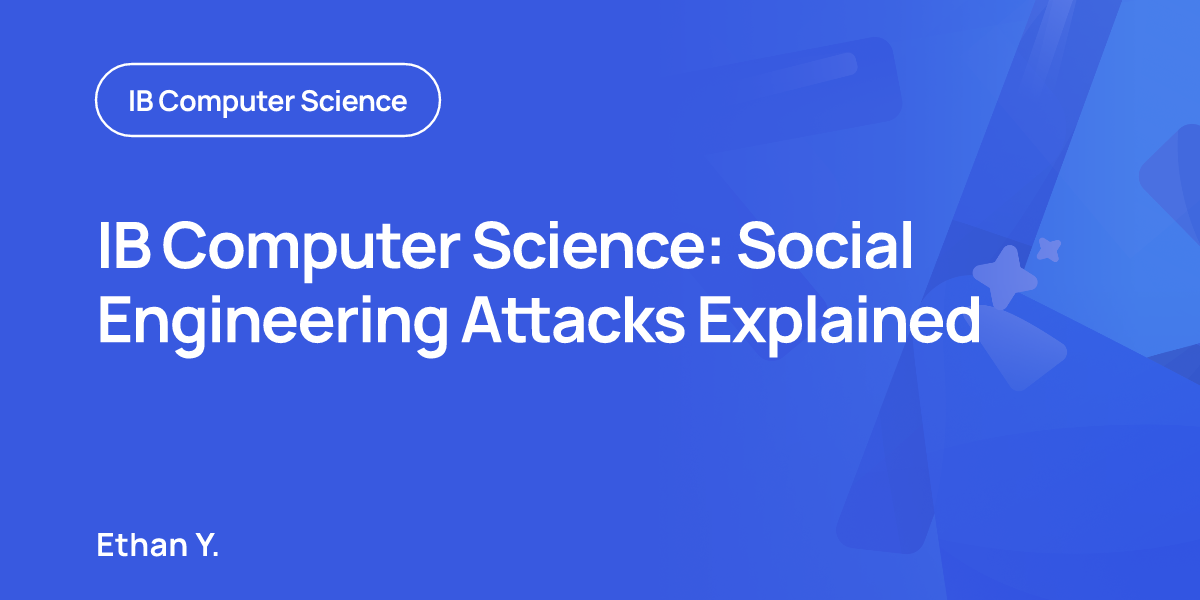



Social engineering rarely looks like a “hack” at first.
It looks like a normal email five minutes before class. A message from “IT Support.” A friendly DM from someone who “just needs a quick favour.” In IB Computer Science, that’s the point: many real breaches happen not because a firewall fails, but because a human brain gets nudged at the wrong moment.
If you can explain social engineering attacks clearly (what they are, why they work, and how to reduce the risk), you’ll be ready for the scenario-style questions that show up across security topics in IB Computer Science.
Quick exam checklist (what to include)
When you see a social engineering scenario in IB Computer Science, hit these points:
-
Define social engineering: manipulation of people to bypass security
-
Name the tactic: phishing, spear phishing, pretexting, baiting, etc.
-
Explain why it works: urgency, authority, curiosity, fear
-
State the impact: credentials stolen, unauthorised access, malware installation
-
Give prevention: verification procedures, awareness training, least privilege, MFA
For extra targeted security practice, start from the IB Computer Science resources hub and then deepen your security coverage via 3.1 Networks Notes.
What social engineering means in IB Computer Science
In IB Computer Science, social engineering is an attack method where the attacker exploits human behaviour instead of exploiting a purely technical vulnerability.
The attacker’s goal is usually to get a user to do at least one of the following:
-
reveal confidential information (like login credentials)
-
click a malicious link or open an attachment
-
install harmful software
-
grant access they shouldn’t grant
A strong IB Computer Science explanation uses the phrase: “bypasses technical controls by manipulating the user.” That one line shows the examiner you understand the core distinction.
Why social engineering attacks work (the psychology examiners want)
Social engineering is effective because security decisions are often made under pressure.
Attackers commonly rely on:
-
Authority: “I’m from the school IT team.”
-
Urgency: “Your account will be locked in 10 minutes.”
-
Fear: “We detected suspicious activity.”
-
Curiosity: “Look what I found about you…”
-
Helpfulness: “Can you quickly approve this request?”
In other words, even if encryption, access control, and network security exist, a rushed human can still open the door. Pair this with your broader security understanding from Network Security Threats IB Computer Science Students Must Know and you can explain both “people attacks” and “system attacks” cleanly.
Common types of social engineering (with exam-ready examples)
Phishing
Phishing uses fake messages that imitate legitimate sources to trick the user into sharing data or logging into a spoofed site.
Exam phrasing to use in IB Computer Science: “The user willingly provides information because the communication appears authentic.”
Spear phishing
Spear phishing is phishing, but targeted. The attacker personalises details (name, school, role, recent activity) to make the message believable.
That targeting detail is often the one mark students forget.
Pretexting
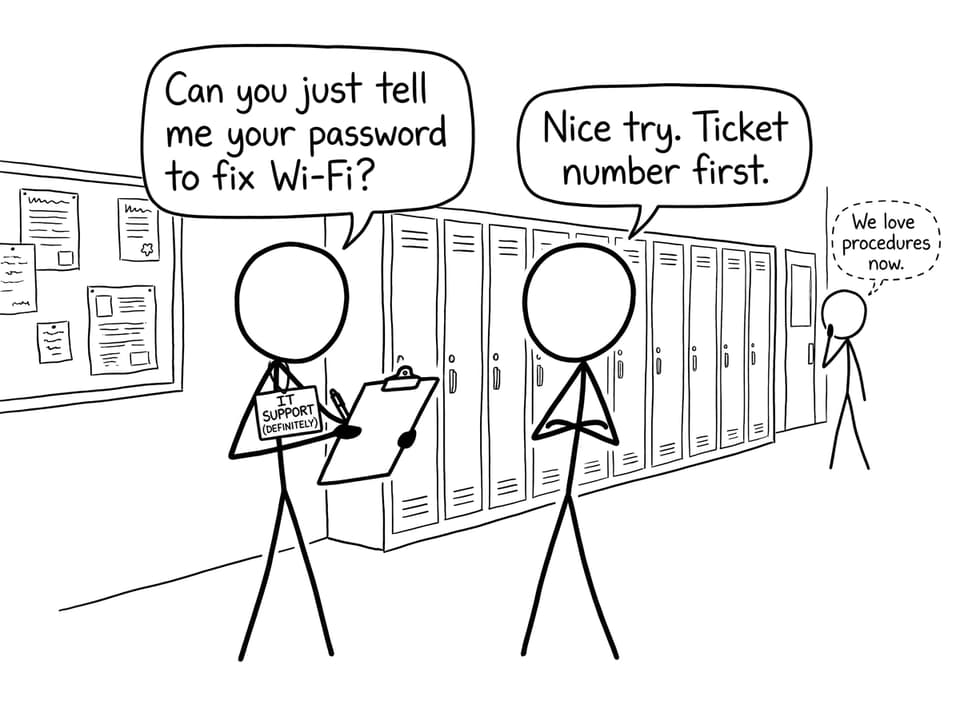
Pretexting is when the attacker invents a believable story (a “pretext”) to obtain information.
Example: pretending to be IT support and asking for a password “to fix the network.”
Baiting
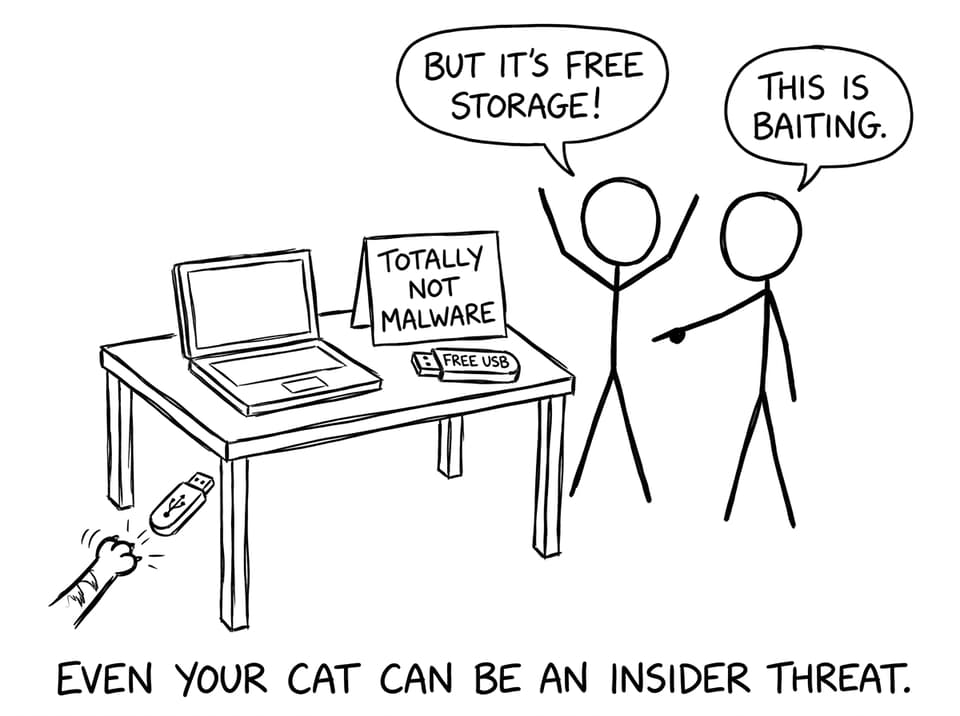
Baiting relies on temptation: “free” downloads, discount links, or even physical items like USB drives.
In IB Computer Science, baiting matters because it shows how user action can trigger a compromise.
If you want to contrast these with software-based threats, read Malware Types Explained: Viruses, Worms, and Trojans and Ransomware Explained and Why It's Dangerous to keep your definitions sharp.
Social engineering vs technical attacks (the clean distinction)
In IB Computer Science terms:
-
Technical attacks exploit weaknesses in software, hardware, or configuration.
-
Social engineering attacks exploit weaknesses in human decision-making.
This is why social engineering can slip past “strong” controls like firewalls or encryption: those controls don’t matter if the attacker convinces a user to hand over access.
To tighten your wording on security language, see Cybersecurity Threats vs Vulnerabilities Explained.
How to prevent social engineering (what gets marks)
Prevention is mostly human-centred, supported by technical policies.
High-scoring IB Computer Science prevention points include:
-
Awareness training: teach users what suspicious messages look like
-
Verification procedures: confirm requests through a separate channel
-
Least privilege: limit what one account can access
-
Authentication improvements: multi-factor authentication reduces damage from stolen passwords
-
Clear reporting culture: encourage reporting without embarrassment
In exam discussions, it also helps to mention risk assessment: social engineering is high-likelihood because humans make mistakes. If you want an exam-structured way to say that, use Risk Assessment Explained for IB Computer Science.
Closing: turn security knowledge into marks
Social engineering attacks are simple in a frustrating way: they work because people are busy, trusting, and human. In IB Computer Science, your job is to explain that clearly, name the technique, and suggest prevention that matches the real weakness being exploited.
To convert that understanding into exam performance, use RevisionDojo as your home base: drill scenario questions in the Questionbank, tighten definitions with Flashcards, pressure-test explanations with AI Chat, and build confidence with Mock Exams and Predicted Papers. Start here: Mastering IB Computer Science Assessments and keep your security revision sharp and calm, thethe way high marks are usually earned.