

There’s a moment most students remember from the IB Career-related Programme: you look at your calendar and realize you’re not just preparing for exams. You’re also building something that looks suspiciously like a real life.
That’s the quiet power of the IBCP. It doesn’t ask you to choose between academic credibility and practical direction. It asks you to carry both at once--and then to reflect on what it means.
For IB students preparing for exams, success stories can sound like inspiration posters. But the best IBCP success stories aren’t motivational. They’re instructional. They reveal patterns: what students prioritized, what they stopped doing, how they used the CP Core to strengthen (not sabotage) exam performance, and how they turned pressure into proof.
In this article, you’ll meet real-style IBCP student journeys across design, tech, business, healthcare, sport, engineering, global development, and music. You’ll also pull out the repeatable habits behind their results--the part you can copy this week.
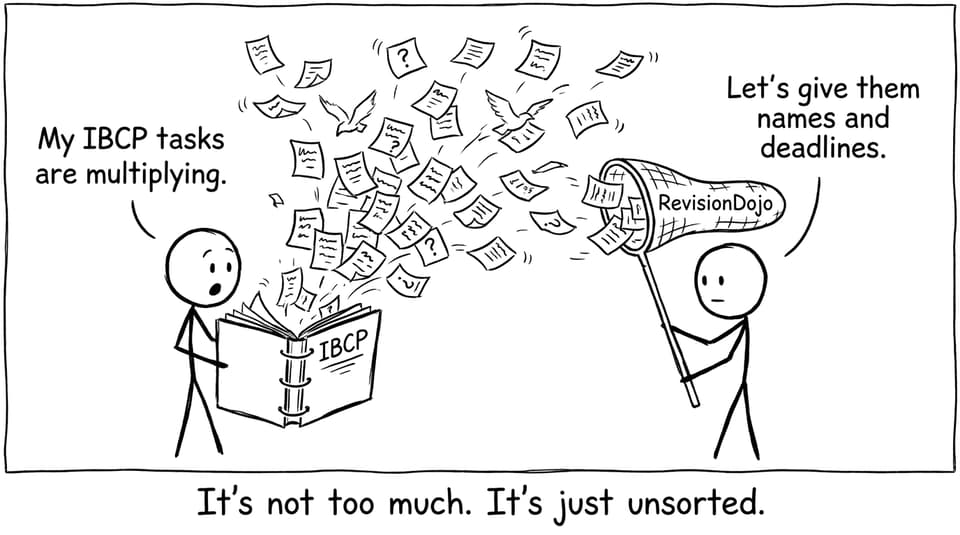
The IBCP success checklist (steal this)
When an IBCP student thrives, it’s rarely because they had more time. It’s because they created better connections.
Use this fast checklist as your definition of an IBCP success story:
-
A clear link between DP courses and the career-related study (CRS)
-
Evidence of growth in confidence, resilience, and ethical awareness
-
Strong completion of the CP Core (PPS, Community Engagement, Reflective Project, Language Development)
-
Exam readiness that improves through better practice loops (not last-minute cramming)
-
A tangible outcome: university pathways, apprenticeships, employment, entrepreneurship, or a portfolio that opens doors
If you’re still orienting yourself, start with IBCP Explained: The IB Career-related Programme. It helps you see how the pieces fit together before you try to optimize them.
Why IBCP stories matter to exam preparation
Exams in the IBCP can feel paradoxical: DP subjects are assessed like the Diploma Programme, with the same seriousness, while the CP Core often feels like a parallel universe of reflection, service, and professional skills.
The students who do best learn one move: they stop treating the CP Core as “extra.” They treat it as their evidence-gathering engine.
-
The Reflective Project improves argument structure, evaluation, and academic honesty.
-
Community Engagement trains planning, documentation, and showing impact (which is basically what good coursework asks for).
-
PPS builds teamwork, communication, and decision-making under pressure (which is what exam rooms demand).
To understand what actually counts, keep IBCP Assessment and Grading: What Counts (and Why) open while you plan your next month.
From creativity to career: Mia (design + sustainability)
Mia studied at an IB World School in Singapore. She loved visual arts, but she had a specific fear: loving something doesn’t automatically turn it into a future.
Her IBCP pathway connected DP Visual Arts with a design and branding career-related study. Instead of chasing more “impressive” topics, she doubled down on coherence.
What she did that worked
-
Reflective Project: She explored ethical questions around fast fashion, sustainability, and persuasive advertising.
-
Community Engagement: She curated a small “Design for Change” exhibition with local eco-artists.
-
Exam prep strategy: She used her art research habits (collect, compare, annotate) to revise DP content with the same discipline.
Mia later applied to sustainable fashion programmes in Europe with something many applicants lack: proof of values, not just taste.
If you’re building your own applied pathway, this guide helps you choose a CRS that supports exams instead of competing with them: What Career-related Studies Can Schools Offer in the IB Career-related Programme?
Tech with purpose: Arjun (computer science + agriculture)
Arjun’s story starts with a common IBCP tension: he loved technology, but he didn’t want it to be abstract. He wanted it to matter to someone outside the classroom.
He paired DP Computer Science with a Microsoft-aligned CRS pathway and used local context as his laboratory.
What he built
-
A simple cloud-based tool to help small farmers log soil observations and track crop conditions
-
A Reflective Project about the ethics of data use in agricultural tech
-
Collaboration with an NGO as part of Community Engagement
Arjun’s breakthrough wasn’t the app. It was learning to explain his work clearly to non-technical people. That ability later helped in exams, where clarity is marks.
When you need the clearest possible “practice loop” for exam performance, start with RevisionDojo’s Questionbank feature and build sets by topic. It’s the fastest way to convert vague revision into measurable improvement.
Business and leadership: Sofia (economics + entrepreneurship)
Sofia, studying in Spain, loved economics but didn’t want to stop at theory. Her IBCP CRS gave her access to structured business learning and mentorship.
What made her pathway stand out
-
A business plan for a community café employing individuals with disabilities
-
A Reflective Project focused on inclusive employment and ethical trade-offs
-
Mentoring from local entrepreneurs through her CRS provider
Later, Sofia launched a student-run startup incubator in her city. Not because she felt fearless, but because she had practised iterating ideas under feedback--a skill exams reward more than confidence.
If you’re trying to reduce workload spikes (and the panic they create), this is a helpful read: Challenges Schools Face When Launching the IB Career-related Programme. It explains why the programme can feel heavy--and how good systems lighten it.
Caring for others: Daniel (biology + health and social care)
Daniel studied in Canada and wanted healthcare, but wasn’t sure whether to choose nursing, biomedical science, or medical technology. The IBCP let him explore without drifting.
How he used the CP Core as training
-
Community Engagement: Volunteered at a local hospital and documented what he observed about communication and consent
-
Reflective Project: Patient confidentiality and the ethics of information sharing
-
PPS: Teamwork and conflict resolution sessions that made him better at managing stress during timed assessments
Daniel’s path shows a subtle truth: empathy isn’t only a personal trait. In the IBCP, it becomes a skill you can practise, reflect on, and demonstrate.
From sport to global education: Layla (psychology + sports management)
Layla was a student-athlete in the UK. She didn’t want school to be something she survived between training sessions. She wanted it integrated.
Her IBCP pathway paired DP Psychology with a sports management CRS.
Her turning points
-
Running a youth sports tournament for Community Engagement
-
A Reflective Project on gender equity in professional athletics
-
Learning to schedule her life like a season: build-up, peak, recovery
That final piece is exam gold. A good revision plan looks like sports training: small sessions, frequent feedback, and timed rehearsals.
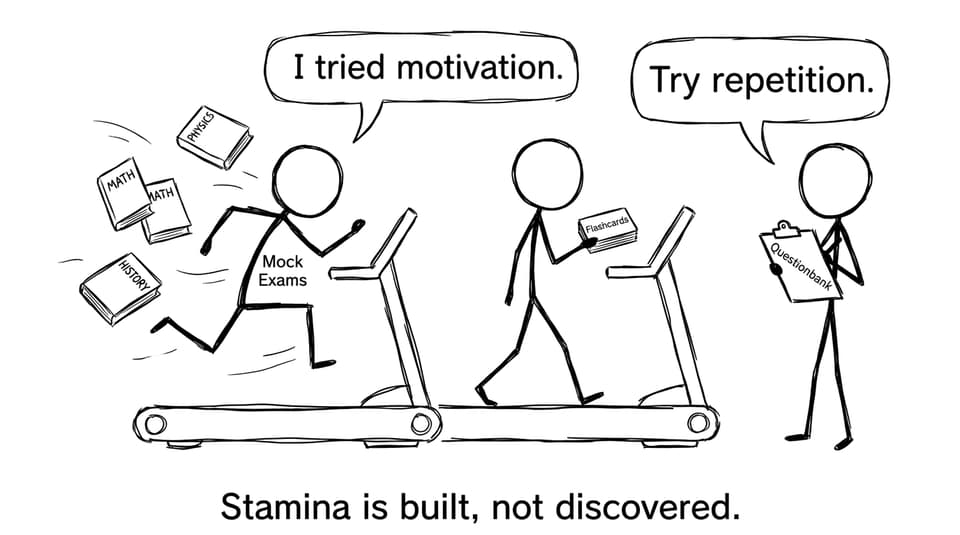
For students who need realistic rehearsal, RevisionDojo’s IB Predicted Papers are designed to feel like the real papers, with examiner-written structure and feedback loops.
Engineering a future: Alex (math/physics + engineering)
Alex studied in Australia and chose the IBCP because he wanted hands-on learning without losing academic challenge.
He combined DP Mathematics and Physics with an engineering CRS.
What he learned early
-
Prototypes are not the goal. Documentation is.
-
Reflection is not “feelings.” It’s evidence of reasoning.
-
The best exam answers read like a clean design brief: clear assumptions, correct method, sensible conclusion.
Alex later entered a mechanical engineering degree with something that surprised his lecturers: he was comfortable explaining trade-offs and constraints, not just calculations.
Global citizenship in action: Aisha (education + languages)
Aisha, a CP graduate from Kenya, focused on education and development. Her CRS connected to teacher training locally, while her DP choices supported her interest in policy and communication.
The work that shaped her direction
-
Teaching literacy skills as Community Engagement
-
A Reflective Project on the ethics of international volunteerism
-
Language and cultural development that improved her ability to communicate across communities
Aisha’s success wasn’t loud. It was consistent. Her story shows how the IBCP can build a track record that universities and employers trust: thoughtful action, recorded over time.
Music meets management: Ethan (music + creative media)
Ethan, from the United States, wanted to combine music with business skills. His IBCP pathway did something many students assume is impossible: it made creative work legible to institutions.
What he produced
-
A small local music festival as Community Engagement
-
A Reflective Project on intellectual property and creative ownership
-
Marketing and leadership skills through his CRS coursework
Ethan later launched a small production project while studying music business. The common thread was not “talent.” It was repeatability: systems, feedback, iteration.
The repeatable patterns behind IBCP success
Across these IBCP stories, the students didn’t share the same subjects, countries, or personalities. They shared something simpler: their effort had a shape.
They built one coherent story
Their DP courses, CRS, and CP Core pointed in the same direction. That reduced decision fatigue and made revision feel purposeful.
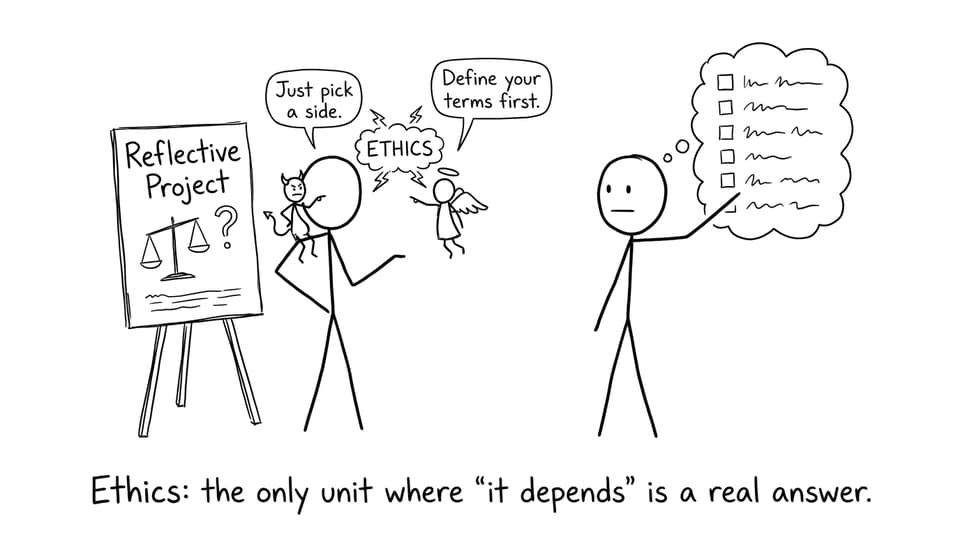
They treated ethics as a skill, not a slogan
The Reflective Project forced them to define terms, evaluate perspectives, and justify decisions. Those are exam skills, just wearing different clothes.
They revised by feedback, not by hours
They did timed practice, marked it honestly, and returned to the same weak points until they changed.
RevisionDojo is built for this loop: Study Notes to clarify quickly, Flashcards to hold daily recall, AI Chat to unblock confusion, Grading tools to learn rubric logic, Mock Exams for stamina, plus Predicted Papers for full-paper rehearsal. If you want the workflow in one place, see RevisionDojo App: The Smarter Way to Prep for IB Exams.
A practical weekly plan for IBCP students (exam season edition)
Here’s a calm, repeatable structure many IBCP students can sustain without burning out:
Two sessions: understand and organize
-
Use Study Notes to rebuild one DP topic
-
Summarize in your own words
-
Create or review Flashcards the same day
Three sessions: apply under constraints
-
Drill topic-specific questions in a question bank
-
Track your top 3 mistake patterns
-
Retest within 48 hours
One session: simulate pressure
-
Sit a timed paper section (or a full practice sitting)
-
Review for patterns (command terms, method marks, structure)
If you want to sharpen personalization in a CP-friendly way, read How to Personalize Learning Within the IB Career-related Programme. It’s built around doing less, better.
Closing: your IBCP story is built in small decisions
The best IBCP success stories don’t sound heroic while they’re happening. They sound boring: a student doing a timed set, reviewing mistakes, updating a reflection, showing up again next week.
And then one day the story becomes obvious. The programme wasn’t pulling them in two directions. It was teaching them how to connect direction with discipline.
If you want your own IBCP story to feel calmer during exam season, build a single loop you can repeat: learn with Study Notes, lock it with Flashcards, prove it with a Questionbank, get unstuck with AI Chat, and rehearse under time with Mock Exams and Predicted Papers. Start at RevisionDojo and make your next week simpler than the last.