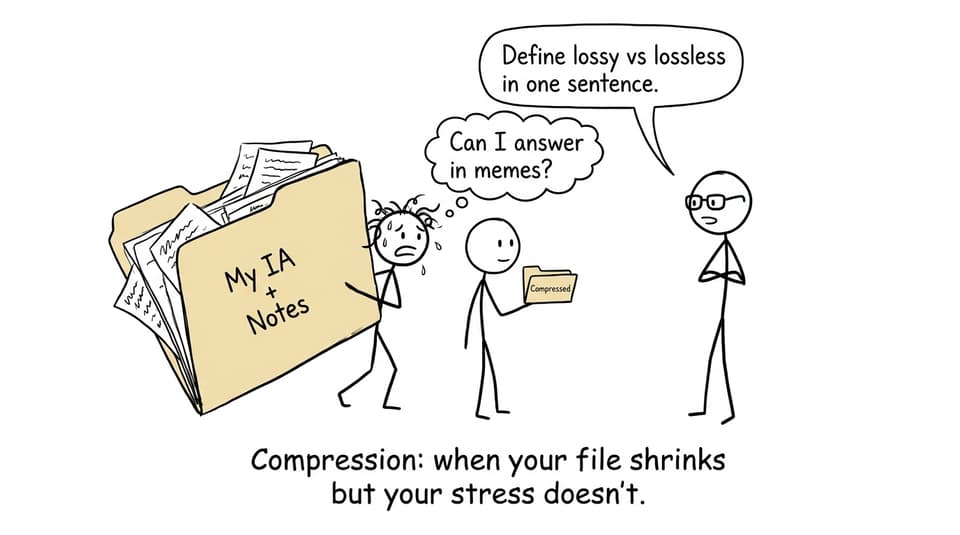


Data compression is a key topic in IB Computer Science because it explains how large files are reduced in size to save storage space and improve transmission speed. Students are expected to clearly distinguish between lossy and lossless compression, explain how each works, and justify when each should be used.
Many students lose marks by giving vague definitions or by confusing the two methods. Precise explanations are essential.
What Is Data Compression?
Data compression is the process of reducing the size of a file by removing or encoding data more efficiently.
Compression is used to:
- Reduce storage requirements
- Speed up file transfer
- Reduce bandwidth usage
There are two main types of compression in IB Computer Science:
- Lossless compression
- Lossy compression
What Is Lossless Compression?
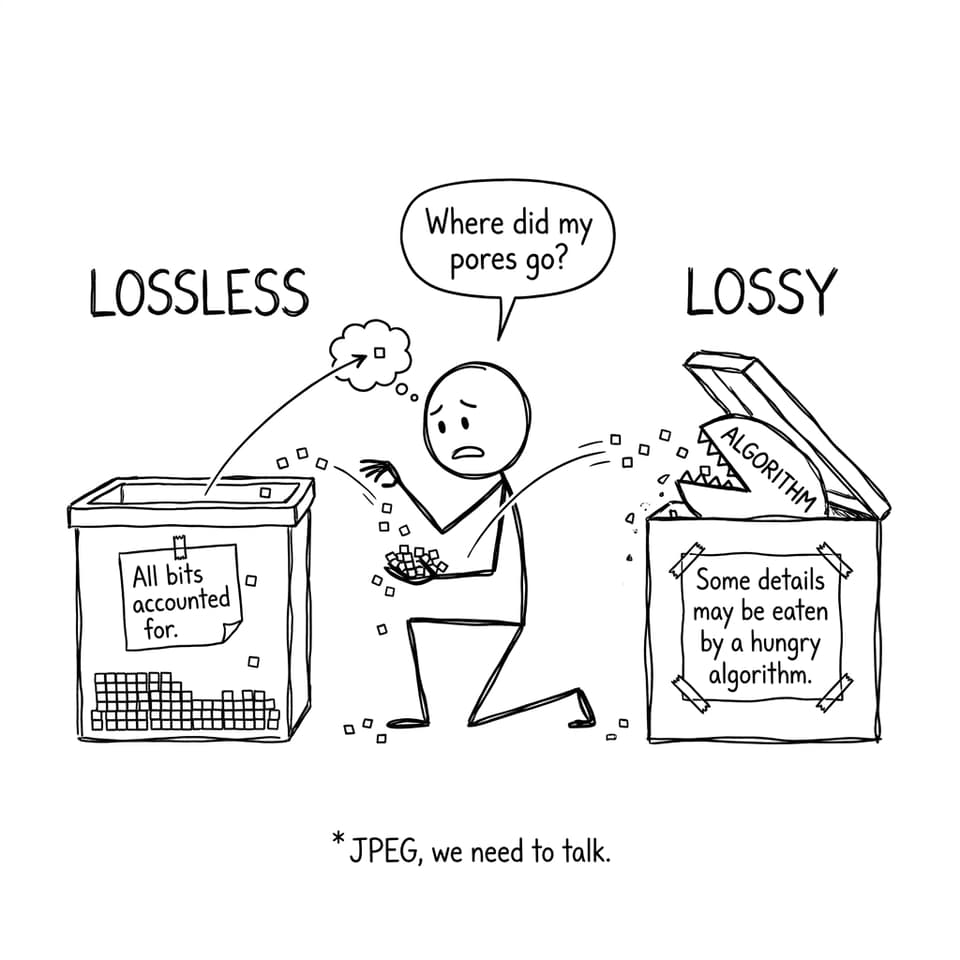
Lossless compression reduces file size without losing any data.
This means:
- The original file can be perfectly reconstructed
- No information is permanently removed
- Data integrity is preserved
Lossless compression works by:
- Removing redundancy
- Using more efficient encoding
Common lossless formats include:
- ZIP files
- PNG images
- FLAC audio
In IB exams, lossless compression is often linked to:
- Text files
- Program files
- Medical or legal data
- Situations where accuracy is critical
What Is Lossy Compression?
Lossy compression reduces file size by permanently removing some data.
This data is usually:
- Less noticeable to humans
- Considered less important for perception
Lossy compression works by:
- Removing detail that the human eye or ear is less sensitive to
- Reducing precision of data
Common lossy formats include:
- JPEG images
- MP3 audio
- MP4 video
Lossy compression is widely used for:
- Streaming
- Media storage
- Online content
Key Differences Between Lossy and Lossless Compression
For IB Computer Science, students must clearly compare the two:
- Lossless compression
- No data loss
- Larger file size than lossy
- Perfect reconstruction
- Lossy compression
- Permanent data loss
- Much smaller file sizes
- Reduced quality
Examiners reward answers that explain trade-offs, not just definitions.
Choosing Between Lossy and Lossless Compression
The choice depends on purpose.
Lossless compression is used when:
- Accuracy is essential
- Data must not be altered
- Files may be edited repeatedly
Lossy compression is used when:
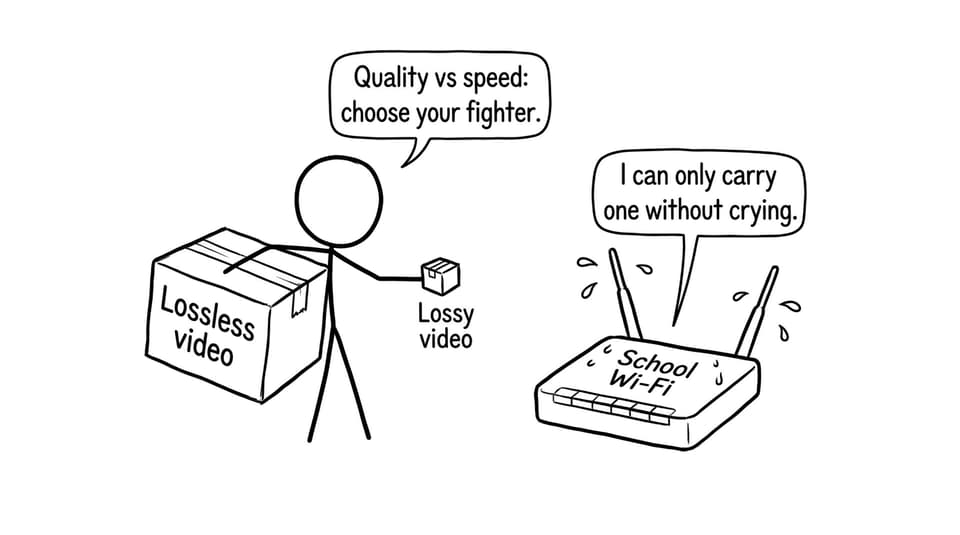
- Small file size is more important than perfect quality
- Data is consumed by humans (images, audio, video)
- Some quality loss is acceptable
Common Student Mistakes
Students often:
- Say lossy compression “damages” files without explanation
- Forget that lossless files can be restored perfectly
- Confuse compression with encryption
- Fail to justify use cases
Clear reasoning earns higher marks.
Final Thoughts
Lossy and lossless compression solve different problems. Lossless compression preserves all data and is essential when accuracy matters, while lossy compression sacrifices some detail to achieve much smaller file sizes.
Understanding when and why each method is used allows IB Computer Science students to explain compression clearly, accurately, and confidently in exams.