

Your grade in IB Computer Science doesn’t usually collapse because you “didn’t know enough.” It collapses because, under time pressure, you knew the right idea but couldn’t deploy it: the command term slips by, the case study angle feels fuzzy, the pseudocode is correct in your head but messy on paper.
With Paper 3 gone, HL success now lives in two rooms: Paper 1 and Paper 2. If you prepare for them deliberately, IB Computer Science becomes predictable in a good way.
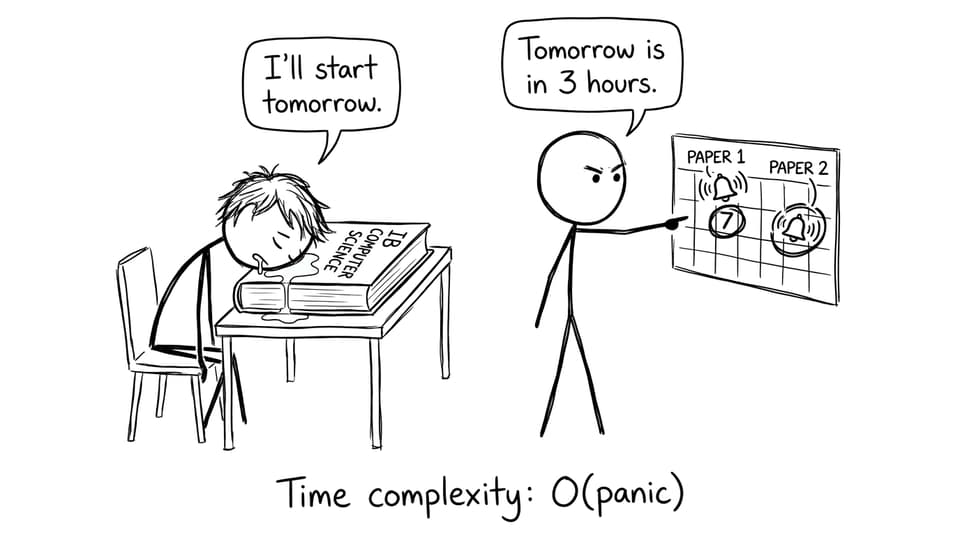
IB Computer Science HL Papers: what you’re training for
At HL, Paper 1 (2 hours, 40%) and Paper 2 (2 hours, 40%) dominate your outcome. A clean way to think about it:
-
Paper 1: core concepts + case-study-based analysis and evaluation
-
Paper 2: computational thinking + problem solving + programming logic (Java or Python track)
If you want a central hub for IB Computer Science resources, start here: IB Computer Science Resources.
Quick-start checklist (do this before “more revision”)
-
Lock your toolchain: one language (Java or Python) and consistent pseudocode conventions.
-
Build a command-term habit (describe vs explain vs evaluate).
-
Do at least one timed block weekly using exam-style questions.
-
Track mistakes by type (logic, misread, missing keywords, weak evaluation).
A fast way to turn this into daily practice is the RevisionDojo Questionbank.
How to prepare for Paper 1 (concepts + case study)
Paper 1 rewards students who can do two things at once: recall precise theory and apply it to a scenario.
Build “definition + consequence” notes
When you revise systems, networks, databases, or machine learning, don’t stop at definitions. Add the consequence: why it matters and what it affects in a real system. If your notes feel heavy, use an exam-focused framework like How to Make Effective IB Computer Science Study Notes.
Train command terms like a mini skill
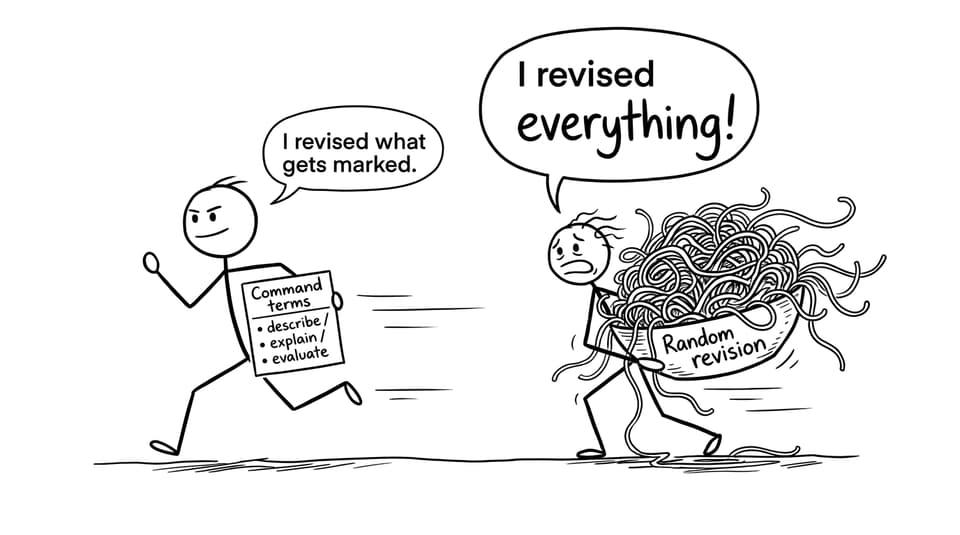
In IB Computer Science, command terms are hidden scoring rules. “Evaluate” needs pros/cons and a justified conclusion; “explain” needs cause-and-effect; “outline” needs brief key points. Write one paragraph per command term from a case study prompt until the structure becomes automatic.
For topic targeting, use: Most Important Topics for IB Computer Science Paper 1.
How to prepare for Paper 2 (computational thinking + programming)
Paper 2 is where calm, reusable patterns beat heroic last-minute problem solving.
Handwrite pseudocode until it’s boring
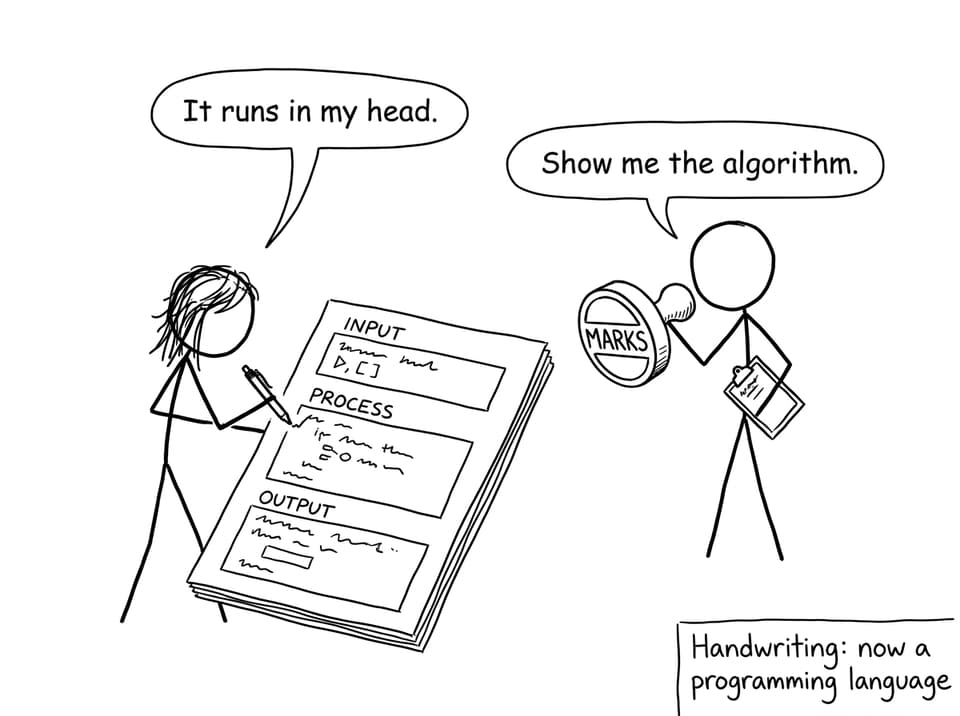
Typing helps learning, but handwriting helps marks. Practice writing clean algorithms with clear variable names, loops, and boundary conditions.
Drill the recurring “core moves”
Sorting, searching, tracing, recursion, arrays/2D arrays, and HL structures (like stacks/queues) show up because they’re foundational. Build a small library of templates you can adapt quickly.
If you’re short on time, this is a strong focused guide: How to Prepare for IB Computer Science Paper 2 in Just 3 Days.
The most common mistakes (and the simple fix)
-
Static memorization: fix it by answering “so what?” after every concept.
-
Time sink questions: fix it by using timed sets and strict checkpoints.
-
Command term mismatch: fix it by underlining the verb and matching a response template.
-
Pseudocode that’s right but unclear: fix it by using consistent structure (INPUT/PROCESS/OUTPUT).
Use RevisionDojo to make IB Computer Science practice feel real
RevisionDojo is built for the exact loop that improves IB Computer Science scores:
-
Study Notes and Flashcards to lock in theory fast
-
Questionbank for targeted practice and weak-spot drilling
-
AI Chat to debug misconceptions (not just code)
-
Grading tools for feedback aligned to how marks are awarded
-
Predicted Papers and Mock Exams to build timing and stamina
-
Coursework Library and Tutors when you need structured support
Explore exam simulation here: IB Computer Science Predicted Papers and Computer Science Predicted Papers (Free).
Conclusion: make IB Computer Science predictable
Preparing for IB Computer Science HL Paper 1 and Paper 2 is less about grinding and more about building repeatable responses: command terms you can execute, case-study points you can evaluate, and algorithms you can write cleanly under pressure.
If you want that practice loop in one place, use RevisionDojo’s IB Computer Science Resources plus the Questionbank and IB Computer Science Predicted Papers to train like exam day is normal -- not a surprise.