


A failed IB mock can land like a slammed door.
One moment your teen is “nearly done with revision,” and the next they’re staring at a grade that feels like a verdict on their intelligence, their future, and every late night they’ve ever pulled. If you’re the parent watching this happen, the instinct is almost always the same: fix it. Fast.
But the IB doesn’t reward panic. It rewards iteration. A mock exam is less a judgment and more a diagnostic scan. The most powerful support you can offer is not pressure, but a calm plan that turns the result into useful feedback.
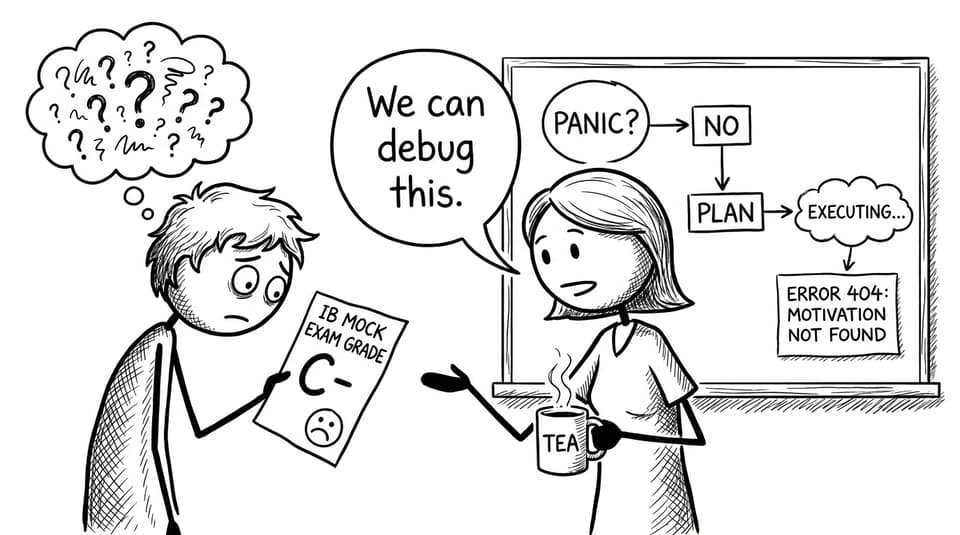
The 10-minute reset checklist (for the first night)
When your teen fails an IB mock, start small and stay human.
-
Keep your reaction steady (even if you’re anxious).
-
Name the feeling: disappointment, embarrassment, fear.
-
Confirm the truth: a mock is practice, not the final outcome.
-
Delay strategy talk until emotions cool.
-
Ask one gentle question: “Do you want comfort or a plan right now?”
-
Book the next step: review feedback tomorrow, not at midnight.
If your teen wants something concrete, point them toward an all-in-one routine builder like the RevisionDojo app for IB exam prep so “what do I do now?” becomes a checklist, not a spiral.
Why IB students fail mocks (and why it’s useful)
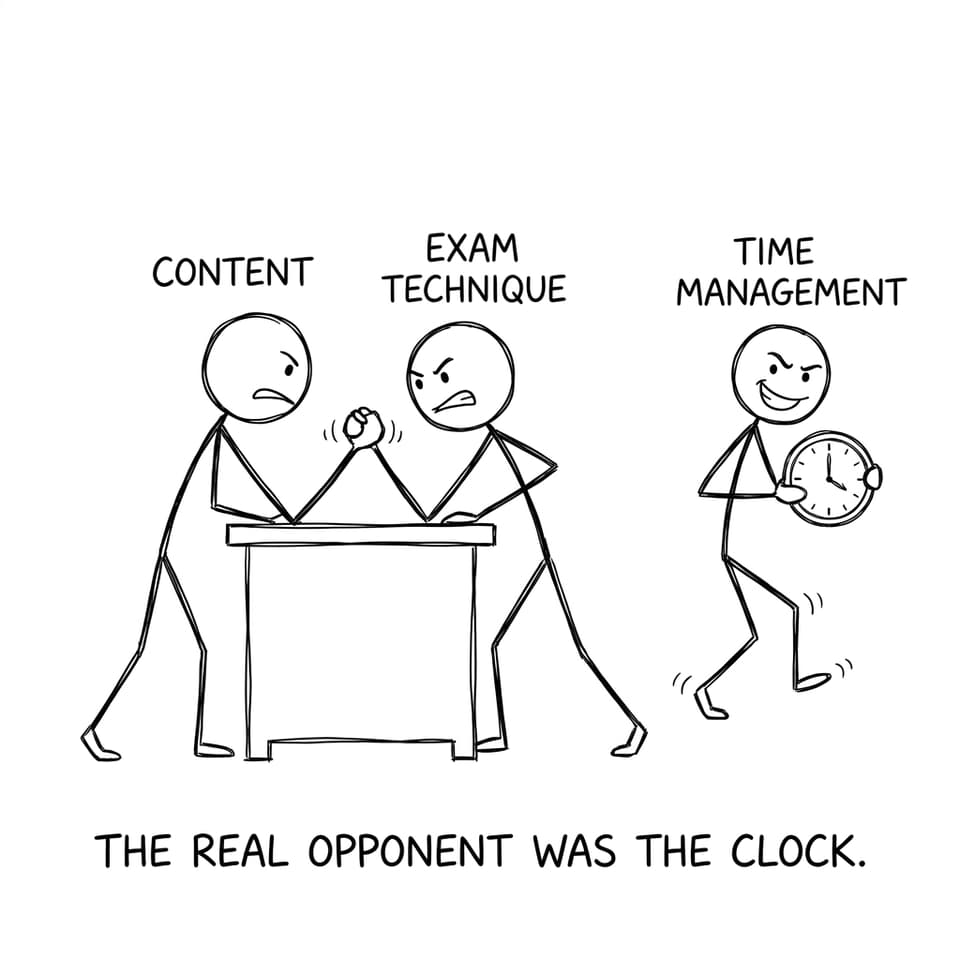
Most students don’t fail IB mocks because they “didn’t try.” They fail because the mock exposes a mismatch between effort and exam reality.
Common causes include:
-
Content gaps: they revised broadly, but missed high-frequency subtopics.
-
Exam technique gaps: they know the material but don’t answer how marks are awarded.
-
Time management: they spend too long earning easy marks and run out before the hard ones.
-
Stress response: memory and clarity drop under timed pressure.
-
Burnout: the brain stops cooperating when everything is due at once.
This is why mocks matter. They make the invisible visible. If your teen needs reassurance from someone who’s been there, send them to Failed Mock Exams? You Can Still Pass IB and let them see that the path forward is normal.
What to say (and not say) after a failed IB mock
Words don’t just comfort. They shape identity. In the IB, identity becomes habit, and habit becomes results.
Say this instead
-
“This tells us what to fix next.”
-
“You’re not behind, you’re getting data.”
-
“Let’s separate content, timing, and technique.”
-
“We’re going to build a repeatable week, not a heroic weekend.”
Avoid this (even if you mean well)
-
“How could this happen?” (sounds like blame)
-
“You need to study harder.” (usually the wrong diagnosis)
-
“Your friend got a 7.” (comparison is gasoline)
-
“It’s just a mock.” (minimizes real feelings)
If you want a parent-focused overview of how RevisionDojo supports families with the IB, the RevisionDojo Parents page is a helpful starting point.
Turn the result into a plan: the 48-hour audit
The best IB students don’t “move on” from a mock. They mine it.
Here’s a simple audit you can do with your teen in under an hour:
Collect the evidence
Ask for the script, mark breakdown, and teacher feedback. Then do one thing that changes everything: identify patterns.
Label each lost mark
Use four labels:
-
Content (didn’t know)
-
Method (knew, but couldn’t do)
-
Technique (answered wrong for the rubric)
-
Timing (ran out, rushed, blanked)
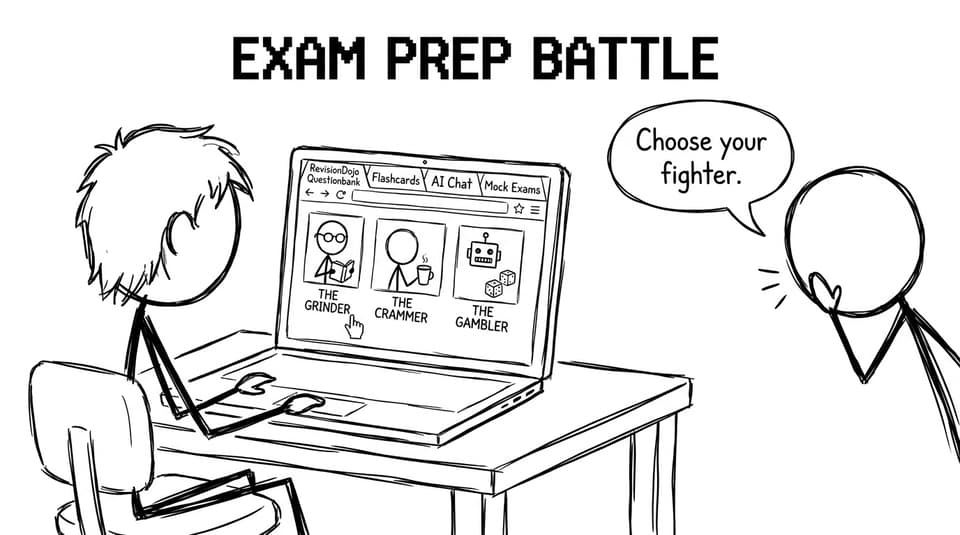
Once you know the label, you know the fix. RevisionDojo is built around that loop: Study Notes for clarity, Flashcards for recall, Questionbank practice for application, AI Chat for quick explanations, and Grading tools for rubric-aligned feedback.
Start with the most “fixable” category. Timing and technique improvements can lift an IB grade quickly.
For structure, borrow a proven schedule from IB Mock Exam Schedule: How Often Should You Practice? or a burnout-safe routine from How to Study for IB Mocks (Without Burning Out).
Build confidence the IB way: small reps under real conditions
Confidence is not motivational. It’s mechanical. In the IB, it grows when a student repeatedly proves to themselves: “I can do this kind of question under time.”
A practical weekly rhythm looks like:
-
3x short topic blocks using Questionbank practice
-
Daily retrieval with RevisionDojo Flashcards
-
1x timed mock-style session using Online IB Mock Exams: Practice Anywhere, Anytime
-
1x review session: write a mistake log, then redo 5 questions correctly
If your teen benefits from realistic rehearsal, add IB Predicted Papers by IB Examiners (Free) once fundamentals stabilize. They’re best used as training simulations, not fortune-telling. For that mindset shift, IB Predicted vs Specimen Papers: What They Mean is worth reading.
The takeaway: make the mock useful
A failed IB mock hurts because it feels personal. But it isn’t personal. It’s a map.
If you stay steady, help your teen label the real problem (content vs technique vs timing vs stress), and build a small weekly loop of practice and feedback, the mock becomes a turning point instead of a scar.
When you’re ready to turn that plan into something your teen can actually follow day by day, RevisionDojo brings the whole IB system into one place: Questionbank, Study Notes, Flashcards, AI Chat, Grading tools, Predicted Papers, Mock Exams, Coursework Library, and Tutors. The result is less guessing, more evidence, and a calmer path back to momentum.