This site uses cookie tracking technologies. Learn more in our Cookie Policy.
IB Computer Science: Symmetric vs Asymmetric… | RevisionDojo
Join 600k+ Students Already Crushing Their Exams
Encryption is the quiet hero of the internet. You don’t see it working when you log in, send a message, or open a secure website. But the moment it fails, everything feels fragile. That’s why IB Computer Science exam questions love encryption: it’s simple to define, easy to apply to real scenarios, and full of marks for clear comparisons.
In this guide for IB Computer Science students, you’ll learn what encryption is, why it matters, and the exam-relevant differences between symmetric and asymmetric encryption. No heavy maths required -- just the kind of explanation that earns method marks.
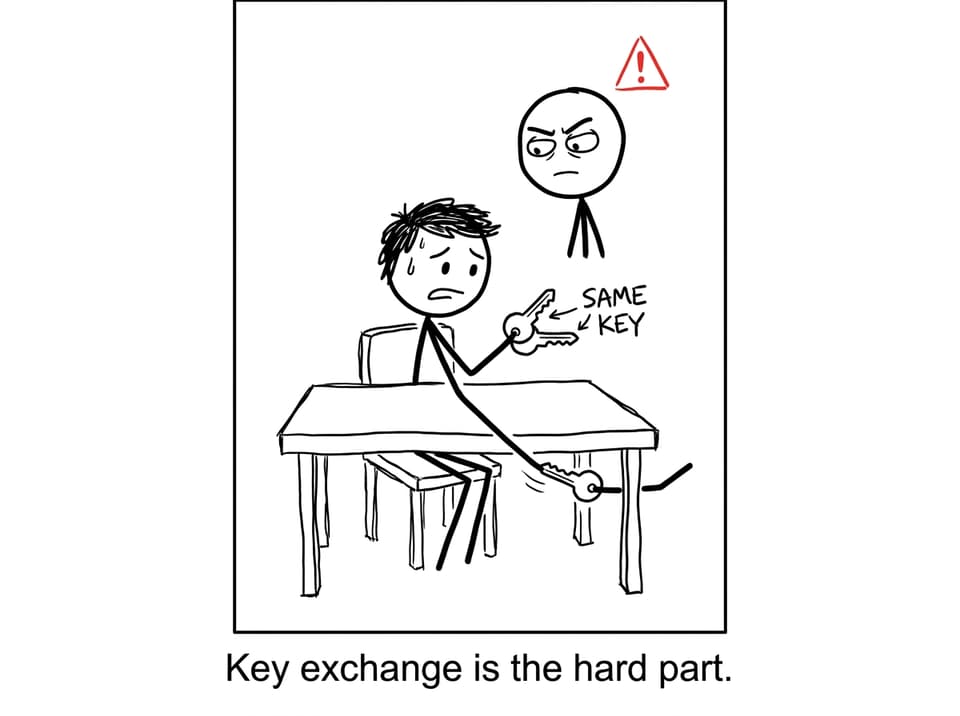
Student trying to pass a secret key
Encryption, in IB Computer Science terms
Encryption is the process of turning plaintext (readable data) into ciphertext (unreadable data) so that only someone with the right key can turn it back.
In IB Computer Science, the core security idea you should attach to encryption is confidentiality: even if data is intercepted, it cannot be understood without the key.
Before we split symmetric vs asymmetric, keep this short checklist in mind for IB Computer Science responses:
Define encryption using plaintext, ciphertext, and a key
State why it’s used: interception is possible on networks
Explain how symmetric encryption uses one shared key
Explain how asymmetric encryption uses public and private keys
Compare speed and key distribution
Mention the hybrid approach (asymmetric first, symmetric after)
If you want ready-made definitions you can drill with spaced repetition, RevisionDojo’s IB Flashcards with Spaced Repetition make this kind of content stick.
Symmetric encryption (one key, fast, but awkward to share)
In symmetric encryption, the sender and receiver use the same secret key to:
encrypt the plaintext into ciphertext
decrypt the ciphertext back into plaintext
This is why symmetric methods are generally described in IB Computer Science as fast and efficient, especially for large amounts of data (files, stored data, long messages).
The big weakness: key distribution
The weakness isn’t the idea of one key -- it’s the moment you need to share that key.
If the key is intercepted while being transferred, the attacker can decrypt anything encrypted with it. In open networks (like the internet), securely distributing a shared secret key is difficult.
Asymmetric encryption (two keys, safer sharing, but slower)
In asymmetric encryption, there are two different keys:
a public key (shared openly)
a private key (kept secret by the owner)
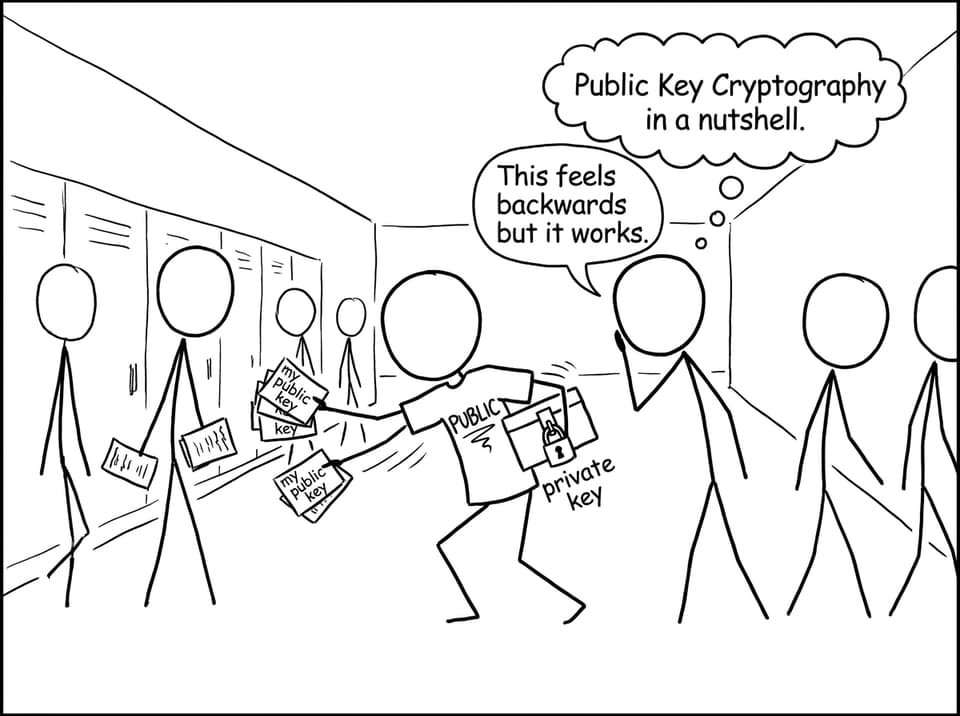
They’re mathematically linked, so data encrypted with one key can only be decrypted with the other. In IB Computer Science, you usually explain it like this: someone encrypts data using your public key, and only your private key can decrypt it.
Public key flyers, private key protected
The tradeoff: performance
Asymmetric encryption is more computationally expensive. That’s why IB Computer Science mark schemes often reward students who explicitly say it’s not efficient for encrypting large data volumes.
How real systems combine both (the hybrid approach)
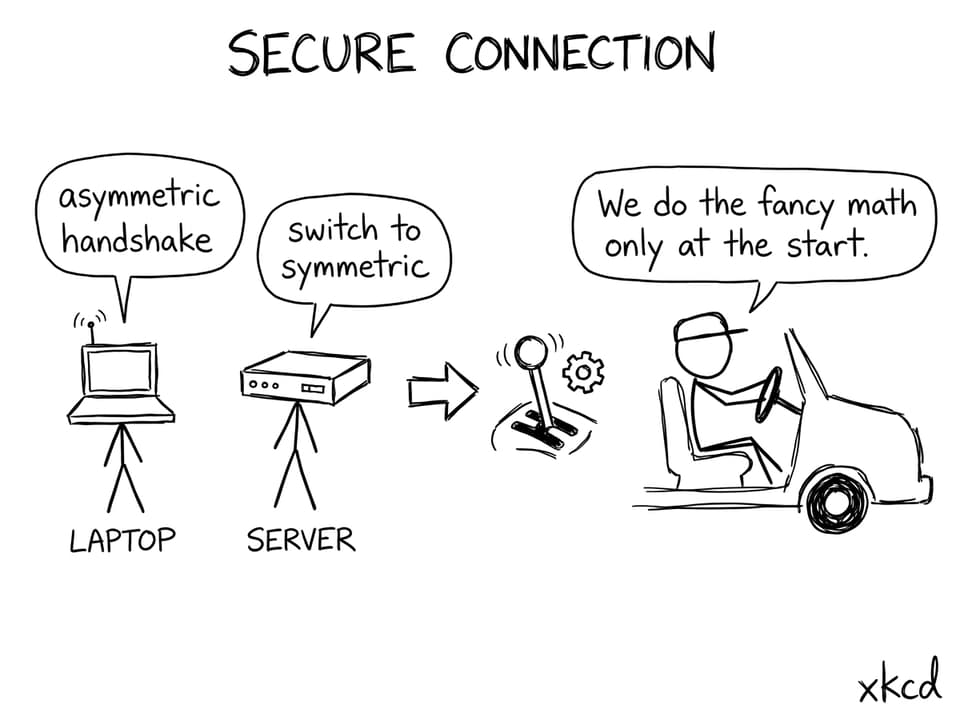
Most real-world secure communication uses a hybrid approach:
Asymmetric encryption is used at the start to securely exchange or agree on a secret
then symmetric encryption is used for the main data transfer because it’s fast
This is one of the simplest “sound like you understand the real internet” points you can make in IB Computer Science.
Asymmetric handshake then switch to symmetric
To practise applying this to scenarios, run targeted drills in the Questionbank feature and ask for feedback on your explanations using RevisionDojo’s AI Chat.
Common IB Computer Science mistakes (and how to avoid them)
Students lose marks when they:
mix up which key is shared (public) and which is protected (private)
claim asymmetric is “better” without mentioning it’s slower
forget the key distribution problem in symmetric encryption
ignore the hybrid approach that combines security with speed
A good habit is to practise short comparisons under time pressure using RevisionDojo’s IB Computer Science Predicted Papers and then review with Grading tools so you can see exactly where marks were missed.
Conclusion: the IB Computer Science version of “secure, then fast”
Symmetric encryption is the workhorse: one key, fast, ideal for lots of data, but risky if the key is intercepted during sharing. Asymmetric encryption is the diplomat: two keys, easier to share safely, but slower. Modern systems combine them, using asymmetric methods to set up trust and symmetric methods to do the heavy lifting.
If you’re preparing for IB Computer Science, turn this understanding into marks by practising explanations, not just reading them. RevisionDojo makes that loop easy with Study Notes, Flashcards, the Questionbank, AI Chat, Grading tools, Predicted Papers, Mock Exams, the Coursework Library, and Tutors -- all built for the way IB exams actually test you.