
When you type a password into a “secure” site, you’re not really trusting the padlock icon.
You’re trusting a story your browser tells itself: this site is who it claims to be, and the key I’m using belongs to them. In IB Computer Science, that story is called digital certificates and Public Key Infrastructure (PKI). It’s less about coding and more about logic: how the internet turns “anyone can pretend” into “we can verify.”
If you can explain that chain of trust clearly, you can score well even without drowning in implementation details.
IB Computer Science checklist: what to say in exam answers
Keep your IB Computer Science explanations tight and cause-and-effect:
-
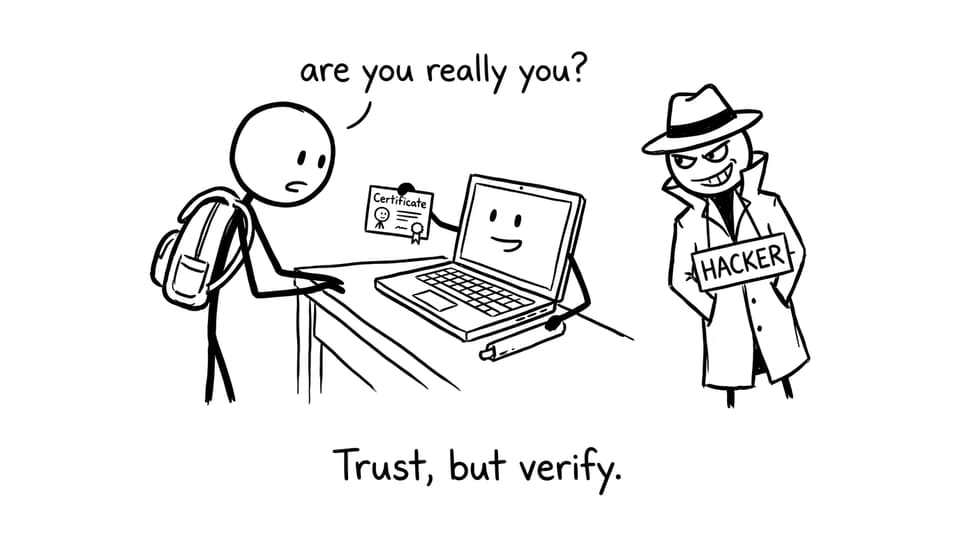
Define a digital certificate as proof of identity linked to a public key.
-
Identify the Certificate Authority (CA) as the trusted third party that signs certificates.
-
Define PKI as the system that manages certificates, keys, and verification rules.
-
Explain the verification sequence: certificate shown, CA signature checked, public key trusted, secure session begins.
-
Add one balanced risk: if a CA is compromised, trust can fail.
For practice phrasing, you can drill short definitions with RevisionDojo Study Notes and then test yourself with timed prompts in the Questionbank.
Why the internet has a trust problem
The internet is an open room, not a private corridor. Anyone can:
-
Copy a website’s look and pretend to be it
-
Intercept traffic on a shared network
-
Insert themselves between two parties (a classic man-in-the-middle setup)
So the big question in IB Computer Science isn’t “how do we encrypt?” It’s “how do we know who we’re encrypting with?”
That’s the job of digital certificates and PKI: they let you verify identity before you rely on encryption.
What a digital certificate really is
A digital certificate is an electronic document that connects:
-
An entity’s identity (often a website/domain or organization)
-
To that entity’s public key
-
With a digital signature from a trusted issuer
In exam language: a certificate supports authenticity. It doesn’t magically make data private by itself; it makes the public key believable.
If you want to see how RevisionDojo frames exam-style definitions for IB Computer Science, start from the subject hub: IB Computer Science Resources.
Certificate Authorities (CAs): where trust gets borrowed
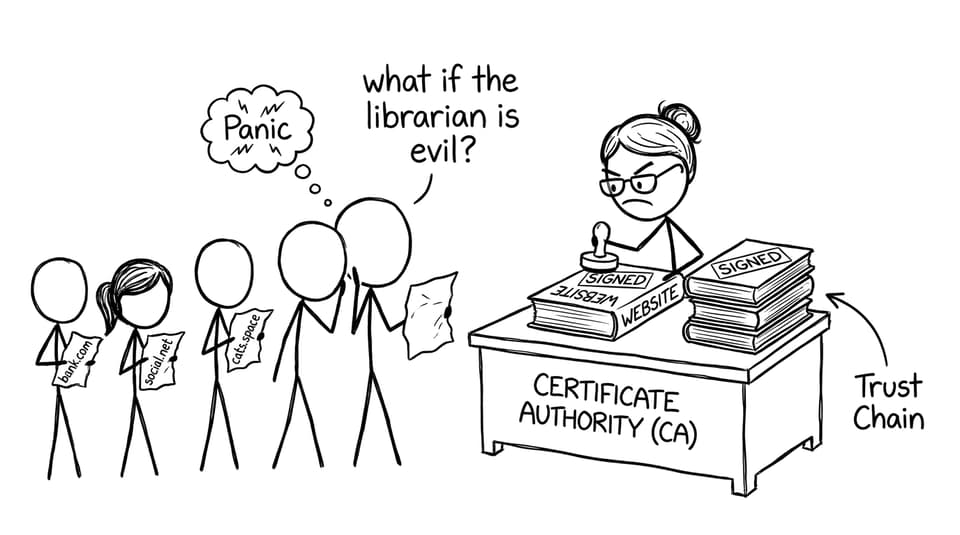
A Certificate Authority (CA) is a trusted organization that issues digital certificates. The key IB idea is delegation: you don’t personally investigate every website; you trust a CA to do identity checks and then sign the certificate.
Your browser trusts certain “root” CAs by default. When it sees a certificate signed by one of them (or by a chain leading to one), it accepts the identity claim.
To rehearse this as a quick paragraph (great for 4-6 mark questions), try building a mini-response and get feedback using RevisionDojo’s AI Chat and marking flow with its Grading tools.
What PKI means in IB Computer Science
Public Key Infrastructure (PKI) is the wider system that makes certificates usable at scale. In IB Computer Science, you can describe PKI as the framework that includes:
-
Certificate Authorities
-
Digital certificates
-
Public/private key pairs
-
Rules and processes for issuing, distributing, and validating certificates
PKI is basically “the trust plumbing” of the internet.
The verification sequence (the part examiners love)
When a user connects to a secure website, the logic runs like this:
-
The website sends its digital certificate.
-
The browser checks validity details (including whether it’s signed by a trusted CA chain).
-
The browser verifies the CA’s signature, so the certificate can be trusted.
-
The browser now trusts the website’s public key.
-
Only then can a secure session be established and data sent safely.
That sequence is pure IB Computer Science gold: clear steps, clear purpose.
If you want to practise writing it under time pressure, build a timed set in RevisionDojo’s Exam builder and add difficulty variety using System Fundamentals Questionbank.
Certificates vs encryption: the common mix-up
Digital certificates don’t encrypt your messages. They help you avoid encrypting to the wrong person.
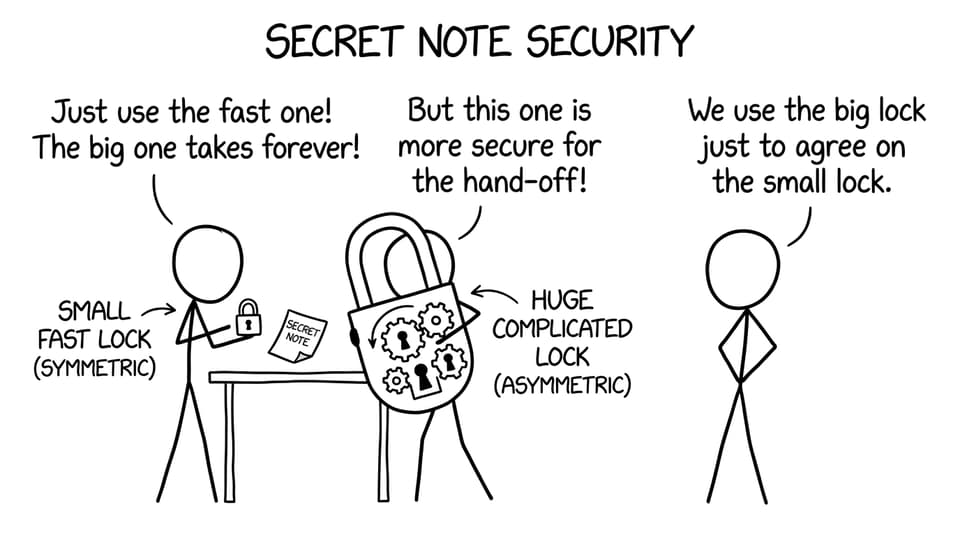
Typically, once identity is verified, the connection uses symmetric encryption for the bulk data transfer because it’s faster. The certificate helps bootstrap trust so that key exchange can happen safely.
Limitations and risks you should mention
A high-scoring IB Computer Science answer is confident but not naive. PKI reduces risk, but it doesn’t erase it.
-
If a CA is compromised or makes a mistake, fraudulent certificates can be trusted.
-
Users can still ignore warnings or get tricked by lookalike domains.
-
Security depends on correct validation and updated trust lists.
This is where balanced evaluation marks often appear.
How RevisionDojo helps you learn this fast
If PKI feels abstract, that’s normal. The trick is repetition with feedback.
-
Use Flashcards for “certificate, CA, PKI” definitions.
-
Use the Questionbank for short structured responses.
-
Use Mock Exams and Predicted Papers on RevisionDojo to practise full exam pacing without guessing what matters.
-
If you’re stuck, ask the AI Chat to critique your 6-mark explanation and then retry.
For a broader last-minute plan around IB Computer Science, see How to Pass IB Computer Science in 1 Week.
Closing: the exam-ready takeaway
In IB Computer Science, digital certificates answer the question “who are you?” and PKI explains “why should I believe you?” Once that trust is established, secure communication becomes logical, not magical.
If you want to turn that logic into marks, practise writing the verification sequence until it feels automatic, then pressure-test it with RevisionDojo’s Questionbank, Study Notes, Flashcards, AI Chat, and Grading tools. Trust is built through repetition too.
