

When you revise databases, it’s easy to feel like everything is “just stored in tables.” Then an exam question asks why a school database can be trusted, and suddenly you’re not talking about storage anymore -- you’re talking about reliability.
In IB Computer Science, two ideas quietly decide whether your explanation earns full marks: data integrity and data consistency. They sound similar, and that’s the trap. Examiners reward the student who can show the cause-and-effect difference.
If you want a strong foundation, pair this article with The Best Way to Revise Databases for IB Computer Science and then drill exam-style prompts in the Databases Questionbank.
A quick exam checklist for IB Computer Science
Use this mini-checklist before you write any database reliability answer in IB Computer Science:
-
Define data integrity (trustworthy/correct data over time).
-
Define data consistency (no contradictions across copies/locations).
-
Add a real example (grades, bank balance, medical record).
-
Name at least two mechanisms (validation, keys, access control, transactions).
-
Finish with a clear contrast sentence: “Integrity = correct; consistency = agrees.”
Data integrity in IB Computer Science: “Can we trust it?”
Data integrity means data stays accurate, valid, and uncorrupted across its lifecycle. In IB Computer Science, you can phrase it as: integrity is about whether the system protects the correctness of data as it is created, stored, updated, and retrieved.
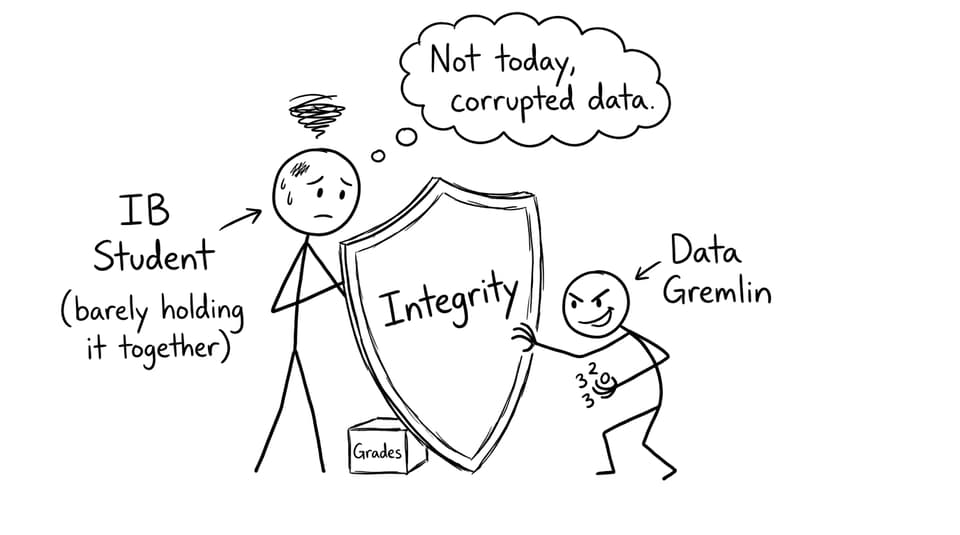
A simple story helps. Imagine a teacher enters a grade of 7, but a bug (or unauthorized edit) changes it to 2. The database might still look neat and organized, but the data has lost integrity because the value is no longer correct or trustworthy.
Integrity failures cause real damage: wrong grades, wrong balances, wrong decisions. That is why database design is more than “tables and SQL.” For core definitions like DBMS features, see DBMS and RDBMS Notes.
How integrity is maintained (the IB-mark-friendly way)
To score well in IB Computer Science, list safeguards as a system of layers:
-
Validation (blocks impossible inputs like negative ages).
-
Verification (reduces human entry mistakes).
-
Primary keys (stop duplicate records).
-
Foreign keys (stop invalid links) -- connect this to Referential Integrity Notes.
-
Access control (prevents unauthorized edits).
The key phrase examiners like is that integrity is not one feature -- it’s the combined effect of constraints, procedures, and permissions.
Data consistency in IB Computer Science: “Does it agree with itself?”
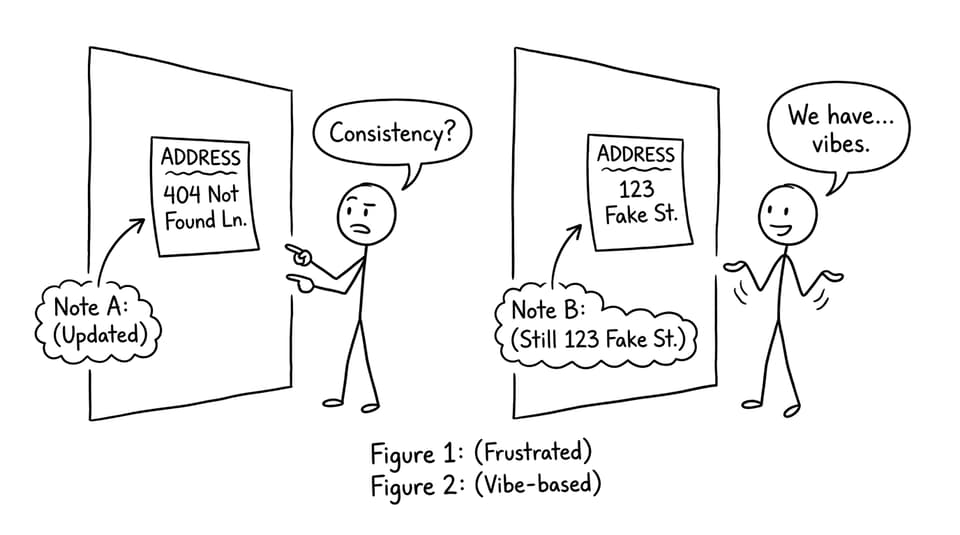
Data consistency means the same fact has the same value everywhere it appears. In other words: the database does not contradict itself.
Picture a student’s address stored in two places. If one gets updated and the other doesn’t, the system becomes inconsistent. Nothing is necessarily “corrupted” -- it’s just disagreeing with itself.
Consistency is heavily connected to good database structure. If you store each fact once and reference it using keys, updates happen in one place and contradictions are less likely.
Why normalisation matters for consistency
Normalisation is basically the database designer admitting a truth: duplication creates disagreement. In IB Computer Science, you can explain normalisation as organizing data to reduce redundancy and prevent update anomalies. For a full refresher, use Normalisation Explained for IB Computer Science and, if you’re on the newer syllabus, practice schema-building with Constructing a Database Normalized to 3NF.
Integrity vs consistency: the one sentence that wins marks
In IB Computer Science terms:
-
Data integrity: the data is correct and trustworthy.
-
Data consistency: the data matches across the system.
And here’s the twist worth writing in your own words: data can be consistent but wrong (everyone copied the same incorrect grade), or correct in one place but inconsistent elsewhere (one table updated, one forgotten).
Transactions: how databases protect both
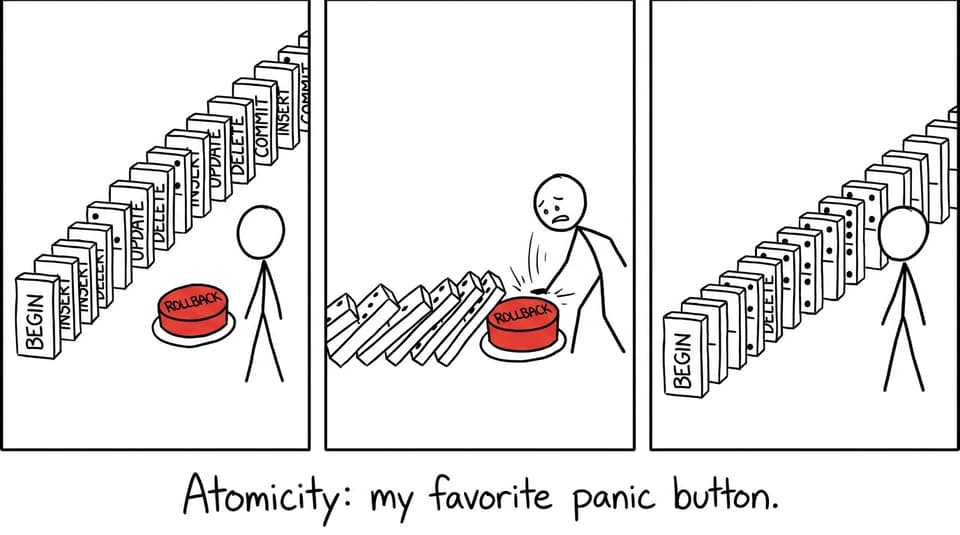
Transactions help databases avoid half-finished changes. If something fails, the system can roll back rather than leave a messy “in-between” state.
For IB Computer Science, link transactions to ACID and use the word rollback. RevisionDojo has a clear walkthrough in Atomicity, Consistency, Isolation, Durability (ACID), plus syllabus notes in Transactions and Data Consistency (A.1.2) and HL depth in How Transactions Maintain Data Integrity.
Conclusion: the IB Computer Science takeaway
If you remember only one thing for IB Computer Science, make it this: integrity asks if data is trustworthy; consistency asks if data agrees with itself. Build your answers with an example, a mechanism (keys, validation, access control, transactions), and a contrast sentence.
To sharpen this fast, use RevisionDojo’s Study Notes, Flashcards, and AI Chat to rehearse explanations, then pressure-test them in the Questionbank and with Mock Exams and Predicted Papers. When you can explain data integrity and data consistency calmly, you’re not just revising databases -- you’re writing like someone who understands why systems deserve trust.