

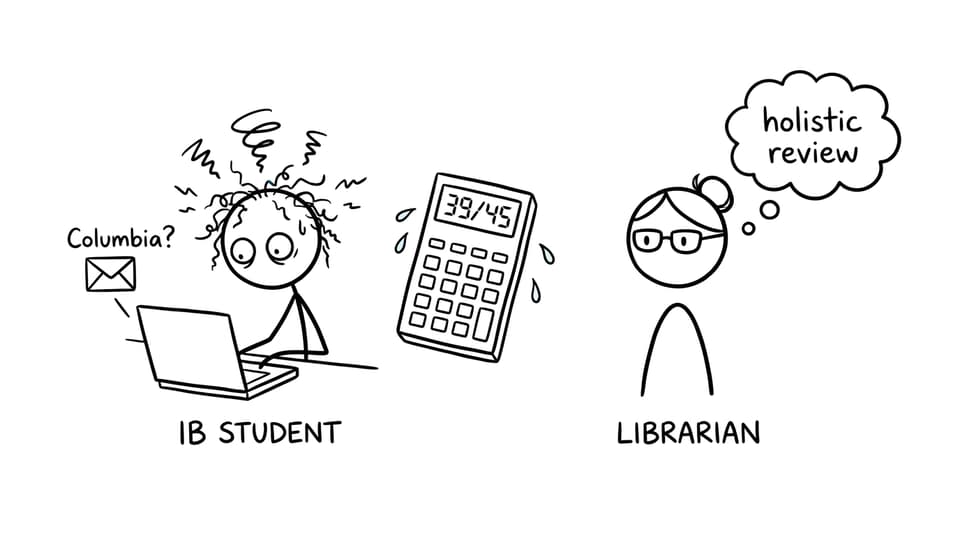
If you are staring at a 39 IB predicted or final score and wondering whether Columbia will quietly slide your application into the “no” pile, you are not alone. The IB has a special talent for turning strong students into anxious statisticians. But here’s the calmer truth: a 39 is not a red flag. It is a signal. And Columbia is the kind of place that tries to read the signal, not just the number.
Can a 39 IB score be competitive for Columbia?
Yes, a 39 IB score is academically competitive for Columbia in 2025. In most schools worldwide, 39 sits well above the global IB average and typically reflects consistent performance across demanding coursework, including Higher Levels and core requirements.
But Columbia does not publish a single IB cutoff that guarantees anything. Like many top US universities, it uses holistic admissions: academics matter a lot, but they are evaluated in context, alongside writing, recommendations, and evidence of intellectual drive.
If you want to sanity-check what your 39 looks like across subjects and core points, use the IB Grade Calculator and compare against IB Grade Boundaries. Those two tools often replace vague panic with something more useful: clarity.
What a 39 IB score actually says about you
A 39 in the IB Diploma usually says you can handle pressure, manage breadth, and still perform when the syllabus is big and the deadlines overlap.
A 39 also usually includes a story inside it:
-
Your subject mix (and whether your HLs are especially rigorous)
-
Your consistency across the six subjects
-
How the TOK + EE bonus points landed
-
Whether your score reflects an upward trend, a tough semester, or a strategic set of strengths
Columbia admissions officers are trained to look for those details. They are not just measuring points; they are asking what kind of thinker you are becoming.
How Columbia evaluates IB applicants (what matters besides IB points)
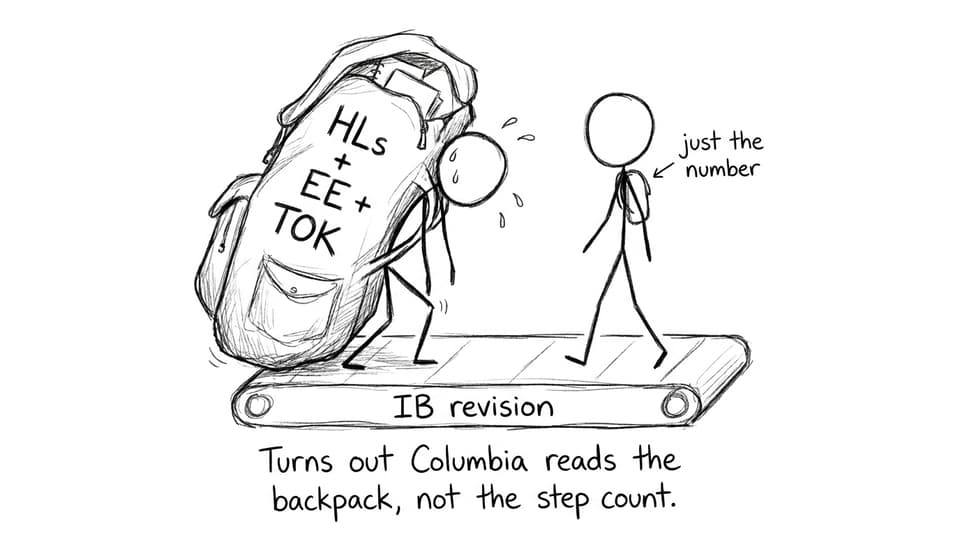
Columbia’s process rewards coherence. Not perfection. In practice, that means your IB score is strongest when the rest of your application “agrees” with it.
Academic context and HL choices
Your HLs matter because they reveal intent and readiness. A 39 with demanding HLs aligned to your intended area of study can read as more compelling than a slightly higher score with a less focused academic shape.
To make your academic story legible, consider building a clear revision and performance narrative using a loop like the one in How 45-Point IB Students Prepare for Exams. Even if you are not chasing 45, the method is about repeatable improvement, not heroics.
Essays: the part you control most
Columbia pays attention to how you think on the page. Your essays are not a place to apologize for the IB. They are a place to demonstrate curiosity, taste, and intellectual honesty.
A good rule: do not try to sound impressive. Try to sound precise.
Recommendations and sustained commitments
Teachers can contextualize your IB performance: rigor, classroom contribution, resilience, and what you do when work gets hard. Activities work best when they show depth over time rather than a scatterplot of clubs.
Predicted vs final IB scores (and how to handle the stress)
A predicted 39 is typically enough to be considered at the first read. The larger question is whether the rest of the file builds confidence: challenging courses, strong writing, and clear fit.
Final scores matter too, but students often overestimate how much a small change moves the needle after decisions are made. The smarter approach is to treat your predicted IB score as a planning tool: identify where points are most “available” and then train those skills intentionally.
For planning, RevisionDojo helps you turn improvement into a system:
-
Use the Questionbank to target weak topics instead of rereading notes.
-
Use IB revision workflows to keep your week realistic.
-
Use burnout-proof study structure so consistency survives stress.
A practical checklist: how to strengthen your application while preparing for IB exams
Here is a short checklist that respects the reality that you are both an applicant and a student.
-
Confirm where your 39 comes from (HL strength, core points, one weak subject) using the Grade Calculator.
-
Build a weekly routine with one timed session and several targeted ones. If you need a tight timeline, use Is 1 Month Enough to Study for IB Exams?.
-
Turn mistakes into assets: practice, feedback, retest. RevisionDojo’s AI Chat can unblock concepts quickly, and the Flashcards keep recall alive on busy days.
-
For writing-heavy subjects and core components, use the Grading tools via the IB Coursework Grader to get criterion-aligned feedback you can actually act on.
-
When you need realism, add Predicted Papers and Mock Exams inside RevisionDojo to train timing and stamina, not just knowledge.
Closing: a 39 IB score is a platform, not a ceiling
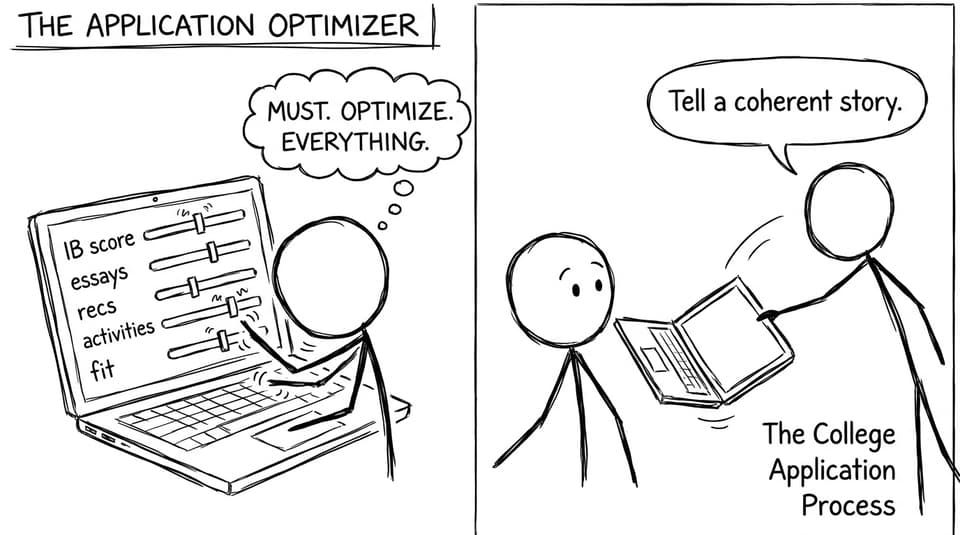
A 39 IB score can absolutely be part of a Columbia-worthy application in 2025. The number is strong. What will separate you is whether your application tells one clear story: rigorous curiosity, sustained effort, and a mind that keeps going after the first draft.
If you want to spend less time guessing and more time improving, make RevisionDojo your system: Study Notes for clarity, Flashcards for daily recall, Questionbank for exam skill, AI Chat for quick unblock moments, Grading tools for writing feedback, plus Predicted Papers, Mock Exams, a Coursework Library, and Tutors when you need expert support. Your IB score is not the whole story. But you can decide how strong the next chapter is.