Question
View answerHLPaper 1A
An athlete says, “I lost because I didn’t train hard enough, but I can improve for next time.” Which combination of locus of causality and controllability best describes this attribution?
An athlete says, “I lost because I didn’t train hard enough, but I can improve for next time.” Which combination of locus of causality and controllability best describes this attribution?
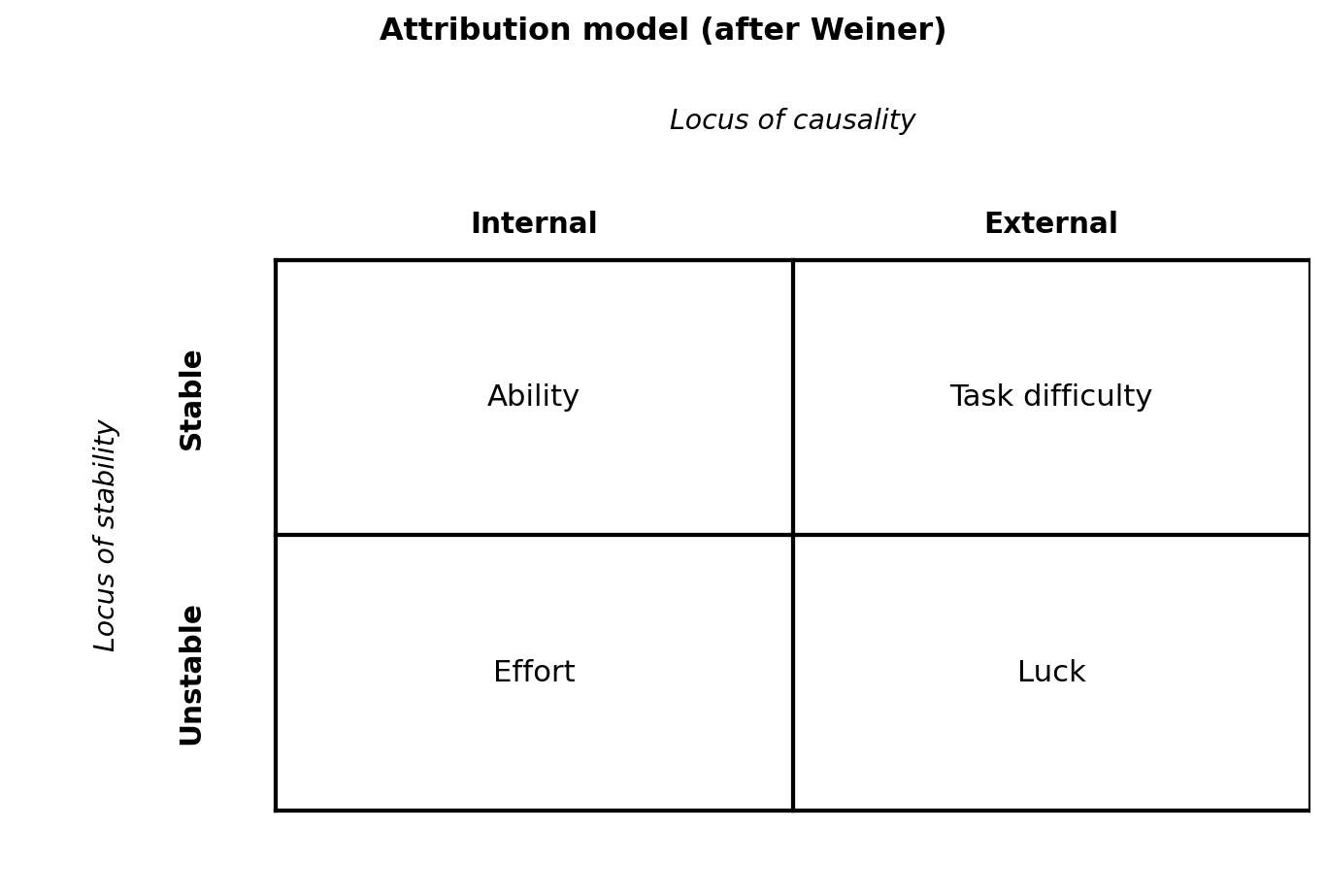
Attribution theory describes how athletes explain their successes and failures along two dimensions: the locus of causality (internal or external) and the locus of stability (stable or unstable). These attributions can affect an athlete's subsequent confidence. The figure shows the attribution model.
Figure: Attribution model (after Weiner)
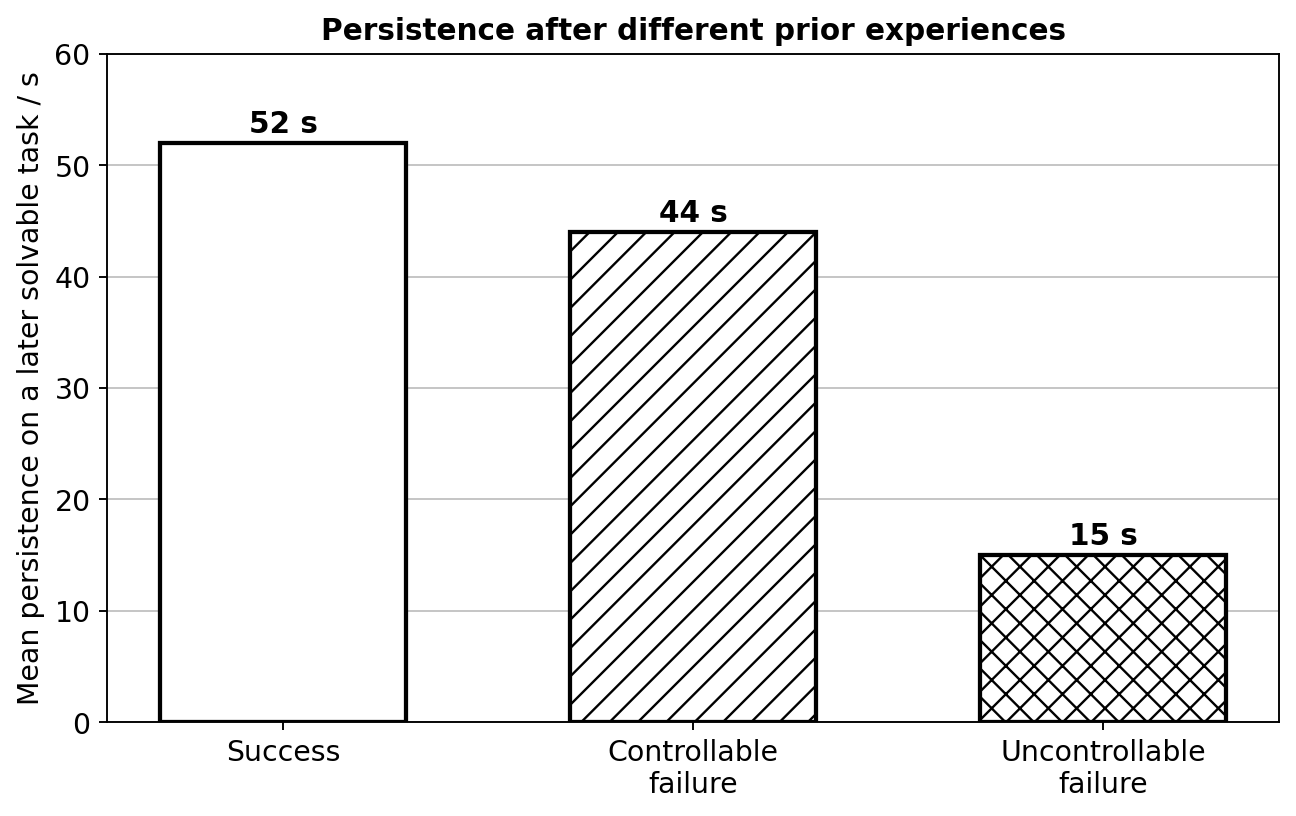
Athletes were randomly assigned to one of three conditions: a task they could succeed at, a failure they could control, or a failure they could not control. They were then all given the same solvable task. The figure shows the mean persistence on this task for each group. The uncontrollable-failure group shows signs of learned helplessness.
Figure: Persistence after different prior experiences
Which health outcome is most closely linked to higher mental toughness?
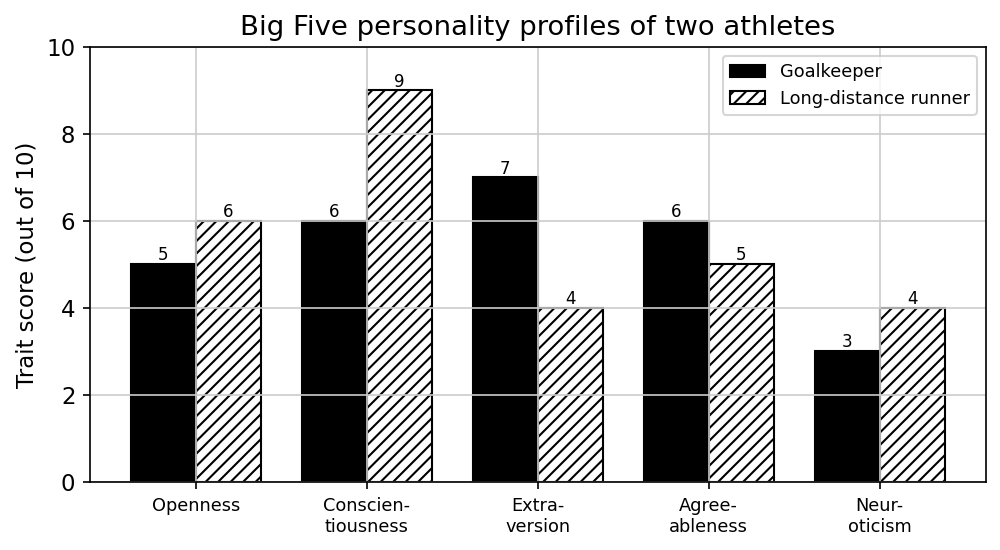
Personality can be described using the Big Five traits. The figure shows the Big Five profile of two athletes, a goalkeeper and a long-distance runner, each trait scored out of 10.
Figure 1: Big Five personality profiles of a goalkeeper and a long-distance runner.
Practice IB Sports, exercise and health science (SEHS) Topic C.1 Individual Differences with authentic exam-style questions for both SL and HL students. This question bank focuses on the exact syllabus content for C.1 Individual Differences and mirrors Paper 1A, 1B, 2 style where relevant.
Get instant solutions, detailed explanations, and build confidence with questions aligned to IB examiner expectations.