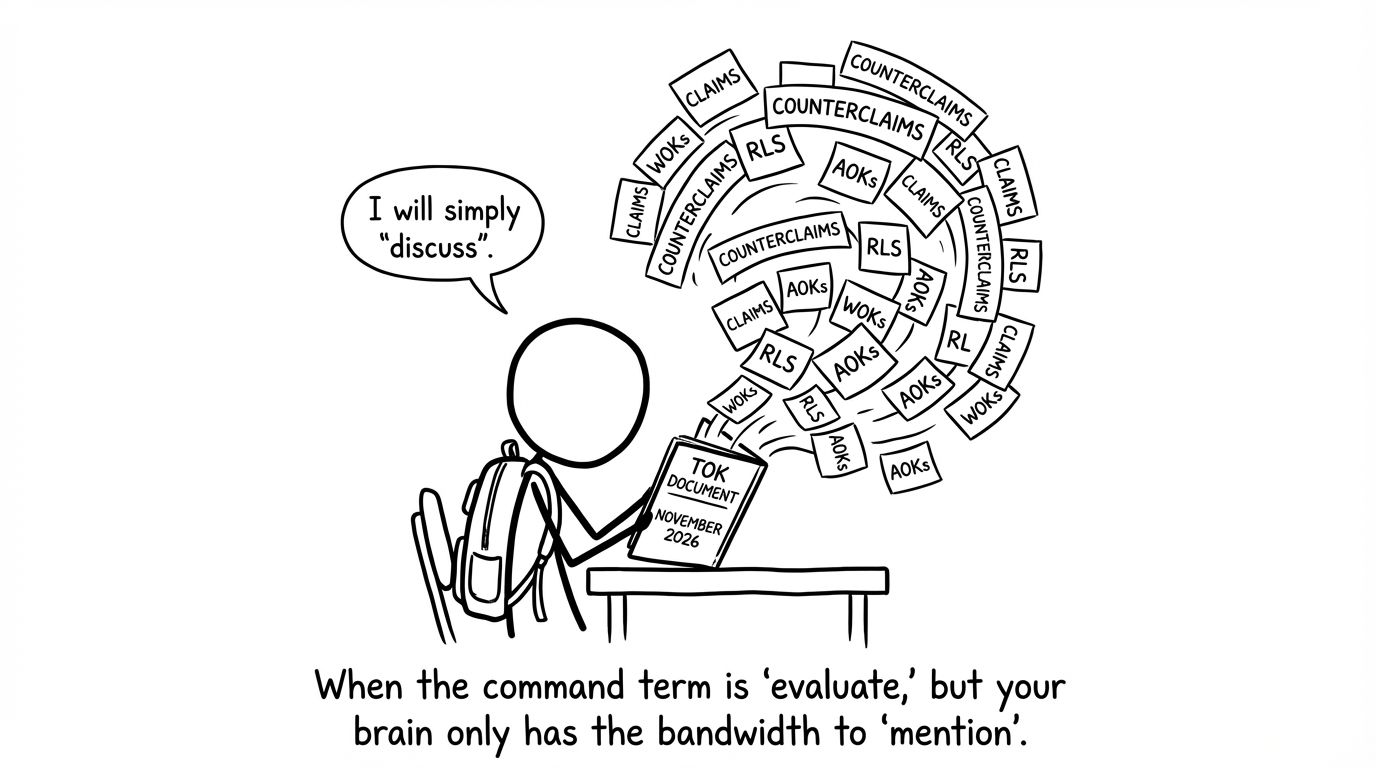
The first time most students panic in TOK, it’s not because the ideas are impossible. It’s because everything feels possible. Every news story, every quote, every AOK, every WOK--all of it seems like it could fit. Optional themes are the opposite of that chaos. They are a simple constraint that gives your thinking a spine.
When you focus on one or two optional themes, TOK stops being a scattered collection of clever points and becomes an argument with momentum. Examiners can feel that difference. And you can, too.
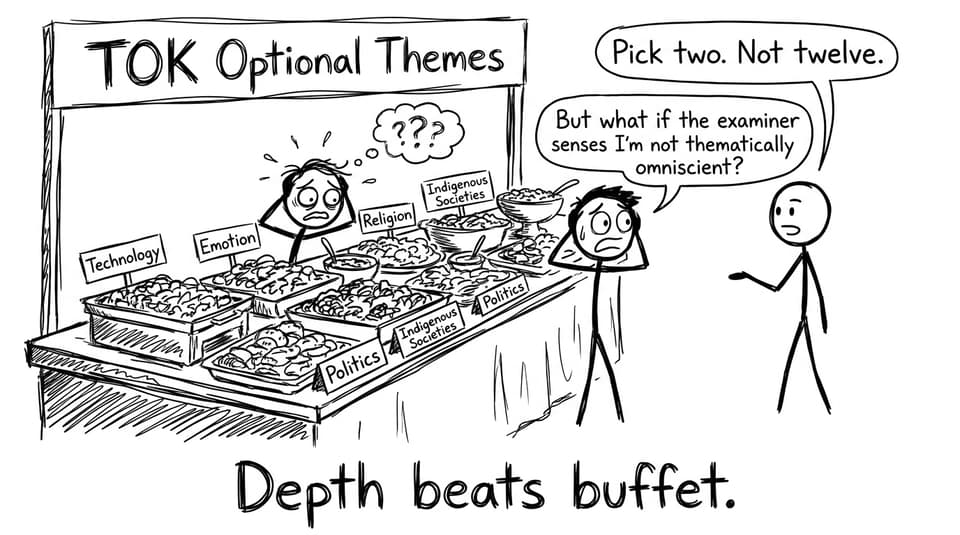
TOK Optional Themes buffet comic
Optional themes in TOK (quick checklist)
Before you commit, run this fast checklist:
Pick 1--2 optional themes you genuinely care about (depth beats coverage in TOK)
Write one draft Knowledge Question (KQ) that naturally lives in that theme
Collect 2 real-world examples that can produce both a claim and a counterclaim
Decide which RevisionDojo support you’ll use: Study Notes, Flashcards, AI Chat, Grading tools, and Mock Exams for pressure-proof practice
Optional themes make your TOK work feel original (without trying)
A lot of students aim for “originality” in TOK by chasing rare examples. That’s exhausting, and it usually backfires. Optional themes give you a better route: original thinking comes from angles, not trivia.
Take Knowledge and Technology. You don’t need obscure case studies. If you explore how algorithms shape what counts as “evidence,” you’ve already stepped into analysis most students avoid. The same is true for Knowledge and Religion, Knowledge and Politics, or Knowledge and Indigenous Societies--each theme naturally pushes you toward assumptions, values, authority, and bias.
Optional themes make real-world examples easier to use in TOK
The best TOK examples do two jobs at once: they’re concrete, and they’re debate-friendly. Optional themes help you find examples that naturally create tension.
Technology: access to knowledge vs misinformation and manipulation
Emotion: empathy as insight vs emotion as distortion
Politics: collective decision-making vs propaganda and power
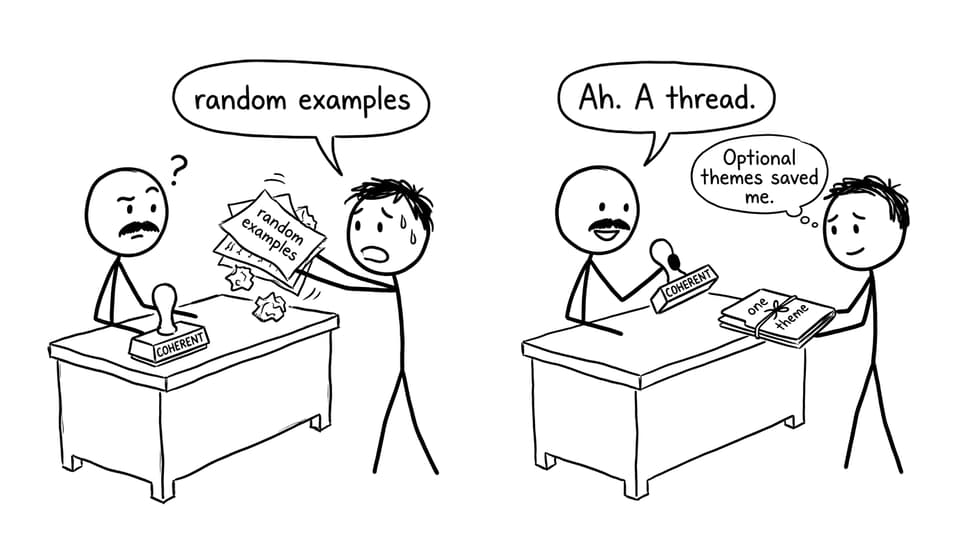
Once you pick a theme, your examples stop being random “cool stories” and start behaving like evidence.
For guidance on building examples into strong KQs, keep Examples and Tips for Writing IB TOK Knowledge Questions nearby. It pairs well with RevisionDojo’s Questionbank and AI Chat, especially when you’re testing whether your KQ is truly open-ended.
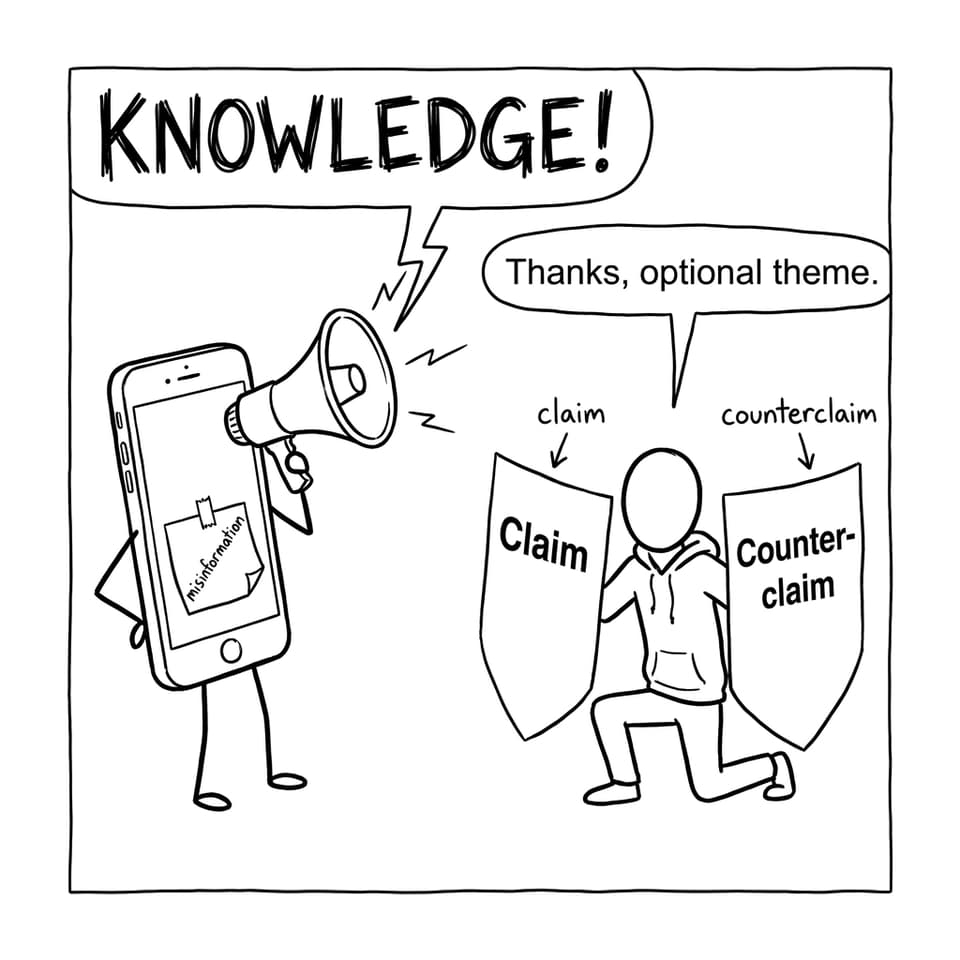
Claim vs Counterclaim comic
Optional themes level up claim--counterclaim sophistication in TOK
Most TOK essays lose marks in one predictable place: the counterclaim is treated like a polite contradiction instead of a real limitation.
Optional themes help because they come with built-in counterweights. In Knowledge and Technology, “technology spreads knowledge” is immediately challenged by “technology shapes what gets seen.” In Knowledge and Politics, “institutions protect truth” is immediately challenged by “institutions have incentives.”
If you want a practical framework for building that balance, follow How to Write a Good TOK Essay (10-Step Guide) and then pressure-test your paragraphs using RevisionDojo’s Grading tools.
Optional themes give your TOK conclusion real implications
A strong TOK ending isn’t a summary. It’s an honest answer plus consequences.
Themes make implications easier because they already point outward to the world. If your theme is politics, your implications might touch trust, legitimacy, or who gets to define knowledge. If your theme is technology, implications might include dependency, speed, or epistemic humility.
Optional themes aren’t extra content. They’re a strategy for thinking clearly under pressure. When you choose a theme, your TOK work becomes easier to plan, easier to support with real-world examples, and easier to conclude with implications that feel mature.
If you want to lock this in quickly, start with RevisionDojo’s TOK hub, then use the Questionbank, Study Notes, Flashcards, and AI Chat to build a theme-first plan. Add Grading tools, Tutors, and Mock Exams when you’re ready to refine. That combination is how good TOK becomes consistent TOK.