
The first time you run a clock reaction, it feels like chemistry is playing a practical joke on you. Two clear solutions. Nothing happens. You start doubting your stopwatch, your eyesight, maybe your life choices. Then, instantly, a deep color appears, right on cue. For IB students, that suspenseful “nothing… then everything” moment is exactly why the clock reaction is such a powerful way to understand kinetics.
IB clock reaction experiment in one paragraph
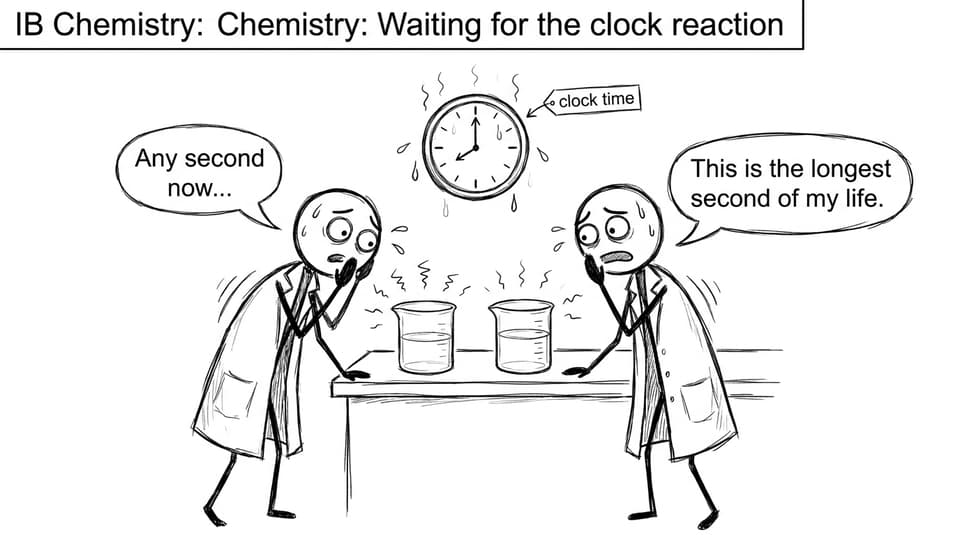
In a clock reaction, you mix solutions that undergo a sequence of reactions and produce a sudden visible change after a time delay (the “clock time”). By changing conditions like concentration, temperature, or catalysts, you can see how the rate changes. That makes it a perfect IB-level bridge between practical skills and theory: collision theory, activation energy, and rate measurements.
Quick checklist before you start (IB-friendly)
-
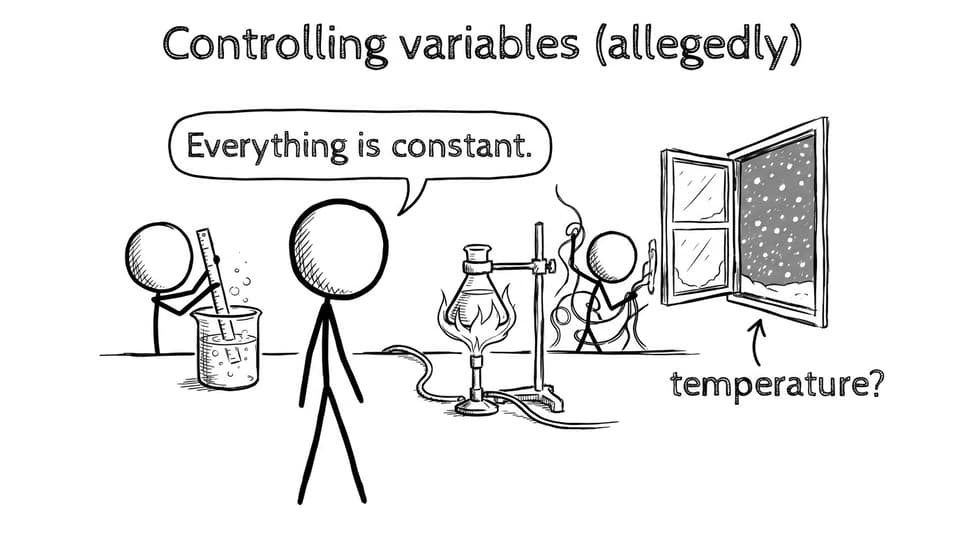
Keep volumes and mixing method consistent (same beaker shape helps).
-
Start timing the instant solutions mix.
-
Repeat trials (at least 3) and average your clock time.
-
Change only one variable at a time.
-
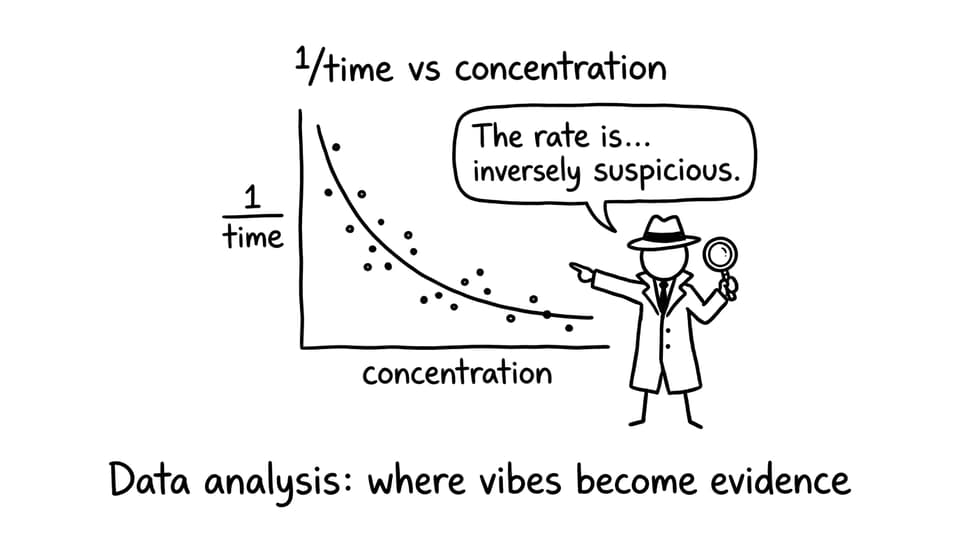
Convert time to a rate proxy (often rate ∝ 1/time).
If you need syllabus-aligned foundations, pair this with RevisionDojo’s topic hub for IB Chemistry and the core unit on Chemical kinetics.
How to study the clock reaction like an IB examiner
Understand what the “clock time” really measures
The visible color change is not magic; it happens when one reactant gets used up and the system suddenly allows a colored species to persist (often involving iodine and starch in classic school versions). The “clock time” is therefore linked to how quickly a key step proceeds. In IB terms: it’s an indirect but very clear way to measure reaction rate.
To connect the practical to theory, revise:
Make your data analysis feel inevitable
A common IB approach is to treat 1/time as proportional to rate, then plot 1/time against concentration (or another variable). You’re not just drawing graphs; you’re telling a story: “When particles meet more often (higher concentration) or have more energy (higher temperature), successful collisions increase, so rate increases.”
If temperature is your variable, RevisionDojo’s explanation of temperature and reaction rate helps you write answers that go beyond “it goes faster.” If you want the deeper mechanism link, use the Arrhenius equation guide.
How RevisionDojo helps you revise clock reactions for IB exams
When you’re preparing for IB exams, the goal is not just running the experiment; it’s being able to explain it under time pressure.
Use RevisionDojo to turn this into marks:
-
Practice with the free Questionbank feature and the full IB Chemistry Questionbank.
-
Lock in definitions and graphs using Chemical kinetics notes.
-
Build exam readiness with the Exam Builder for mock-style practice inside the Chemistry hub, plus targeted support from AI Chat and grading tools.
If you’re thinking about an investigation, this chemistry IA exemplar on acid catalysts and the iodine clock reaction can help you see what strong analysis looks like.
Closing: turn suspense into scores
The clock reaction is memorable because it feels like waiting for a plot twist. But for IB students, it’s also a clean lesson in how chemistry rewards patience, control, and careful reasoning. If you can describe the setup, justify your variables, analyze 1/time trends, and link everything to collision theory and activation energy, you’re not just revising a practical; you’re rehearsing exam marks.
Build that confidence with RevisionDojo’s Study Notes, Flashcards, AI Chat, Grading tools, Mock Exams, Predicted Papers, Questionbank, and Tutors inside the IB Chemistry hub.