TOK and the Human Sciences: why this AOK feels personal
In TOK, the human sciences are the one place where the topic can stare back at you. You read a psychology study, and suddenly you are not just analyzing knowledge--you are analyzing people like you, in classrooms like yours, making choices for reasons they can’t always explain.
That’s why this Area of Knowledge (AOK) is so useful for IB students. It produces rich real-life examples, but it also comes with built-in TOK challenges: messy measurement, fragile generalizations, and ethical lines that shift depending on culture, power, and purpose.
If you want a quick syllabus-aligned overview of this AOK, start with TOK: The Human Sciences (Topic 3.2). Then come back here to turn the ideas into exam-ready TOK analysis.
Quick TOK checklist for human sciences paragraphs
Use this mini-checklist whenever you write about psychology, sociology, economics, or anthropology in TOK:
-
Name the knowledge claim (what is being asserted about how we know?).
-
Identify the method (experiment, survey, case study, model, ethnography).
-
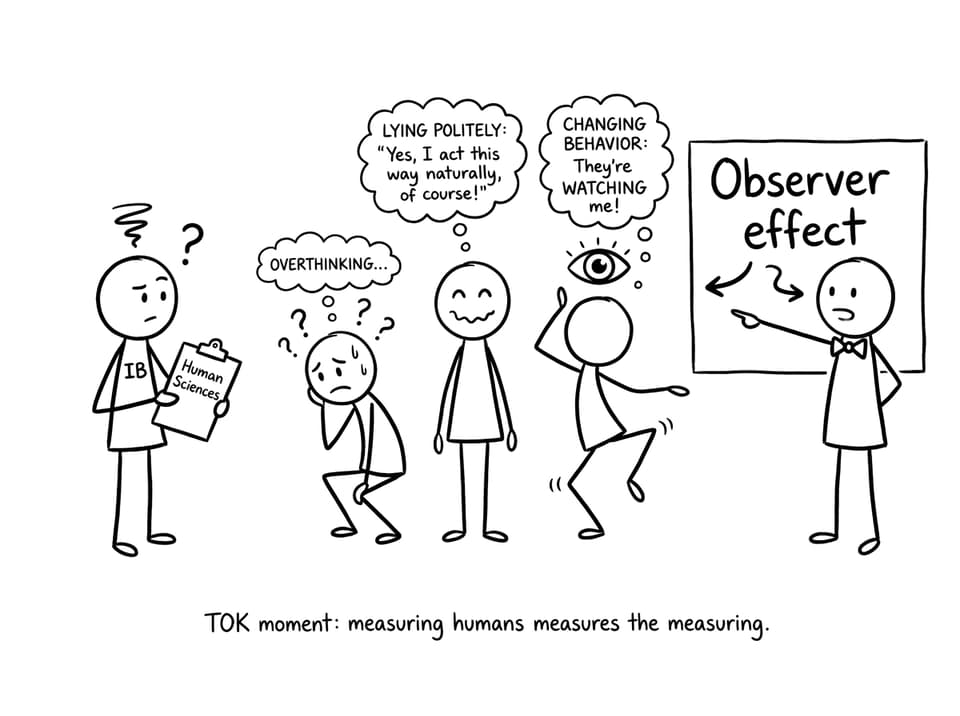
Ask what gets lost in measurement (definitions, proxies, context).
-
Flag bias and perspective (researcher, participant, culture, incentives).
-
Treat ethics as part of reliability, not an afterthought.
-
Add a counterclaim and evaluate it, not just mention it.
For stronger structure, pair this with Structuring for Success in IB TOK Essays and Comprehensive Guide to IB TOK Essay Structure.
Measurement problems: what counts as “evidence” in TOK?
In TOK, the human sciences force you to confront a quiet issue: we often measure what is easy to count, not what is most true. Happiness becomes a number on a survey. Motivation becomes attendance. Poverty becomes a threshold. These operational definitions can be useful, but they also shrink complex experiences into tidy variables.
This is where TOK language matters. Instead of saying “the study is unreliable,” you can write: The method increases reliability through standardization, but risks reducing validity because the concept is being approximated. That single trade-off (reliability vs validity) is a TOK engine.
If you want deeper method-focused detail for this AOK, see How We Study People (3.2.1 Notes).
Ethics: the constraint that shapes the knowledge
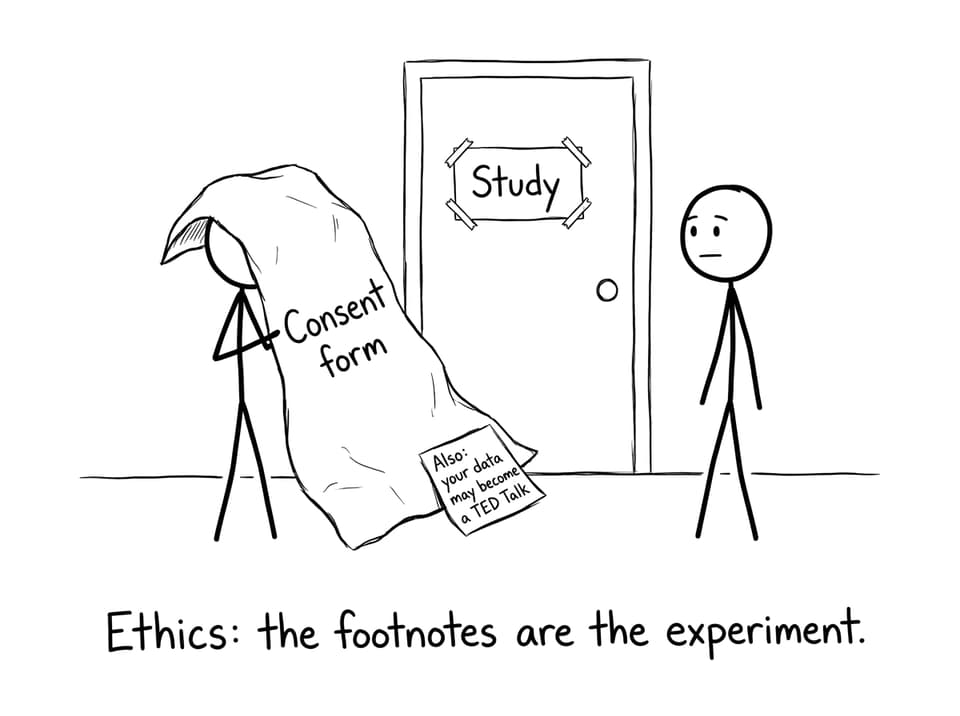
TOK students sometimes treat ethics like a “bonus point.” In the human sciences, ethics is structural. You can’t randomly assign people to trauma. You can’t always observe without consent. You can’t publish everything you learn without harming someone.
So the TOK challenge is not only What do we know? but What are we allowed to do in order to know it? Ethical limits can reduce experimental control, which changes the kind of knowledge we can justify. And when ethical standards vary across time and culture, the justification standards move too.
RevisionDojo’s Step-by-Step Guide to Effective TOK Essay Strategies is a practical guide for turning that into claim--counterclaim writing instead of vague moral commentary.
Complexity: why generalizations crack under pressure
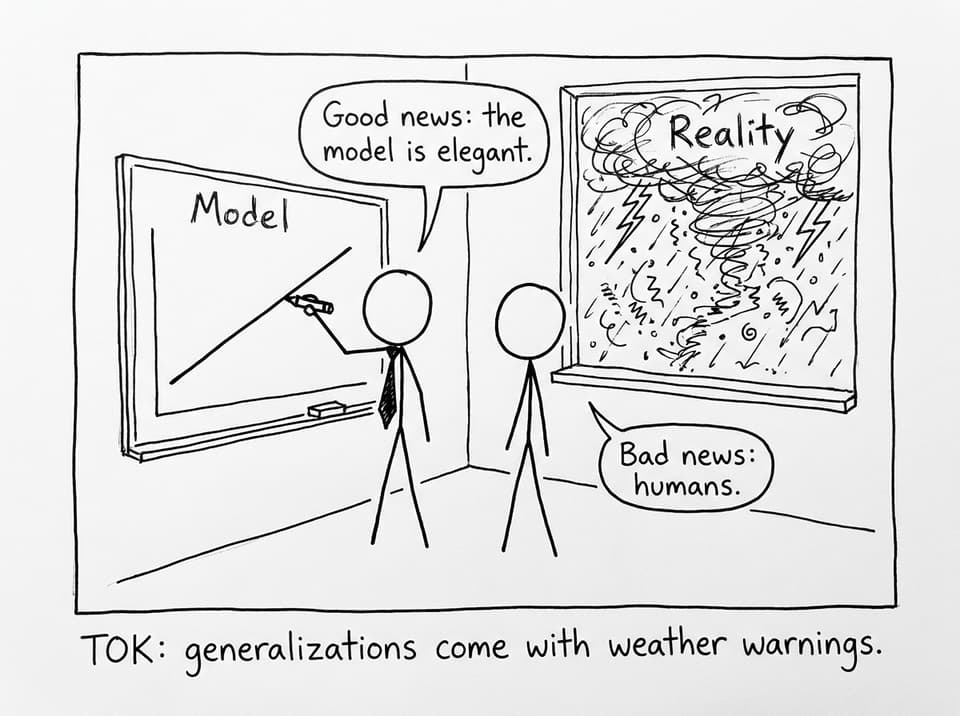
Natural sciences aim for laws that travel well. Human sciences aim for patterns that travel cautiously.
A psychology finding may not replicate across cultures because the social meaning of authority, shame, or individualism differs. An economics model might work in stable conditions, then collapse during a crisis because human behavior changes when fear enters the room.
In TOK terms, this becomes a powerful evaluation point: human sciences knowledge is often context-dependent, and the “strength” of a claim should be scaled to the population studied and the situation applied.
For a broader AOK comparison that helps with TOK contrasts, use Overview of the Five Areas of Knowledge in TOK and Connecting TOK Essay Ideas to Areas of Knowledge.
Examples you can actually use in TOK
Choose examples that naturally expose a limitation:
-
The Stanford Prison Experiment: useful for TOK because it raises questions about ethics, researcher influence, and whether dramatic findings are “knowledge” or performance under pressure.
-
Economic forecasting during global shocks: useful because it shows how models simplify reality, and how human expectations can change outcomes.
Then build the paragraph using clear signposting. If you struggle with that, Building Coherent Arguments in TOK is a strong companion.
Conclusion: use TOK to stay honest about people
The human sciences are tempting because they sound like they explain us. TOK is what stops that temptation from turning into overconfidence. When you write about measurement, ethics, and complexity, you are showing the examiner you can handle uncertainty without giving up on justification.
Build your next TOK paragraph with one strong example, one real limitation, and one thoughtful counterclaim. Then refine it with RevisionDojo’s TOK resources hub and the dedicated Human Sciences topic page. TOK rewards the student who can say: this is what we know--and this is the price we paid to know it.