


If you’ve been revising and someone says, “Don’t forget Paper 3,” you might feel a quiet panic. Not because you forgot to study, but because you can’t even find the right resources.
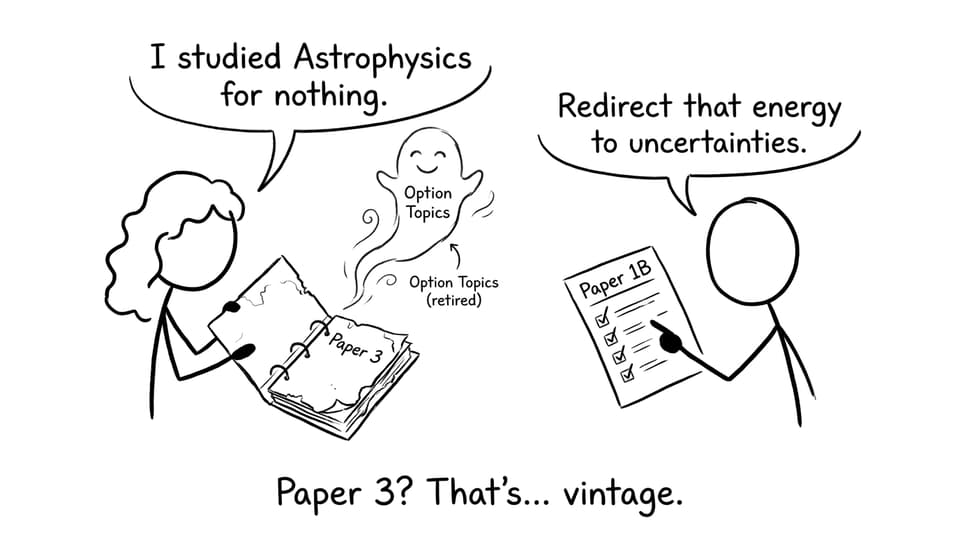
Here’s the truth for IB Physics students sitting exams in 2025 and beyond: IB Physics HL Paper 3 doesn’t exist anymore. The old Paper 3 (options + experimental skills) has been removed, and the skills that used to live there have moved into Paper 1B.
That change sounds simple. In practice, it reshapes how you should train. Not what you “know,” but how you show it under time pressure.
IB Physics HL Paper 3 in 2025: the one fact to remember
For the updated course (first assessment 2025), the exam structure changes in a way that’s easy to summarise:
-
Paper 3 has been eliminated
-
Option topics have been removed
-
Paper 1B is now where experimental design, data handling, and uncertainty analysis show up
So when students search “IB Physics HL Paper 3,” what they usually mean is: What am I supposed to do now to prepare for the experimental-style part of the exam?
The answer is Paper 1B.
You can anchor your prep in the updated IB Physics hub on RevisionDojo: IB Physics Resources.
Quick checklist: what to do this week (not someday)
If you want a simple reset that works even when motivation is low, use this checklist:
-
Learn the Paper 1B skill set: variables, method design, uncertainty, limitations
-
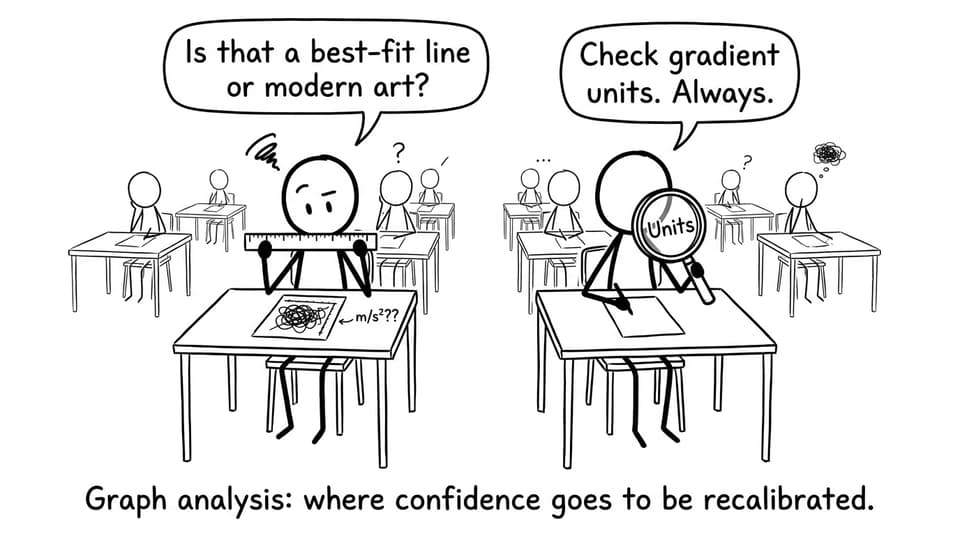
Practice reading graphs like they’re markschemes (gradient, intercept, units, trends)
-
Convert recurring mistakes into Flashcards (yes, even for calculation habits)
-
Do short, timed sets so you get used to “clean thinking” under pressure
-
Use one consistent loop: notes, then questions, then feedback, then reattempt
On RevisionDojo, this loop is built into the platform: Study Notes, Flashcards, the Questionbank, and AI Chat (plus Mock Exams and Predicted Papers when you’re ready to simulate the full thing).
What Paper 3 used to test (and why it confused everyone)
In the old structure, Paper 3 did two things:
-
Tested option topics (chosen by the school)
-
Tested experimental and data skills (often overlapping with IA thinking)
The option system sounded fair on paper, but it wasn’t. Different schools offered different options, and students ended up with unequal preparation pathways. The reform simplified that.
For IB Physics, the key consequence is practical: stop spending time trying to “cover the options.” Your return on time is far higher if you build sharp experimental reasoning that transfers across the whole course.
Paper 1B: what it actually rewards in IB Physics
Paper 1B is where IB Physics starts feeling less like memorising and more like doing.
Experimental design (but graded like an exam)
You’re not being asked to write an IA. You’re being asked to show clear scientific decisions fast.
A strong Paper 1B experimental response usually includes:
-
A direct statement of the independent and dependent variables
-
Control variables that are realistic (not an endless list)
-
A method written in steps that someone else could follow
-
A measurement plan: ranges, repeats, how data will be recorded
-
A brief link to the physics model (why this method tests the relationship)
If you want topic-specific practice that still reinforces these skills, use targeted question sets like RevisionDojo’s Mechanics Questionbank. The content varies, but the habits transfer.
Data interpretation (the hidden time sink)
Many students lose marks not because they can’t do the physics, but because they rush the reading.
Paper 1B data interpretation often demands that you:
-
Extract the trend carefully
-
Use the correct relationship (proportional, linearised, inverse, etc.)
-
Calculate a gradient with units and meaning
-
Comment on scatter and limitations without vague phrases
This is why living inside the data booklet matters. Make it familiar enough that it stops feeling like a separate document. RevisionDojo’s Physics Data Booklet is a clean way to practise that navigation.
Uncertainty and errors (where top grades quietly come from)
Uncertainty marks are some of the most “available” marks in IB Physics because they’re rule-based.
Train these repeatedly:
-
Absolute vs percentage uncertainty
-
Propagation (when you add, subtract, multiply, divide)
-
Identifying systematic vs random effects
-
Stating limitations in a way that connects to the data
-
Improvements that are specific (equipment choice, method change, control variables)
If you’ve done an IA, you already know the language. Paper 1B just asks you to deploy it faster and more precisely.
How to prepare for Paper 1B when you can’t find enough Paper 1B material
This is where students get stuck: “I can’t find enough Paper 1B questions.”
You don’t need perfect labels. You need the right skill stimulus.
Here’s a high-yield approach for IB Physics:
Use old Paper 3 experimental-style questions (selectively)
Old Paper 3 questions can still be useful if you filter:
-
Keep anything about experiment planning, graphs, uncertainty, evaluation
-
Ignore option-topic content (that part is retired)
This gives you volume practice for the same reasoning patterns Paper 1B requires.
Train in short timed blocks
Paper 1B rewards crispness. Set a timer and practise answers that are:
-
short enough to finish
-
structured enough to earn marks
-
precise enough to avoid “hand-wavy” evaluation
When you want the pressure of realistic exam practice, RevisionDojo’s IB Predicted Papers include Physics papers aligned to the newer structure, and you can also use Mock Exams to rehearse pacing.
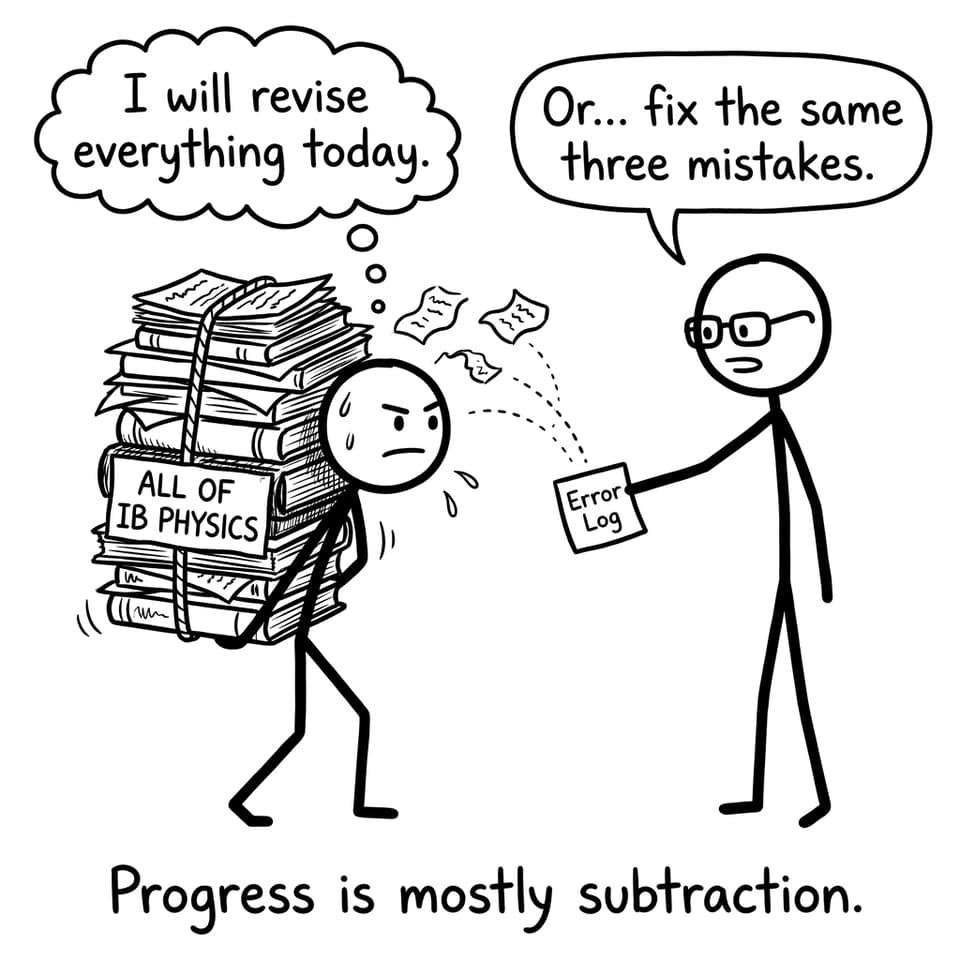
Build an “error log” like a scientist
Most improvement is not adding more content. It’s removing repeated failure modes.
After every practice set, write:
-
what went wrong
-
why it went wrong
-
the smallest rule that fixes it
-
one question you will redo in 48 hours
RevisionDojo makes this loop faster because the Questionbank gives targeted practice, AI Chat explains what you missed, and Flashcards lock the fix into recall.
Common mistakes students make when “studying Paper 3” in 2025
These are the traps that waste the most time:
-
Studying option topics as if they’re still examinable
-
Treating experimental questions like essay prompts (too long, too vague)
-
Ignoring units when interpreting gradients and constants
-
Writing “human error” as a limitation (it signals you don’t know the mechanism)
-
Avoiding uncertainty calculations because they feel annoying
If you’re also unsure how HL expectations differ overall, it helps to read How Does IB Physics HL Differ from SL in Difficulty?. It frames the mindset shift you need for higher-mark reasoning.
How RevisionDojo helps you train Paper 1B skills (without guessing)
The best IB Physics prep feels like a tight loop, not a scattered search.
A practical setup:
-
Start in IB Physics Resources for topic coverage
-
Use Study Notes when you can’t explain a concept cleanly
-
Drill with the Questionbank to turn knowledge into marks
-
Use AI Chat when you’re stuck mid-question and need clarity fast
-
Use Flashcards for definitions, units, and uncertainty rules
-
Use Predicted Papers and Mock Exams to build exam stamina
-
Use Grading tools for coursework drafts (because strong IA thinking supports Paper 1B)
-
If you need a human check, bring in Tutors to correct strategy early
For broader planning (how to organise weeks, not just topics), two strong reads are How to Study for IB Exams: Step-by-Step Guide and How 45-Point IB Students Prepare for Exams.
Closing: stop chasing Paper 3, start training Paper 1B
If you take only one message into your next revision session, let it be this: IB Physics HL Paper 3 doesn’t exist anymore.
In 2025, your job is to prepare for Paper 1B: experimental design, data handling, uncertainty, and calm scientific reasoning under time limits. That’s not a downgrade. It’s a clearer target.
Build your routine around the skills that convert directly into marks, and use RevisionDojo as your home base: IB Physics Resources, the Questionbank, Study Notes, Flashcards, AI Chat, Predicted Papers, and Mock Exams. In IB Physics, the students who win aren’t the ones who study the most topics. They’re the ones who repeat the right skills until they look simple.