


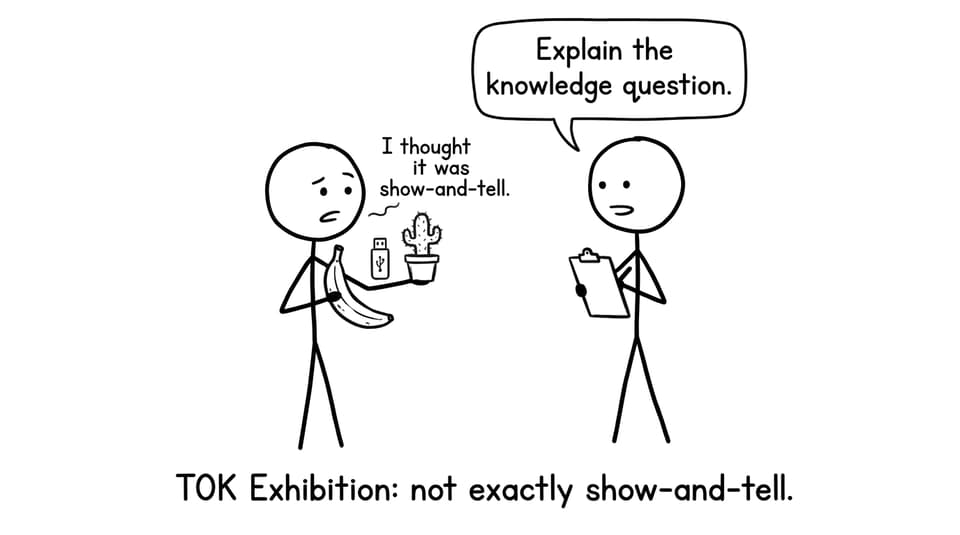
If you have ever felt that the TOK Exhibition is half philosophy and half performance, moderation can feel like the moment the lights come on.
TOK exhibition moderation is not there to trap you. It is the IB’s way of checking that your teacher’s marking matches the global standard, and that your TOK thinking is visible on the page. When you prepare well, moderation becomes boring (in the best way). Your objects make sense, your commentary is tight, and your links are easy to follow.
TOK moderation prep checklist (use this the night before)
-
Your TOK prompt/knowledge question is written clearly and used throughout.
-
Each object is specific, real-world, and easy to justify.
-
Each commentary stays focused: context, link, analysis, implication.
-
Your three objects connect to one coherent central thread.
-
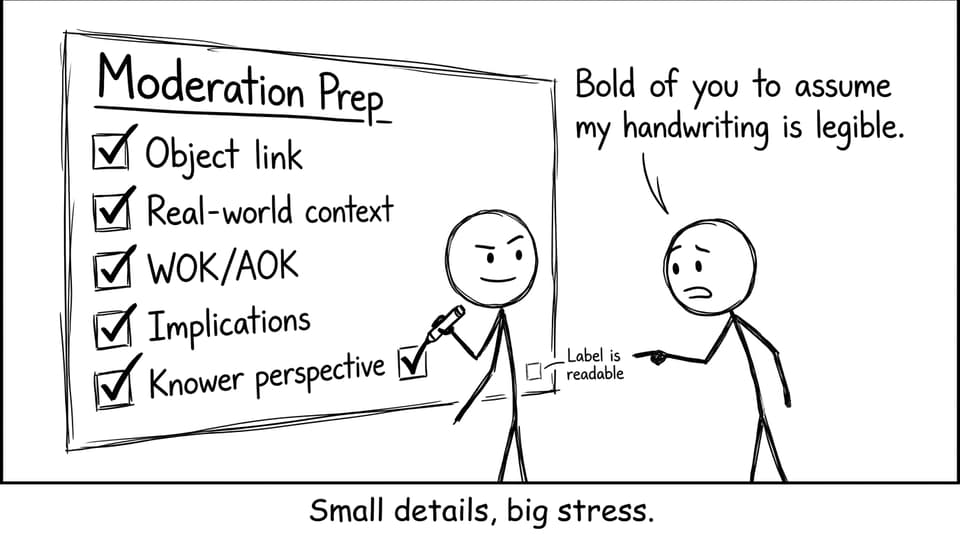
Labels are readable, concise, and consistent.
-
You can answer basic follow-up questions without improvising your whole argument.
For a broader view of requirements, keep this open while you revise: Mastering the TOK Essay and Exhibition.
Understand what TOK exhibition moderation actually checks
Moderation is essentially quality control. The IB wants to see that your TOK Exhibition commentary meets the assessment focus: justified object choices, clear real-world context, and convincing TOK analysis that stays tied to the prompt.
A helpful mindset shift: moderators are not grading your display. They are reading your writing. That is why clarity wins. If a link is implied but not stated, it will likely be treated as missing.
To align your writing with what examiners reward, use: TOK Exhibition Rubric: How to Score Top Marks and the quick explainer How Is the TOK Exhibition Graded?.
Choose TOK objects that make the rubric easy
Strong TOK objects do two jobs at once: they show a real-world situation and they invite analysis (not just description). The best objects also make your knowledge question feel inevitable, like the object almost demanded the question.
Aim for three objects that are:
-
Distinct (different contexts, different angles)
-
Defensible (you can explain why this object, not a generic example)
-
Analysable (they reveal assumptions, limits, or tensions in knowledge)
If you are stuck, read: Selecting the Right Objects for Your TOK Exhibition.
Write TOK commentary that feels “obviously moderated-ready”
Think of each object commentary as a small argument with a clear path. In TOK, the fastest way to lose marks is to spend too many words describing the object and too few words doing knowledge work.
A clean TOK micro-structure:
-
Context: what it is, where it came from, why it exists.
-
Link: one or two sentences connecting directly to the prompt.
-
Analysis: use an AOK/WOK lens to explain how knowledge is produced, trusted, or challenged here.
-
Implication: what this suggests about reliability, bias, responsibility, or limits.
If your knowledge question feels fuzzy, sharpen it with Examples and Tips for Writing IB TOK Knowledge Questions and TOK Essay Titles: What Are Knowledge Questions?.
Make the three TOK objects feel connected (not three mini-essays)
Moderators love coherence. Your TOK Exhibition should read like three perspectives on one big issue, not three unrelated examples that happen to mention the same prompt.
Two practical moves:
-
Reuse 2 to 3 key TOK terms across all objects (e.g., “justification,” “bias,” “authority”) and deepen them each time.
-
Add one bridging sentence at the end of object 1 and 2: “This raises a tension that becomes clearer when we consider…”
If you need help linking real-life situations to your analysis, use The Art of Linking Examples to Knowledge Questions.
Rehearse TOK moderation questions like you are training a reflex
You do not need a script. You need a stable set of answers that return to your prompt and your justification.
Practice answering:
-
Why this object?
-
What TOK idea does it reveal?
-
What is a limitation or counter-perspective?
-
So what? Why does it matter?
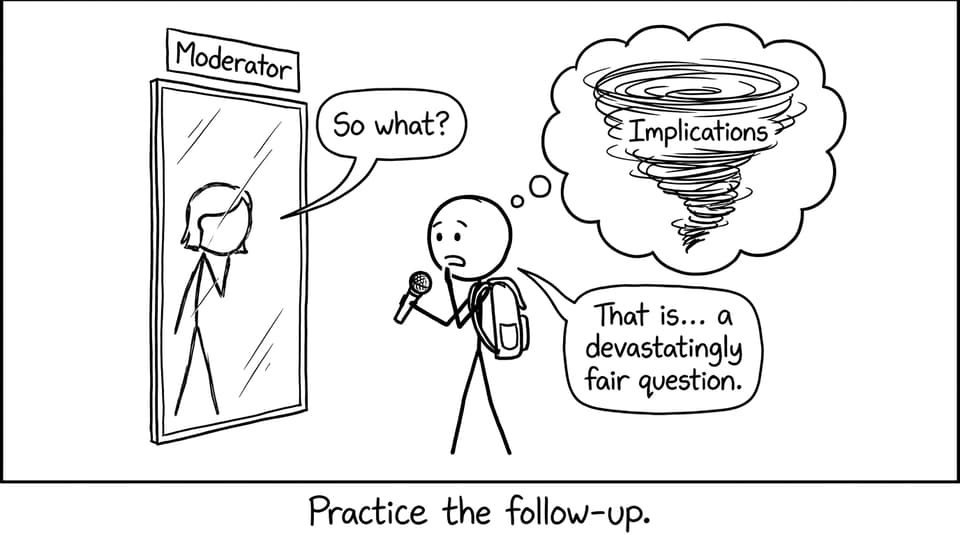
To strengthen your “so what,” read How to Reflect Critically in TOK and How to Reflect on Yourself as a Knower in TOK.
Use RevisionDojo to stress-test your TOK exhibition before submission
The quiet advantage of using RevisionDojo is iteration. TOK gets better when you revise in small, honest cycles.
-
Use the Grading tools to check rubric alignment with the IB TOK Exhibition Grader.
-
Pull examples and structure patterns from the Coursework Library: IB TOK Exhibition Examples.
-
Use AI Chat to rehearse moderation questions and refine explanations.
-
Use Study Notes and Flashcards to keep AOK/WOK language precise.
-
If you want a human set of eyes, RevisionDojo Tutors can help you tighten links without rewriting your voice.
Final thought: make TOK moderation boring
The best TOK exhibition moderation prep is the kind that leaves nothing mysterious. Clear links. Clean justifications. Real implications. A knower’s perspective that feels honest, not decorative.
If you want to walk into TOK moderation with calm confidence, build your final checks inside RevisionDojo: refine with AI Chat, verify with the TOK Exhibition Grader, compare with the Coursework Library, and tighten your language using Study Notes and Flashcards. TOK rewards the student who makes their thinking easy to see.