



In TOK, the moment you type a question into a search bar, you’ve already started an argument.
Because technology doesn’t just deliver knowledge. It filters it, ranks it, translates it, and sometimes quietly edits what you think is even worth knowing. That’s why the TOK theme of knowledge and technology feels so personal to IB students: you’re building your beliefs inside tools you didn’t design.
If you’re revising for exams, treat this theme like a flashlight. It reveals the hidden wires behind “facts” on screens: algorithms, incentives, interfaces, and bias. And once you see those wires, your TOK analysis gets sharper.
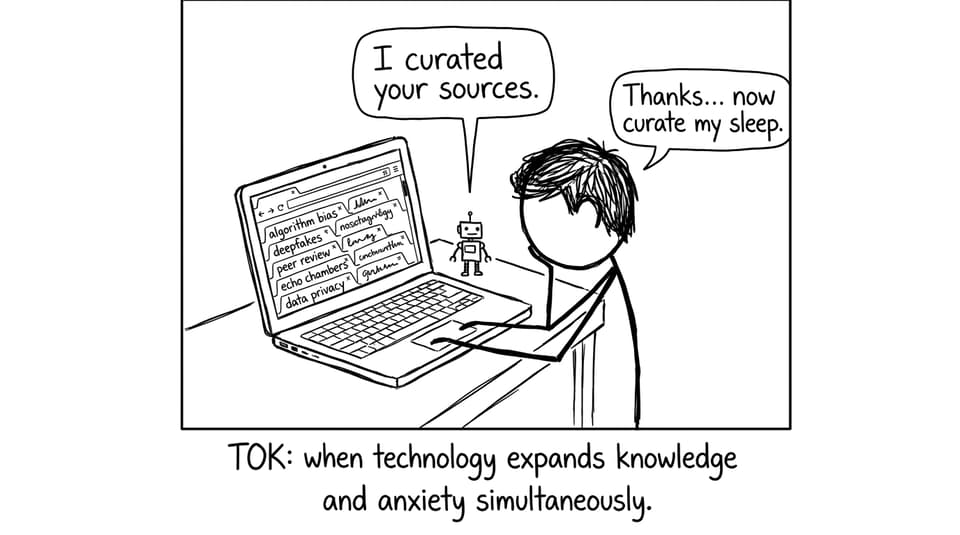
Knowledge and technology in TOK: a quick checklist
Use this checklist to keep your TOK paragraphs focused (and examiner-friendly):
-
Define technology in context (tool, system, or method?)
-
Identify what counts as knowledge in your example (data, explanation, expertise, consensus)
-
Write one precise knowledge question (KQ)
-
Build a claim and a counterclaim
-
Link to a Way of Knowing (reason, perception, language, emotion)
-
End with implications: so what changes about trust, responsibility, or certainty?
For a clean planning flow, borrow the structure from Step-by-Step Guide to Effective TOK Essay Strategies and adapt it to your tech example.
How TOK frames the knowledge: technology relationship
TOK asks you to notice how technology intervenes between you and the world.
Sometimes it extends your abilities: telescopes expand perception; statistical software strengthens reason; translation tools widen language access. But TOK also pushes you to ask what gets lost: context, uncertainty, minority perspectives, or the ability to verify claims without the tool.
A useful TOK sentence stem here is: “Technology functions as a mediator, so the reliability of knowledge depends on…” If you want to keep your essay coherent as you develop this idea, use Structuring for Success in IB TOK Essays.
Writing strong TOK knowledge questions about technology
A strong TOK KQ is broad enough to debate, but specific enough to control. Try patterns like:
-
To what extent do algorithms shape what counts as credible knowledge?
-
How does speed of information affect justification and verification?
-
Under what conditions does technology increase understanding rather than information?
If you need models that show what “good” looks like, see Examples and Tips for Writing IB TOK Knowledge Questions and also Examples of Strong TOK Knowledge Questions: Advice for IB Students.
Claim and counterclaim: the fastest way to sound like TOK
In TOK, “technology is good” is not a claim. It’s a vibe.
Instead, make a knowledge claim that an examiner can evaluate:
Claim: Technology broadens access to knowledge by lowering costs and distributing expertise (think open datasets, online lectures, citizen science).
Counterclaim: Technology can narrow understanding by hiding methods behind interfaces (think black-box AI outputs, ranked search results, and engagement-driven feeds).
Then take the TOK step most students skip: implications. What does that mean for trust, authority, or responsibility? Use How to Consider Implications in TOK Arguments and Conclusions to turn “balanced” into “insightful.”
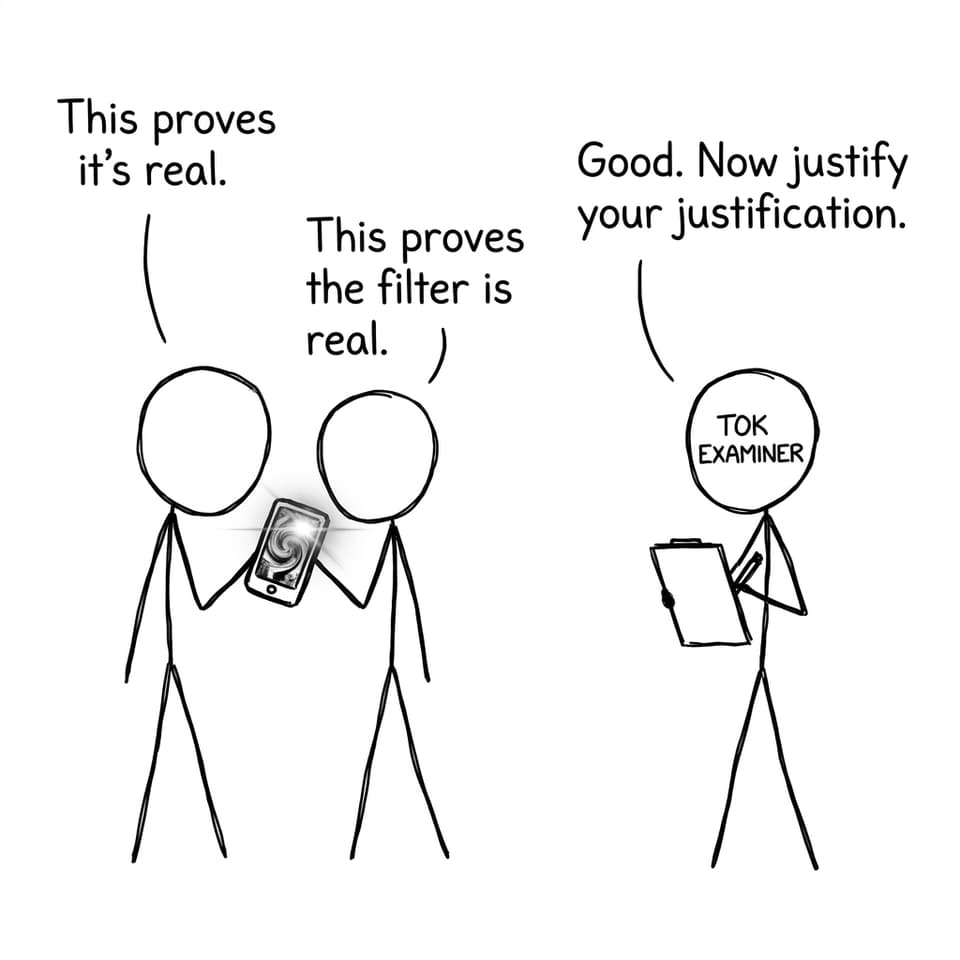
Examples that work in TOK (and why they work)
Choose examples that create a real tension about knowledge, not just a cool headline.
-
AI in medical diagnostics: knowledge becomes faster and sometimes more accurate, but justification may be opaque to patients and even doctors.
-
Deepfakes and synthetic media: perception is no longer a stable pathway to truth; verification shifts toward metadata, institutions, and digital literacy.
-
Social media echo chambers: shared knowledge becomes personalized; community “consensus” can be engineered by recommendation systems.
If you struggle to explain why your example matters, use the linking method in The Art of Linking Examples to Knowledge Questions.
Ways of Knowing: where technology quietly changes the rules
Technology often reshapes WOKs without announcing it.
-
Perception: filters, edits, and camera angles change what seems real.
-
Reason: models and software apply logic, but embed assumptions you may not see.
-
Language: platforms compress nuance; translation tools reshape meaning.
To connect your analysis to core TOK skills, review TOK Core Skills and Strategies Every IB Student Must Know.
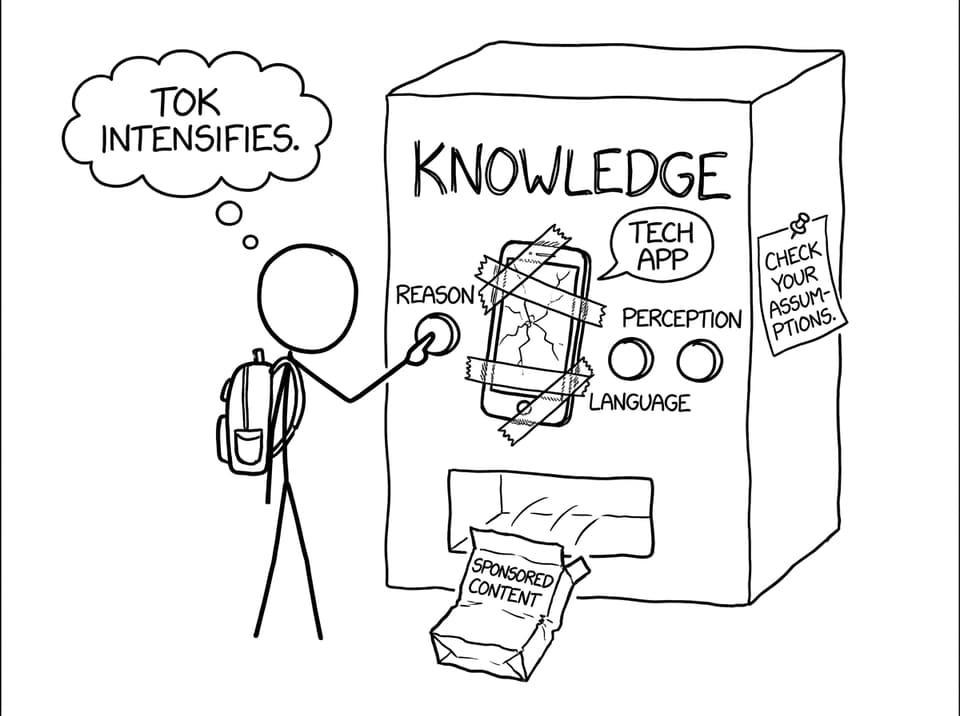
The knower in a tech-driven world (your marks live here)
TOK rewards students who admit they’re part of the system.
Ask yourself: when you research, do you trust the first result because it’s true, or because it’s ranked? When you revise, do you confuse familiarity (you’ve seen it online) with knowledge (you can justify it)? This kind of reflection separates a well-organized essay from a high-scoring TOK essay.
Use prompts from How to Reflect on Yourself as a Knower in TOK to add personal, disciplined insight without turning your writing into a diary.
Conclusion: make TOK practical, not abstract
The Knowledge and Technology theme in TOK is really about one idea: tools don’t just help you know more, they change what “knowing” means.
When you write about TOK and technology, aim for controlled questions, balanced claims, and implications that show intellectual responsibility. Then practise with examiner-style structure.
If you want a single place to train those skills, RevisionDojo is built for it: use the Study Notes to lock in concepts, the Flashcards to retain key terms, and the AI Chat to challenge your claims and counterclaims. When you’re ready to test yourself, the Questionbank, Grading tools, Predicted Papers, and Mock Exams help you practise under pressure, the way exams actually feel. And if you want model work, the Coursework Library and Tutors can show you what top-level TOK looks like, especially for TOK knowledge and technology.


