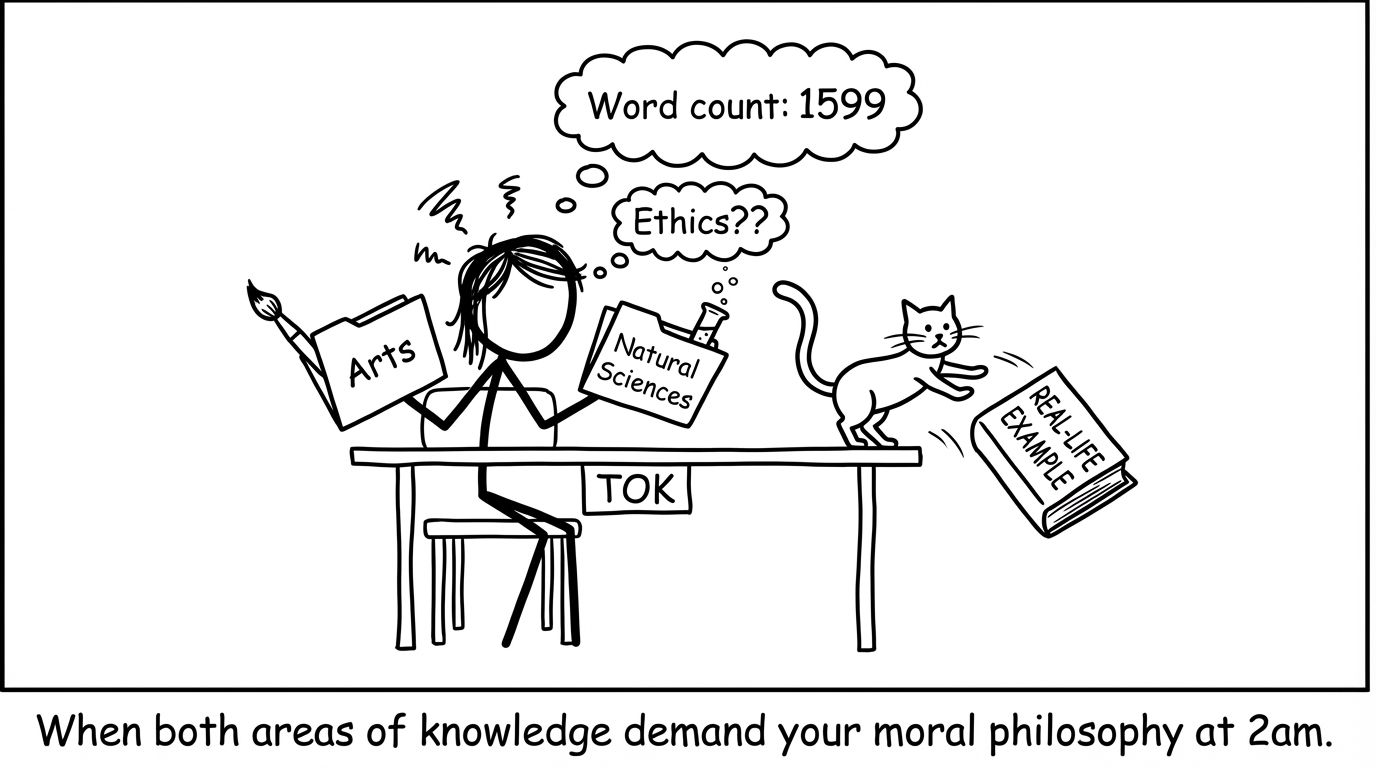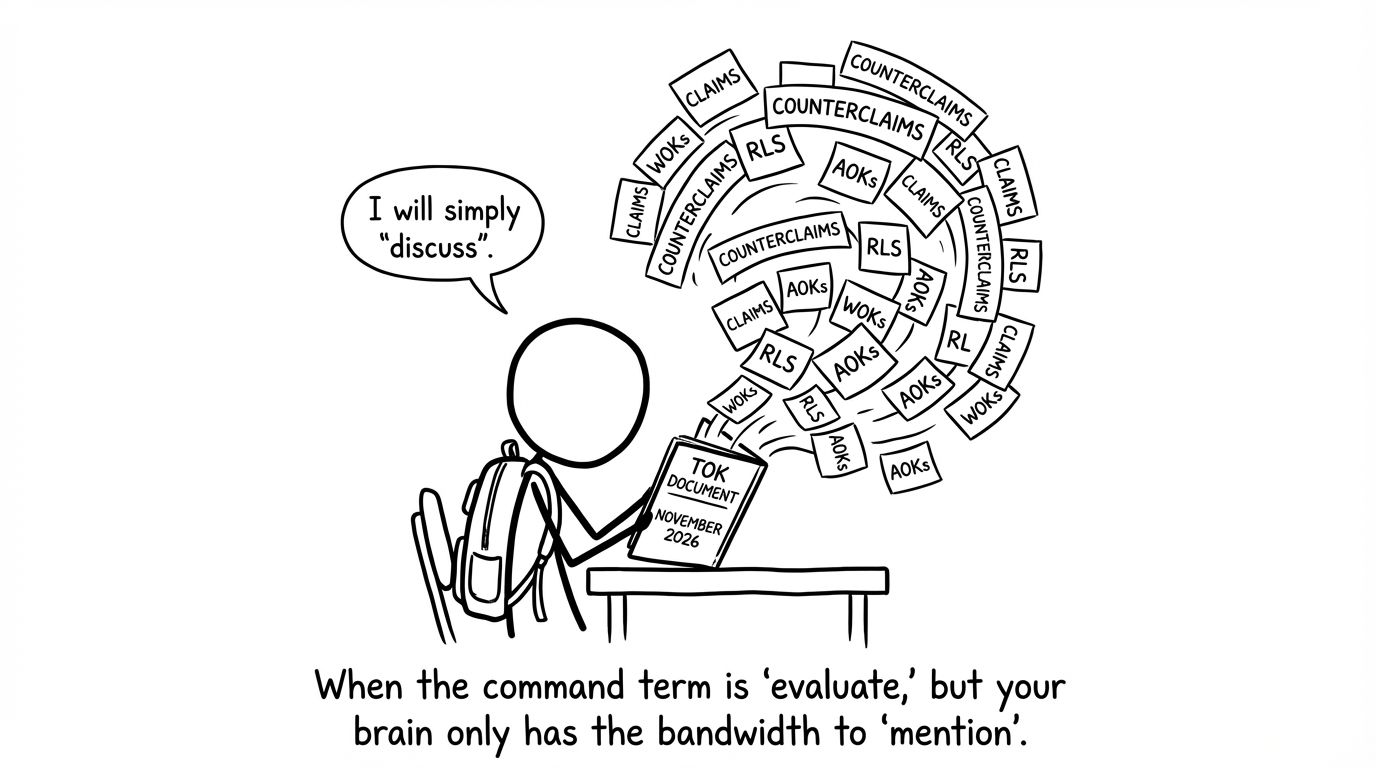

You are halfway through scrolling, you see a confident infographic, and your brain does the quiet little surrender: Sure. That seems true.
That tiny moment is where TOK begins. Not in a textbook definition, but in the split-second decision to trust, doubt, or withhold judgment. The best TOK thinking is built from real life because real life is messy: mixed motives, incomplete data, and people arguing past each other. When you learn to treat everyday situations as evidence, your TOK writing stops sounding like theory and starts sounding like insight.
A quick TOK checklist for real-life situations
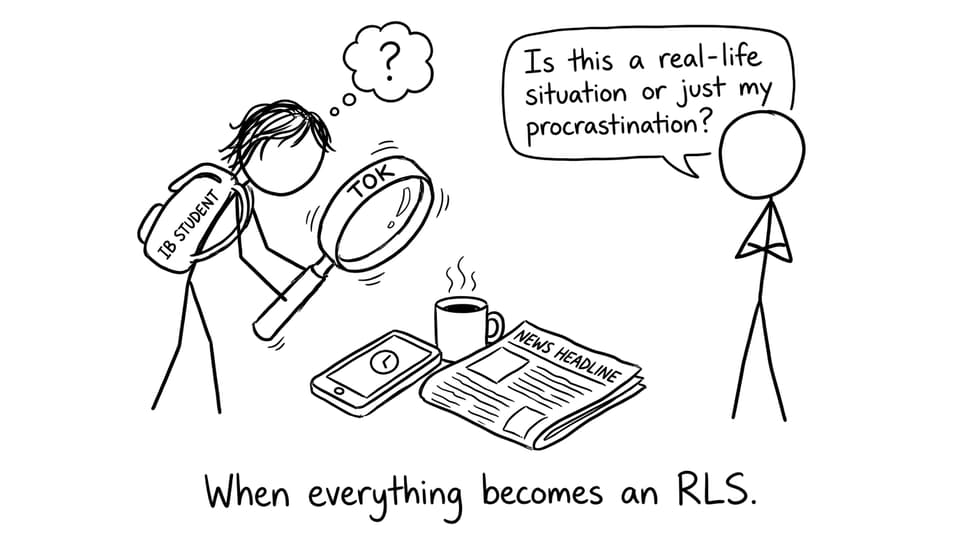
Use this mini-checklist whenever you find a potential example for TOK:
-
Specific: One concrete event, claim, study, object, or media moment (not “social media in general”).
-
Debatable: Reasonable people could disagree about what it shows.
-
Epistemic: It raises questions about how knowledge is produced, shared, or justified.
-
Expandable: You can test it across an Area of Knowledge (AOK) or a Way of Knowing (WOK).
If you want a bank of structured guidance for both assessment tasks, start with IB Theory of Knowledge resources.
Turning a moment into a TOK knowledge question
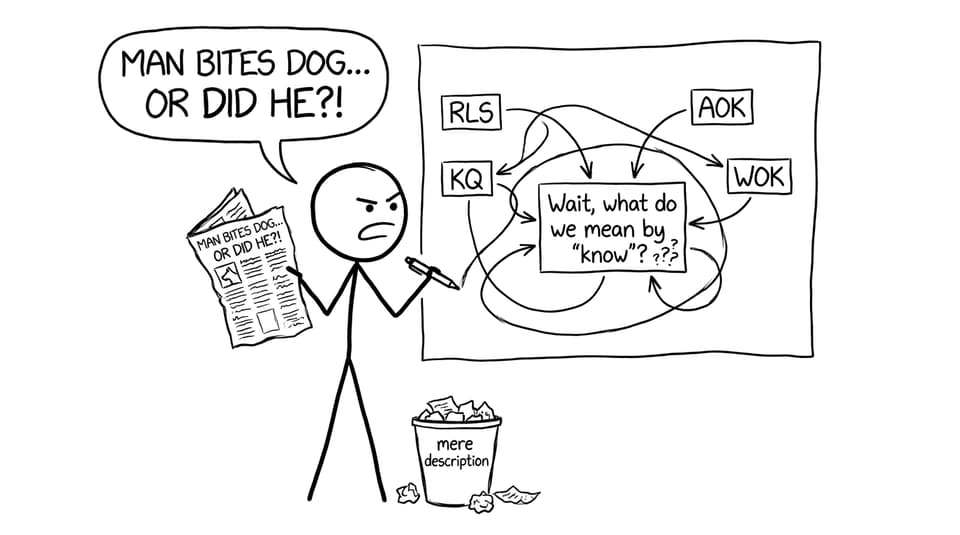
A real-life situation becomes TOK material when you shift from “what happened” to “what does this reveal about knowing?” That shift is the difference between description and analysis.
Try this three-step move:
-
State the situation in one sentence.
-
Name the knowledge tension. (uncertainty, disagreement, bias, authority, measurement, interpretation)
-
Ask a second-order question. (to what extent, how, when, why)
Example: A replication attempt fails for a famous scientific result.
-
Situation: A widely-cited study doesn’t reproduce.
-
Tension: Trust vs method vs authority.
-
Knowledge question: To what extent should reproducibility determine our trust in scientific knowledge?
For more help moving from examples to focused questioning, use The Art of Linking Examples to Knowledge Questions and then refine your opening with Writing TOK Essay Introductions That Grab Attention.
Using AOKs and WOKs without “list-and-leave” TOK
A common TOK problem is name-dropping AOKs and WOKs like they are decoration. They are not decoration. They are lenses that change what counts as evidence and what counts as a good justification.
Here’s a practical way to use them:
-
Pick one AOK and ask: What methods build knowledge here? (experiments, interpretation, testimony, models)
-
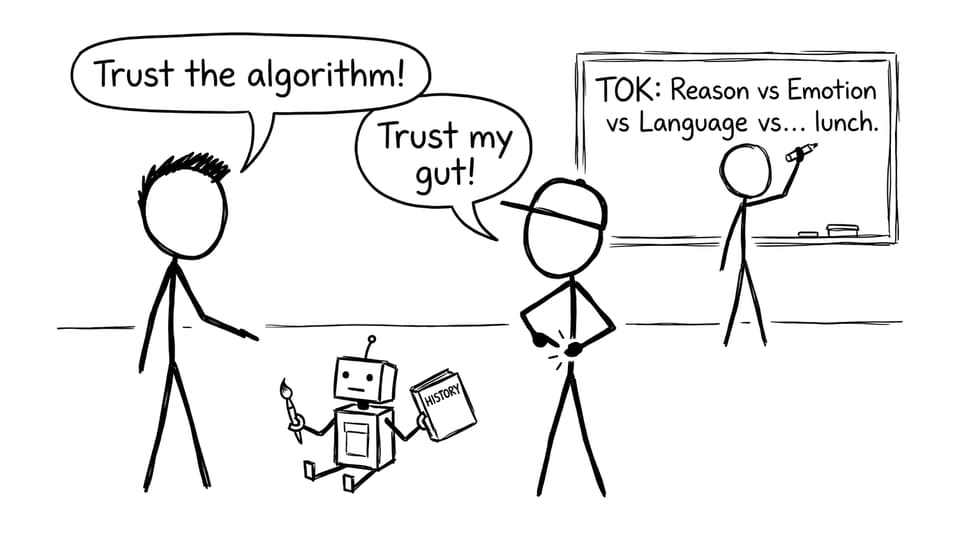
Pick one WOK and ask: Where could this mislead us? (emotion, language, reason, intuition, sense perception)
-
Force a comparison: Would this claim be judged differently in another AOK?
If you need a structured reminder of the habits examiners reward, see TOK Core Skills and Strategies Every IB Student Must Know and How TOK Encourages Questioning and Critical Inquiry.
Real-life TOK examples you can actually use
Strong TOK examples are vivid enough to picture, but rich enough to interrogate.
Example: AI-generated art goes viral
Possible knowledge question for TOK: To what extent can machines produce knowledge associated with human creativity?
-
The Arts: What counts as originality or artistic intention?
-
Reason and emotion: Are we persuaded by the process or by our reaction to the outcome?
-
Language: How do labels like “AI art” frame what viewers think they’re seeing?
Example: A misquote sparks outrage
Possible knowledge question for TOK: How does language shape what a community treats as knowledge in politics?
-
Human Sciences: How do group dynamics and incentives amplify certain narratives?
-
Language: What is “context,” and who gets to define it?
-
Ethics: What responsibilities come with sharing information you cannot verify?
If you’re choosing objects for the exhibition, these everyday-media examples pair well with the object-based method in How to Excel in Your IB TOK Exhibition and Selecting the Right Objects for Your TOK Exhibition.
How RevisionDojo helps you practice TOK, not just read about it
Good TOK is a skill you train: noticing assumptions, testing claims, and writing with controlled skepticism. RevisionDojo is built for that kind of repetition.
When you’re drafting, use the AI Chat to stress-test a claim (“What would the strongest counterclaim be?”). When you’re revising, use Grading tools to check whether your argument is actually evaluative, not just confident. When you need examples fast, pull from the Study Notes and build recall with Flashcards. And when deadlines pile up, ask Tutors for targeted feedback on one paragraph at a time.
For a broader workflow across IB revision (including Questionbank, Mock Exams, Predicted Papers, and the Coursework Library), see RevisionDojo App: The Smarter Way to Prep for IB Exams.
Conclusion: Make TOK a habit, not a subject
The quiet advantage of TOK is that it trains you to pause before you agree. To ask what’s missing, who benefits, and what standard of proof you’re using today. Real-life situations are where that habit is built.
If you want to turn that habit into exam-ready writing, use RevisionDojo to practise the full loop: collect examples, turn them into TOK knowledge questions, test claims and counterclaims, and polish with rubric-aware feedback. Start with the IB Theory of Knowledge resources and build from there.