Loading subject…
1 Matter
1.1 States and properties of matter
1.2 Characteristics of gases
1.3 Diffusion
1.4 Atomic structure
1.5 Electronic configuration and valency
2 Pure and impure substances
2.1 Solutions, colloids and suspensions
2.2 Filtration, distillation and chromatography
3 Periodic table
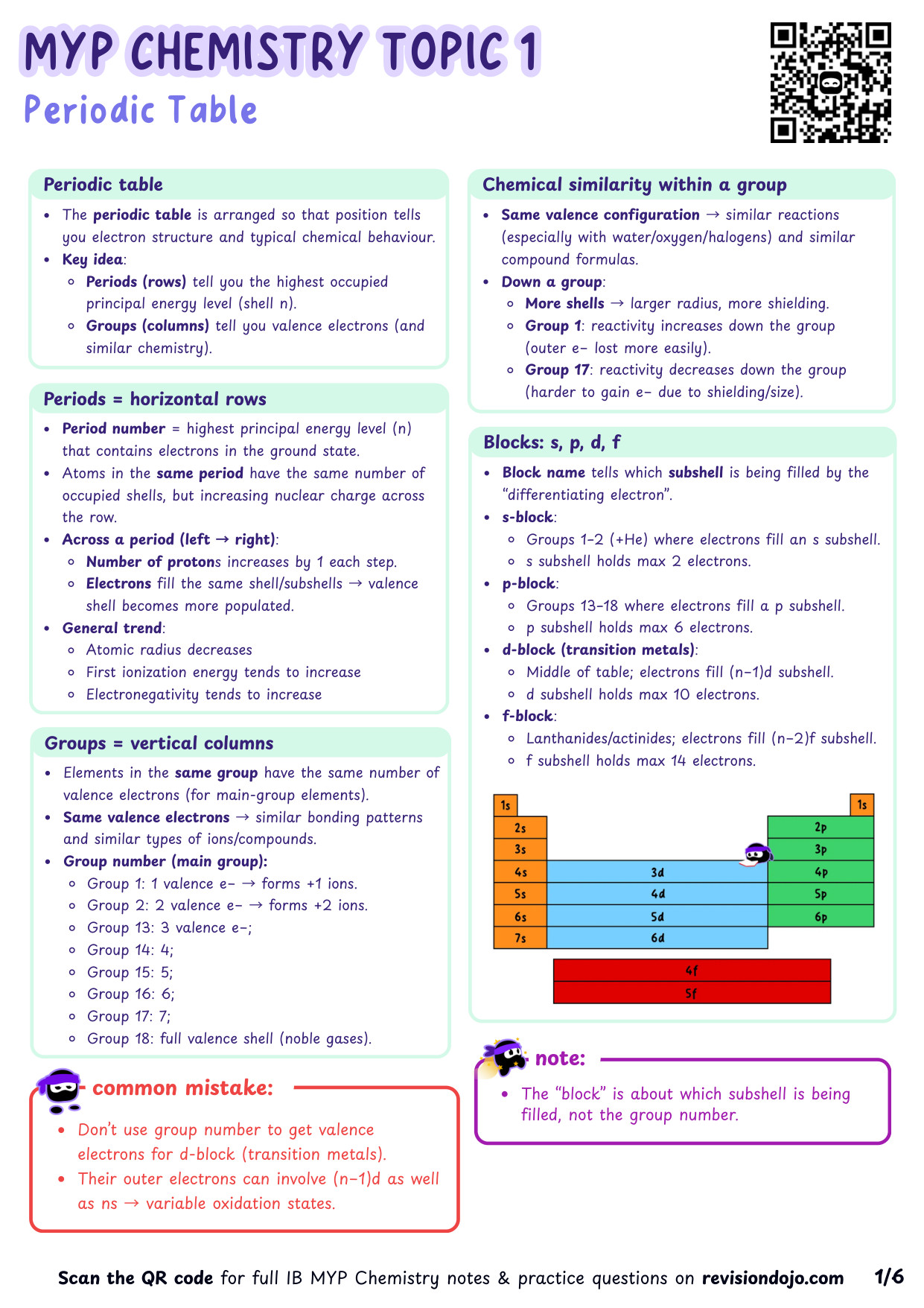
3.1 Structure of the periodic table
3.2 Metals and non-metals
3.3 Noble gases
4 Bonding and periodic properties
4.1 Structure and bonding
4.2 Chemical formula
4.3 Properties of elements and compounds
4.4 Alloys
4.5 Periodic trends
4.6 Transition metals
5 Types of chemical reaction
5.1 Chemical reactions and the conservation of mass
5.2 Word and chemical equations
5.3 Balancing equations
5.4 The mole concept and chemical calculations
5.5 Acids and bases
5.6 Neutral solutions
5.7 Acid and base characteristics
5.8 pH, titrations and indicators
5.9 Formation of salts
5.10 Uses of salts
5.11 Reactivity series
5.12 Redox reactions
5.13 Corrosion
5.14 Extraction
5.15 Electrochemical cell
5.16 Endothermic and exothermic reactions
5.17 Energy changes in a reaction
5.18 Collision theory
5.19 Chemical reaction kinetics rates
5.20 Reversible reactions
6 International Union of Pure and Applied Chemistry (IUPAC)
6.1 Alkanes, alkenes, alcohols
6.2 Structural formulae – carboxylic acids and esters
7 The atmosphere
7.1 Atmospheric composition
7.2 Emissions and environmental implications
Browse summary cheatsheets for