Loading subject…
A.1 Communication
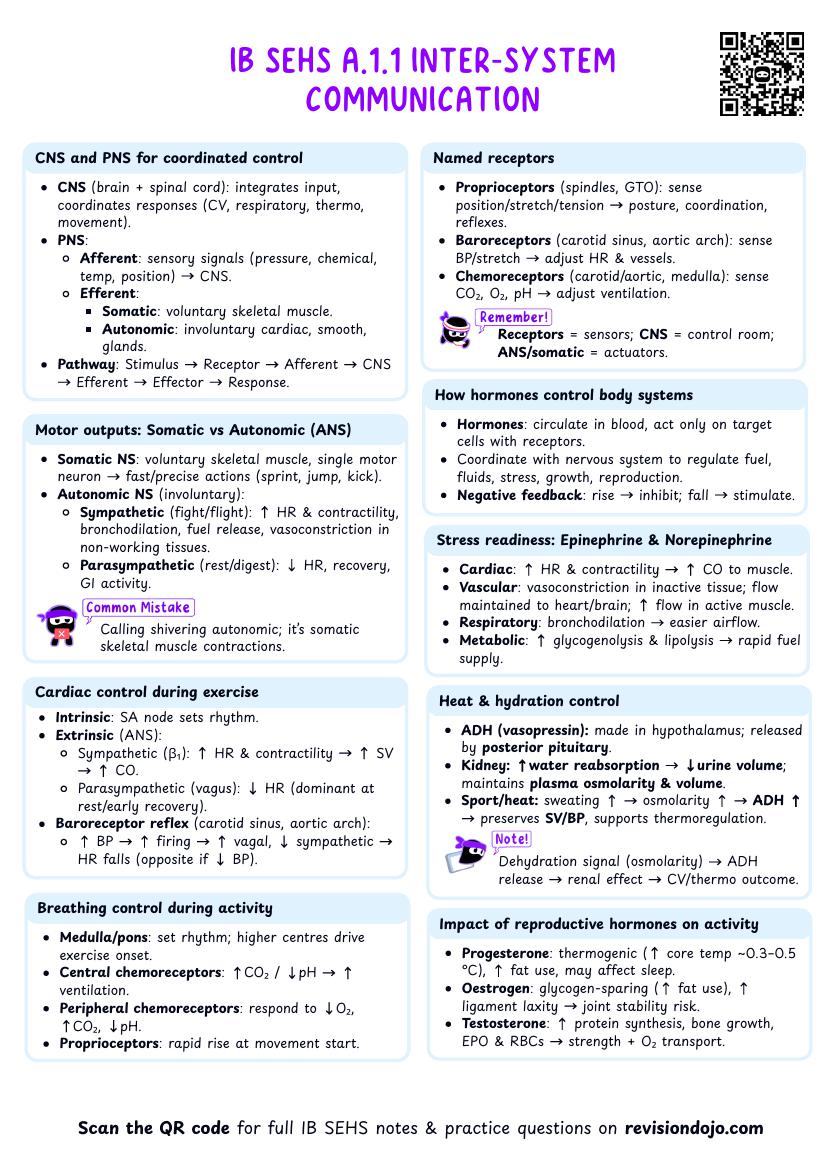
A.1.1 Inter-system communication
A.1.2 Maintaining homeostasis
A.1.3 Transport
A.2 Hydration and nutrition
A.2.1 Water and electrolyte balance
A.2.2 Fuelling for health and performance
A.2.3 Energy systems
A.3 Response
A.3.1 Qualities of training
A.3.2 Benefits to health of being active
A.3.3 Fatigue and recovery (HL)
B.1 Generating movement in the body
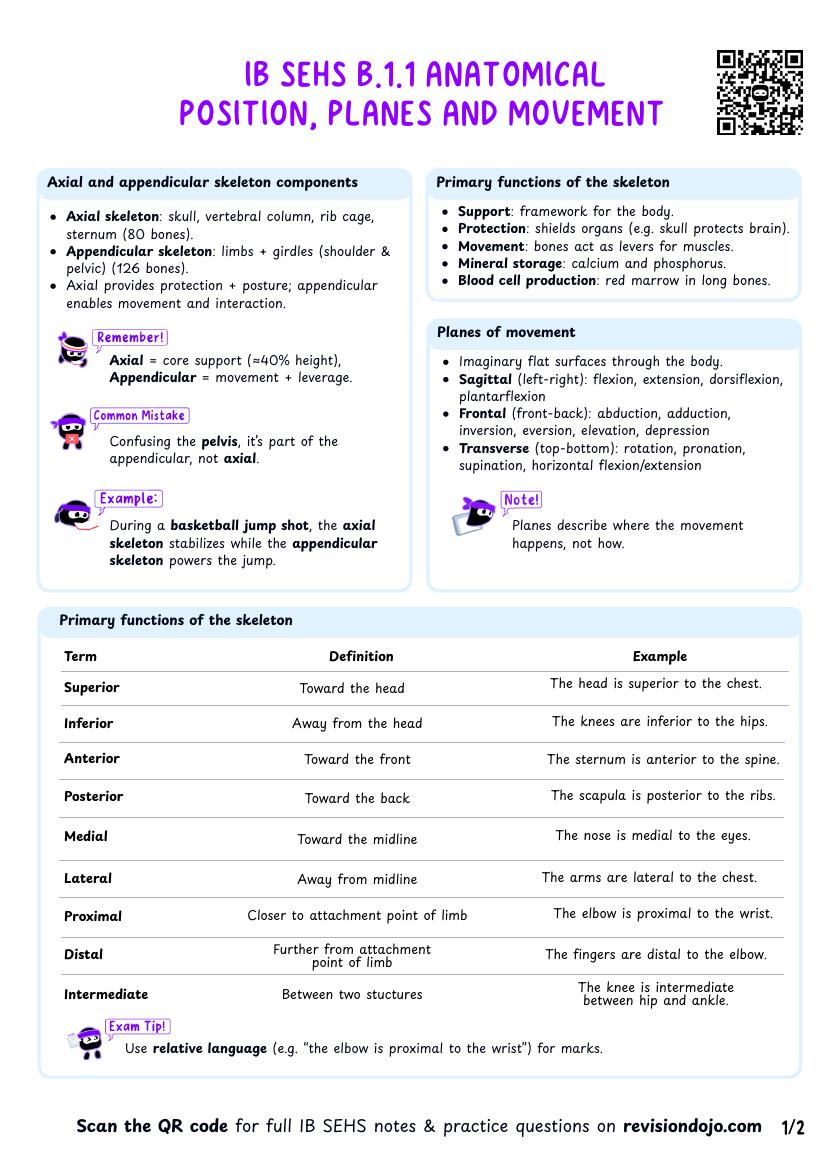
B.1.1 Anatomical position, planes and movement
B.1.2 Structure and function of connective tissues and joints
B.1.3 Muscular function
B.1.4 Levers in movement and sport
B.2 Forces, motion and movement
B.2.1 Newton’s laws of motion
B.2.2 Fluid mechanics
B.2.3 Movement analysis and its applications
B.3 Injury
B.3.1 Causes of injury
B.3.2 Interventions related to injury
C.1 Individual differences
C.1.1 Personality
C.1.2 Mental toughness
C.2 Motor learning
C.2.1 Motor learning processes
C.2.2 Attentional control
C.3 Motivation
C.3.1 Achievement motivation
C.3.2 Self-determination
C.3.3 Motivational climate
C.4 Stress and coping
C.4.1 Arousal and anxiety
C.4.2 Coping
C.5 Psychological skills
C.5.1 Goal setting
C.5.2 Imagery
Browse summary cheatsheets for
A.3.3.1 Neuromuscular and metabolic mechanisms of fatigue (HL)
32 minute read
A.3.3.2 Hydration, electrolytes, and energy availability in fatigue (HL)
36 minute read
A.3.3.3 Recovery processes, timescales, and indicators of effective recovery (HL)
49 minute read
A.3.3.4 Hydration and nutritional strategies for exercise recovery (HL)
29 minute read
A.3.3.5 Recovery techniques and factors influencing recovery quality (HL)
54 minute read
A.3.3 Fatigue and Recovery