
If you’ve ever stared at your IB subject choices and felt your stomach drop, you’re not alone. The IB can feel like a carefully designed juggling act: six subjects, plus coursework, plus deadlines that show up like surprise quizzes in real life.
And then someone says, “Just pick the easiest IB subjects.”
It sounds simple. But the truth is quieter: the easiest IB subjects are usually the ones where your strengths, the syllabus, and the assessment style line up. When they do, revision feels less like pushing a boulder uphill and more like walking with a map.
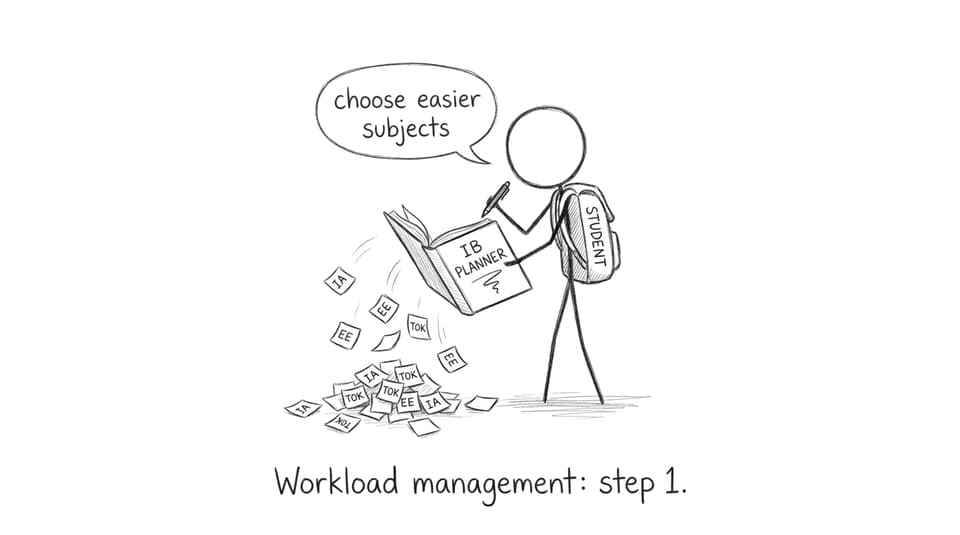
A quick checklist: what “easy” means in IB
Before we name five “easier” options, use this quick filter. An IB subject often feels easier when:
-
Content is familiar or intuitive (less abstract theory, more real-world links).
-
Assessments reward structure (clear rubrics, predictable task types).
-
Workload is steady (fewer heavy lab reports or dense problem sets).
-
Resources are abundant (good notes, targeted practice, strong feedback loops).
If you want a single hub for that last point, start at the International Baccalaureate (IB) hub and build outward.
What are the 5 easiest IB subjects?
These five are commonly viewed as more manageable by many IB students. Not because they’re “free” grades, but because their demands are often clearer, more applied, or more consistent.
IB Math Applications and Interpretation SL
For many students, IB Math AI SL feels more approachable than more abstract routes because it leans into interpretation, modelling, and practical calculator skills.
If you’re deciding, explore the syllabus-aligned resources in IB Mathematics Applications & Interpretation. And when revision gets fuzzy, a structured guide like How to Use RevisionDojo Notes to Simplify IB Math AI Concepts can help you turn “I kind of get it” into repeatable methods.
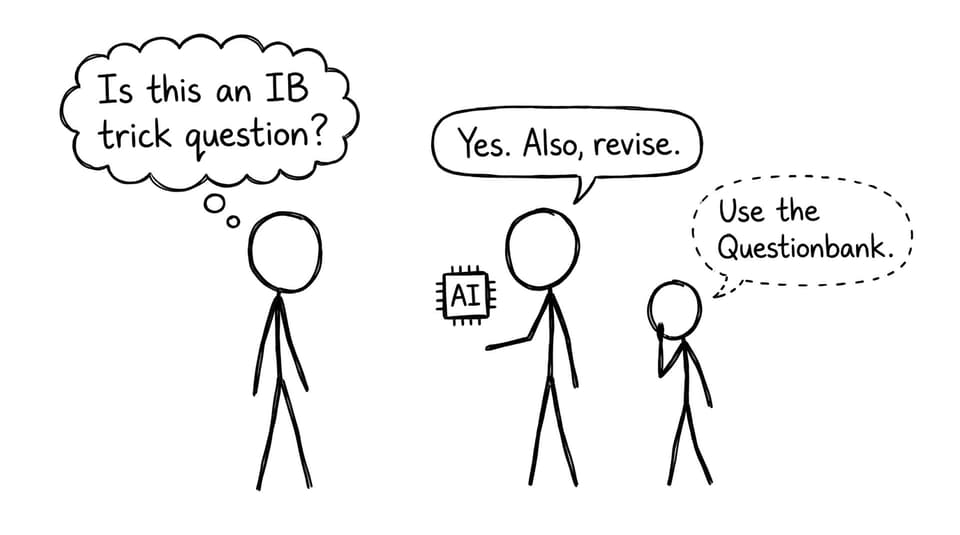
How to make it feel even easier: use a loop: Study Notes -> Questionbank -> quick error log -> repeat. RevisionDojo’s Questionbank and AI Chat are perfect for catching small misunderstandings before they become test-day disasters.
IB Environmental Systems and Societies (ESS)
IB ESS is often considered manageable because it’s interdisciplinary: science meets society, with concepts that connect naturally to the world you already live in.
If this is on your list, start with IB Environmental Systems and Societies resources and read What is IB ESS about? (2026 first assessment) to understand what the course really emphasizes.
How to make it feel even easier: treat case studies like stories. Build Flashcards for key terms and real examples, then use timed Mock Exams to practice linking evidence to evaluation.
IB Film SL
For students who think visually and enjoy creative analysis, IB Film can feel “lighter” than subjects where every mark depends on calculations or memorization.
To go deeper, browse IB Film posts. If coursework is your stress point, these two guides tend to save students a lot of time: How to Prepare for the IB Film Internal Assessment and Common Mistakes in IB Film Portfolios (and fixes).
How to make it feel even easier: use the Coursework Library and Grading tools on RevisionDojo to check whether your reflection is actually answering the criteria, not just sounding insightful.
IB Language B (SL)
IB Language B is often manageable because progress is incremental: vocabulary, structures, and confidence stack over time. The assessment formats can feel predictable once you’ve practiced them repeatedly.
If you want clarity fast, read What You Need to Know About the Language B IB Syllabus and then sharpen exam habits with IB Language B Exams: format, timing, and strategy.
How to make it feel even easier: build themed vocab Flashcards, then do short weekly timed writing. Use AI Chat to generate practice prompts and the Grading tools to spot recurring errors.
IB Social and Cultural Anthropology SL
Anthropology SL is often seen as approachable because the ideas are human-sized: culture, identity, systems, meaning. The reading load exists, but many students find it inherently engaging.
If you’re doing coursework in this area, browsing exemplars can clarify what “good” looks like. RevisionDojo’s IB Social and Cultural Anthropology EE examples can help you understand how strong arguments are built and evidenced.
How to make it feel even easier: practice writing paragraph frameworks: claim -> concept -> example -> implication. Then test yourself with the Questionbank so analysis becomes automatic.
A realistic way to balance your IB workload
The easiest IB subjects won’t feel easy if your week has no structure.
Try this simple rhythm:
-
Two short revision blocks per day (25-35 minutes each).
-
One timed task per week per subject using Mock Exams.
-
One feedback moment: use AI Chat or a Tutor to fix the same mistake twice.
-
One consolidation tool: Flashcards for definitions, Study Notes for understanding, Questionbank for application.
If you want the full system in one place, RevisionDojo for IB lays out how students combine tools like Study Notes, Predicted Papers, Mock Exams, and Grading to reduce stress while improving scores.
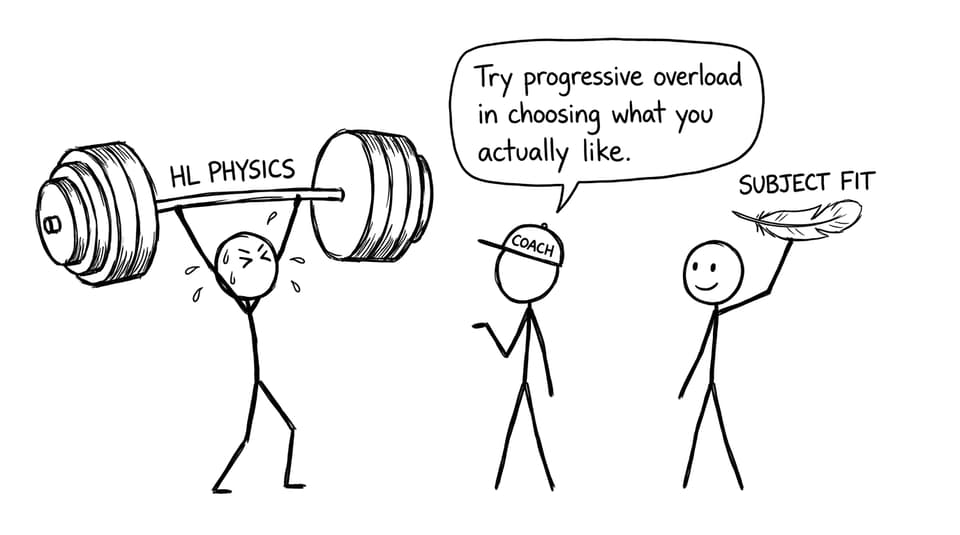
Conclusion: pick “easy” by picking what fits
The easiest IB subjects are rarely the ones with the least work. They’re the ones where the work has a clear payoff, where your effort turns into marks instead of confusion.
If you’re aiming to make IB feel more manageable starting today, build your plan around RevisionDojo: Study Notes to understand, Questionbank to apply, Flashcards to remember, AI Chat and Grading tools to improve, and Predicted Papers plus Mock Exams to rehearse the real thing. Start at the RevisionDojo IB hub, choose your subjects with intention, and make “easy” mean “well-prepared.”