


A university admissions reader once described their job like this: “I’m not picking the smartest 17-year-old. I’m picking the 19-year-old they’ll become after their first semester.”
That sentence quietly explains why IB students tend to get a warmer reception than they expect.
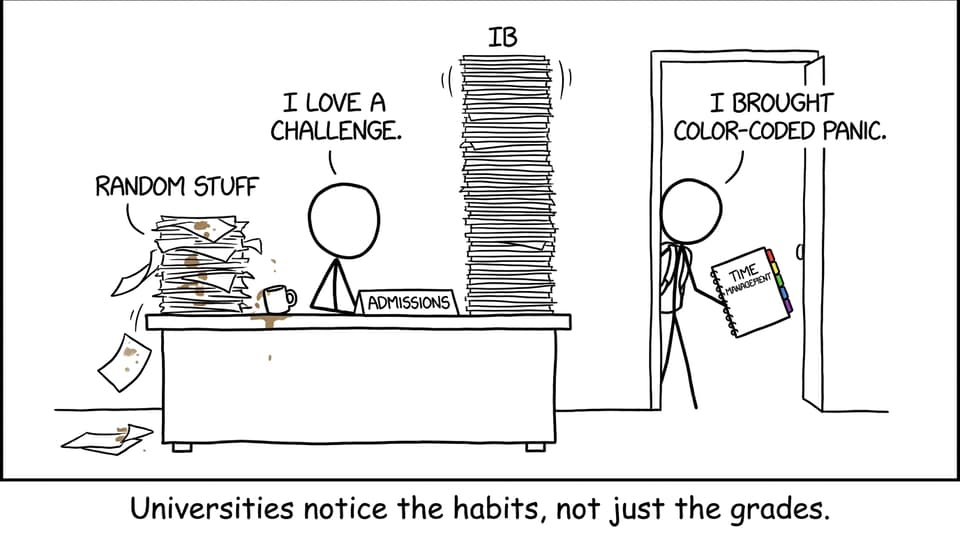
Universities don’t only want high grades. They want evidence of how you think when the workload stacks, deadlines collide, and the syllabus stops holding your hand. The IB is one of the few school programmes that makes those habits visible: deep reading, careful writing, independent research, and a routine of feedback.
This article breaks down why universities prefer IB candidates, what those advantages look like in real admissions decisions, and how you can translate your IB work into stronger exam performance (and calmer confidence) using RevisionDojo.
Quick overview: what universities notice in IB students
Use this checklist as your “so what?” summary. Universities often prefer IB applicants because the programme signals:
-
Academic rigor across a broad curriculum (not just one strong subject)
-
College-style assessment (coursework + exams, with clear criteria)
-
Research and academic writing ability (especially via the Extended Essay)
-
Critical thinking and reflection (built into TOK)
-
Time management under pressure (six subjects plus core requirements)
-
Global perspective and communication skills (often visible in essays and interviews)
Now let’s go a layer deeper, the way an admissions reader does.
The IB “rigor signal” universities trust
The first reason universities prefer IB is simple: it reduces uncertainty.
A transcript is a story universities try to interpret quickly. But school standards vary widely. Grade inflation exists. Some classes are brutally hard; others are generous. The IB gives universities a more stable reference point because it’s standardized, externally assessed, and built around consistent expectations.
Breadth that still feels like depth
The IB forces you to keep multiple academic muscles alive at once: writing, quantitative reasoning, analysis, languages, sciences, humanities. Even students who “lean” STEM still have to argue, structure, and communicate. Universities value this because first-year courses often punish narrow preparation. You don’t just need to know things. You need to switch modes.
If you’re trying to reinforce that breadth while revising, use a system that mirrors it. A good starting hub is RevisionDojo for IB, where subjects, practice, and feedback live in one place.
Higher Level courses show academic stamina
HL courses act like a preview of university pacing: more content, more depth, more expectation that you will figure things out between lessons. Universities prefer IB students because HL experience is a signal of “I can handle the first-year workload without collapsing.”
On RevisionDojo, students usually train HL skills by pairing Study Notes with a high-volume Questionbank loop: learn a concept quickly, then apply it immediately until the pattern sticks.
IB assessments resemble university work (and universities know it)
Many programmes test you once at the end. The IB tests you repeatedly, in different forms, with clear criteria. That structure matters.
Internal assessments train applied thinking
Universities prefer IB students partly because IAs make learning practical. You’re not only memorizing; you’re designing, investigating, analyzing data, evaluating limitations, and writing up findings.
That is remarkably close to what university departments want in lab reports, essays, problem sets, and seminars.
External exams build performance under constraints
IB exams are not just content checks. They reward technique: command terms, structure, and timing. The students who do well learn to think inside constraints. And universities care about that because deadlines, word limits, and marking rubrics do not disappear after graduation.
To build this exam skill deliberately, it helps to train with purpose-built resources like IB Predicted Papers and timed practice through Mock Exams. The point isn’t to “get lucky”; it’s to normalize pressure.
The IB builds research and writing maturity
When universities say they like IB, they often mean: “These students already know what academic work feels like.”
The Extended Essay quietly changes how you study
The Extended Essay teaches a rare skill: staying with one question long enough to become interesting.
At first, it feels like a burden. Later, it becomes evidence that you can handle independent research, source evaluation, and long-form argument. Universities prefer IB students because that ability transfers directly into first-year papers and projects.
If you want your writing to improve faster during revision season, focus on feedback loops, not inspiration. On RevisionDojo, students often use AI Chat to stress-test a paragraph’s logic, then use Grading tools to align structure with markband expectations.
TOK trains “thinking about thinking” (which universities reward)
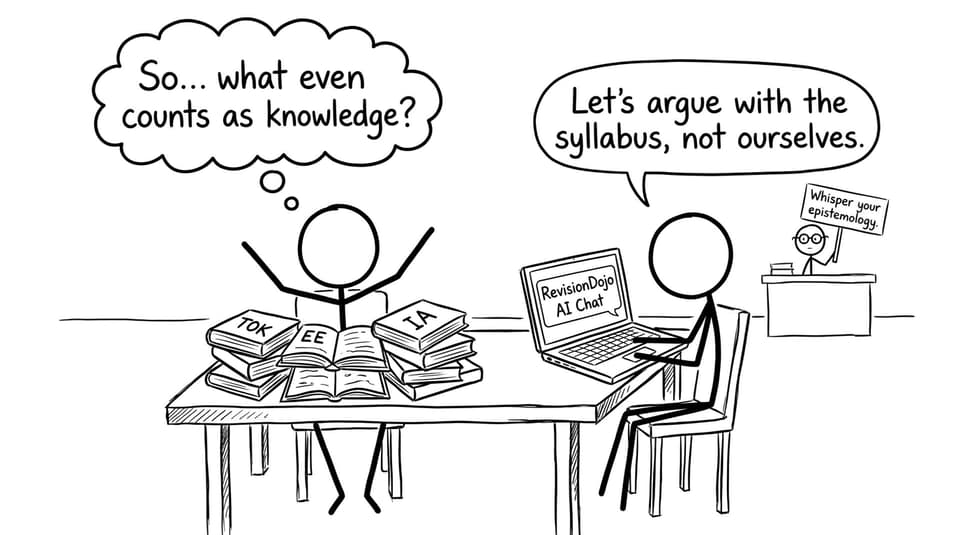
TOK can feel abstract until you realize what it’s really doing: it’s turning you into someone who can explain why an argument works.
Universities prefer IB students because seminars are essentially TOK in disguise: claims, evidence, limitations, counterclaims, implications. If you can do that in Year 12, you’ll do it again in Year 13, and again in your first-year tutorials.
Universities like the IB student who can manage time (not just talent)
There’s a quiet truth about school: some students succeed because they’re naturally quick. University is different. Speed helps, but systems win.
The IB forces you to build systems because there are too many moving parts: six subjects, deadlines, IAs, EE, TOK, CAS. You either learn to plan, or you feel the consequences.
Universities prefer IB students because the programme makes self-management visible. Not perfect management, but real management: prioritizing, adjusting, and recovering.
If you feel like you’re working hard but not converting effort into marks, read IB: I Study All Day but Remember Nothing. It explains the common trap (comfort study) and the fix (active recall + exam-style practice).

The “global mindset” is not a slogan (and admissions readers know)
Universities often claim they want global citizens. But what they actually need are students who can:
-
read unfamiliar contexts,
-
communicate clearly,
-
consider alternative perspectives,
-
and avoid shallow certainty.
The IB bakes these habits into the curriculum, especially through interdisciplinary themes, international contexts, and reflection.
And yes, CAS counts here too. Not as a resume gimmick, but as proof you can sustain commitments beyond exams.
How to turn the IB advantage into higher exam scores
Universities may prefer IB students, but you still have to get through the exams first. Here’s a practical approach that matches what the IB rewards.
A simple IB revision loop (30-75 minutes)
-
Study Notes (10-15 min): learn the minimum you need to attempt questions
-
Questionbank (25-45 min): do exam-style questions by topic
-
Review (10-15 min): write “error rules” (what you did wrong and how to fix it)
-
Flashcards (optional 5-10 min): convert your error rules into daily recall
RevisionDojo is designed around this loop: Questionbank, Study Notes, Flashcards, AI Chat, Grading tools, Predicted Papers, Mock Exams, Coursework Library, and Tutors when you need a human to diagnose what’s stuck.
For more structure, use How to Prepare for IB Final Exams Efficiently and Countdown to IB Exams: Use IB Resources That Work.
Closing: the real reason universities prefer IB
Universities prefer IB students because the programme doesn’t just teach content; it teaches a way of working.
It rewards consistency. It punishes vague revision. It forces you to practice thinking under constraints. And by the time you’re applying to university, those habits show up in your writing, your time management, and the calm confidence that comes from having done hard things before.
If you want to make that IB advantage visible in your final scores, build a simple loop and run it daily: Study Notes for clarity, Questionbank for application, Flashcards for recall, AI Chat for quick diagnosis, and timed practice through Mock Exams and IB Predicted Papers. Start here: RevisionDojo App: The Smarter Way to Prep for IB Exams.