
The first time you look up an Ivy League credit policy, it feels like opening a door into a quiet room where everyone speaks in footnotes.
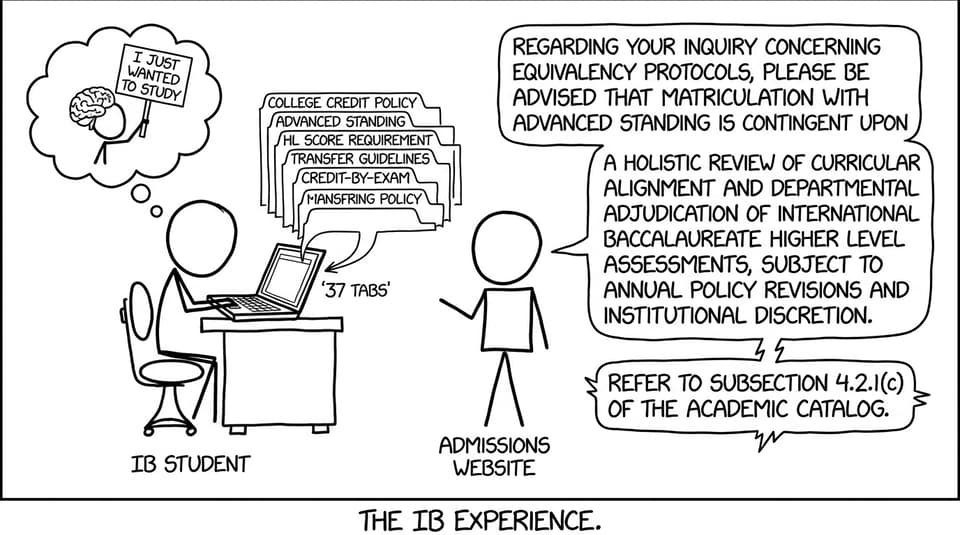
A table. A few thresholds. A sentence that sounds simple until it isn’t. And suddenly, your entire two-year IB grind is being translated into a new language: College credit.
For international IB students preparing for exams, that translation matters. Not because you are trying to “hack” your way through College, but because credit can change your first-year workload, your timeline, and your cost. More than anything, it can change the feeling of arriving on campus: either as someone who has already earned momentum, or as someone asked to start from zero.
What “equivalence credits” actually mean in College
When students say “equivalence,” they usually mean one of three things that get mixed together on College websites:
-
Credit award: you receive official College credits toward graduation.
-
Placement: you may skip an introductory course, but not gain College credits.
-
Advanced standing: you can shorten your degree timeline if enough credits count.
IB policies vary by institution, department, and sometimes even by the specific course you would replace. The headline numbers can be misleading: a school might advertise “up to X credits,” but the fine print might make it hard to reach.
If you want a grounded sense of how IB performance can translate into College benefit, start with RevisionDojo’s overview: How Many College Credits Can You Get from the IB Diploma.
Quick checklist: what to verify before you commit to a College plan
Use this checklist early, before exam season pressure makes everything feel urgent.
-
Does the College award credit for HL only, or also for SL?
-
What score is required: 4, 5, 6, or 7?
-
Are credits capped (for example, “maximum 8” vs “maximum 24”)?
-
Is credit limited to certain departments (often math and sciences)?
-
Does your intended major accept the credit, or only the registrar?
-
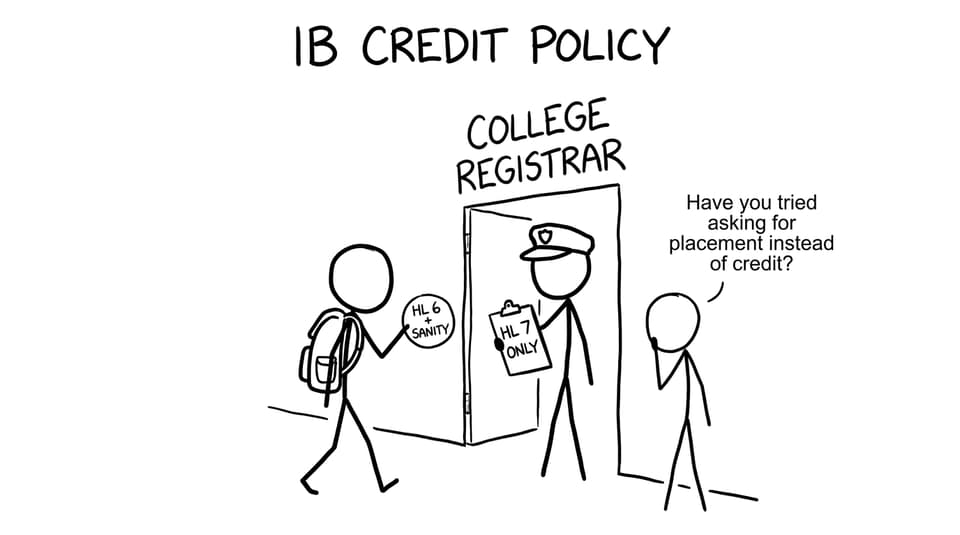
If credit is limited, does the College offer placement instead?
-
Is there a difference for international credentials vs domestic testing routes?
To plan this well, you need two parallel tracks: (1) College policy research, and (2) exam execution. RevisionDojo is built for the second track so the first track doesn’t steal your attention.
Why Ivy League College credit can feel uneven for IB students
The IB Diploma is widely recognized, but recognition is not the same as equivalence.
In practice, Ivy League College credit policies often cluster into two types:
“Credit-light, placement-heavy” policies
Some institutions offer limited official College credit, while still allowing students to place into higher-level courses. This can be academically helpful, but it doesn’t always reduce the number of credits you must pay for or earn.
“Credit-available, but only at the top score band” policies
Other schools technically offer more College credits, but set thresholds high enough that students feel pressured to chase perfection.
This matters for international students because many do not have easy access to alternative credential systems. If you’re all-in on IB, the IB score thresholds become your only door into College credit.
AP vs IB transfer credit: the quiet comparison students notice
International IB students often discover something uncomfortable: on some College credit tables, AP appears to have broader coverage.
The pattern is not universal, but it shows up often enough that it shapes student choices.
-
Some universities list many AP subjects, including niche options.
-
The IB list sometimes focuses on traditional high-enrollment sequences, commonly math and the core sciences.
That can create a subtle message: if your IB interests include arts, environmental courses, or less common humanities pathways, you may get less formal College credit recognition even when the course was rigorous.
The healthiest way to respond is not resentment. It’s strategy.
If your dream is Ivy League College, choose subjects for fit and performance first. Then treat credit as a bonus rather than a promise.
“AP 5 vs IB 7”: why equivalence often feels psychologically unfair
On many College conversion charts, you will see a rough pairing:
-
IB 7 (HL) ~= AP 5
-
IB 6 (HL) ~= AP 4
Students react to this because the scoring scales look different, but the College expectation can feel similar: “Bring your top result.”
IB often demands a broader performance profile: external exams plus coursework components like IAs, and consistent writing under markscheme logic. AP often concentrates performance into one exam event.
So even if equivalence tables are trying to standardize achievement, the lived experience of earning an IB 7 can feel heavier.
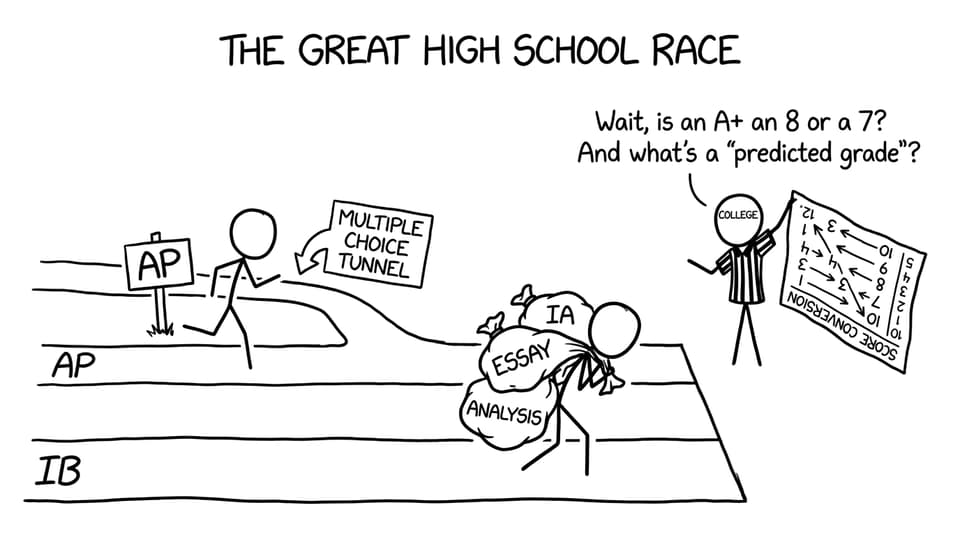
The practical takeaway for IB students preparing for exams is simple: do not build your study plan around hitting the “credit line.” Build it around maximizing your diploma points and maintaining consistency. In College terms, a strong transcript and strong scores create options even when credit is limited.
What this means for your exam strategy right now
Here is the trap: you read about College credit policies, then start studying as if your worth depends on whether a registrar will “accept” you.
That’s a bad trade.
Instead, treat your exams as your one controllable lever. The more consistently you can reach your target band (often 6/7 at HL for credit-eligible cases), the more negotiating room you have later.
A good IB exam plan looks boring on purpose:
-
Learn the content with focused explanations
-
Drill recall daily
-
Practice exam-style questions weekly
-
Sit timed papers regularly
-
Review mistakes immediately, not “later”
RevisionDojo is designed to make that loop easy:
-
Use the Questionbank for targeted practice that actually resembles IB marking.
-
Use IB Predicted Papers to train timing and stamina in realistic formats.
-
If you’re wondering how credit typically plays out, read How Many College Credits Did You Get for IB?.
-
If you want the bigger picture of what RevisionDojo includes, start at RevisionDojo: IB & MYP Resources.
And when writing-heavy subjects or coursework stress starts bleeding into exam prep, the platform’s Study Notes, Flashcards, AI Chat, Grading tools, Mock Exams, Coursework Library, and Tutors help you keep the system stable instead of emotional.
How to talk to a College like a strategist (not a supplicant)
Most students only ask: “Do you give IB credit?”
Better questions are calmer and more specific:
-
“Do you award College credit, placement, or both for HL X with a 6?”
-
“If credit isn’t awarded, can I place out of the introductory sequence?”
-
“Will my department accept this credit toward the major, or only as elective credit?”
-
“Is there a cap on total College credit from external exams?”
If the answer is “no credit,” remember this: placement can still be valuable. Skipping an intro course can let you take a more interesting seminar earlier, even if it doesn’t shorten graduation.
A realistic planning mindset for international IB students
International students carry extra uncertainty: visas, finances, culture shift, and the social fatigue of being “new” at the exact moment you’re trying to be excellent.
So you need a planning mindset that protects you.
-
Assume College credit will be limited at the most selective schools.
-
Prepare for placement as the more likely outcome.
-
Use your IB subjects to build academic readiness, not just equivalence.
-
Keep your exam routine steady so you don’t chase policy changes with your emotions.
If you want a strong, repeatable study system that doesn’t collapse when anxiety spikes, this piece helps: You’re Not Lazy: Your IB Study Method Is Broken.
Closing: treat College credit as a bonus, not a verdict
Equivalence credits can change your College experience, but they should never be the thing that decides your self-respect.
Your job as an IB student preparing for exams is simpler, and harder: show up for the work when it’s boring, when it’s repetitive, and when nobody is clapping. That’s how 6s and 7s get built. That’s how options appear.
If you want a calmer, more reliable path to those results, build your routine inside RevisionDojo: drill the Questionbank, rehearse with IB Predicted Papers, and reinforce weak points with the platform’s Study Notes, Flashcards, AI Chat, Grading tools, Mock Exams, Coursework Library, and Tutors.
Your College future is not a single policy table. It’s the compounding effect of what you practice every week.