


In October, a lot of IB students have the same quiet thought.
It arrives between a confusing homework set and a grade that feels like it belongs to someone else: What if I picked the wrong IB Math?
Maybe the algebra feels like fog. Maybe the statistics feels like a maze. Maybe a university requirement suddenly matters more than it did in Year 10. Whatever the trigger, the question is real: can you switch between IB Math AI and AA mid-course without blowing up your grades, your Internal Assessment, and your sanity?
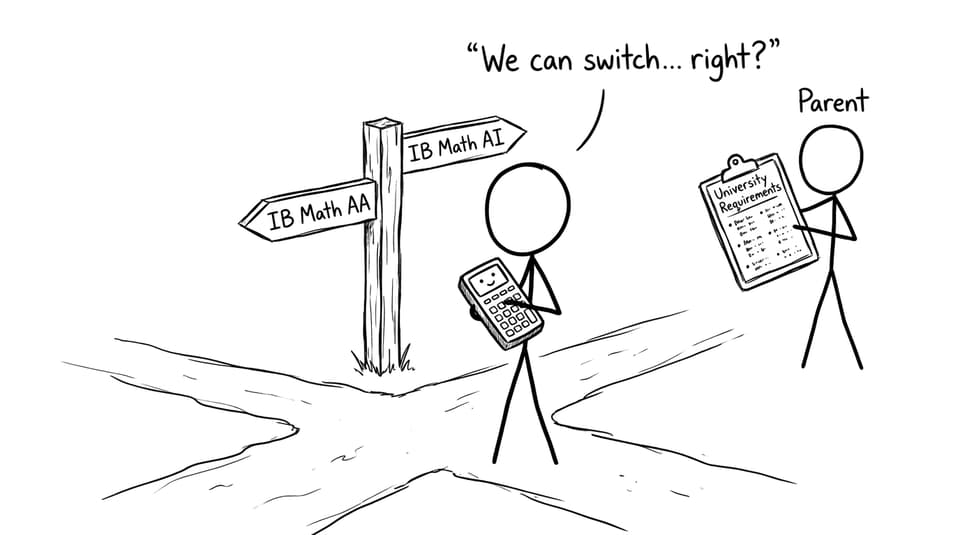
IB Math AA vs AI: the real difference (in plain language)
Both options are IB Math, but they reward different instincts.
Math AA (Analysis and Approaches)
Math AA leans into algebraic fluency, abstract reasoning, and calculus-heavy thinking. If you enjoy symbolic manipulation and building arguments step-by-step, AA often feels “cleaner,” even when it’s hard.
Math AI (Applications and Interpretation)
Math AI leans into statistics, modeling, interpretation, and technology-supported problem solving. If you like data, context, and using tools strategically, AI can feel more intuitive.
If you want a deeper comparison before making any decision, start with Which IB Math Is Harder? A Detailed Comparison and then zoom in on IB Math AA vs AI: How to Choose the Best Course for Your University Goals.
Quick checklist: should you even consider switching IB Math?
Before you move anything on your timetable, use this as a reality check:
-
Are you switching for a clear university requirement, not just a bad week?
-
Are you still in Year 1 (especially first semester)?
-
Can your school realistically schedule the switch?
-
Are you willing to redo or reshape your Math IA if needed?
-
Do you have a catch-up plan that’s specific (topics, hours, deadlines)?
If you cannot answer those questions with evidence, switching IB Math may create a second problem while you’re still solving the first.
Can you switch between IB Math AI and AA mid-course?
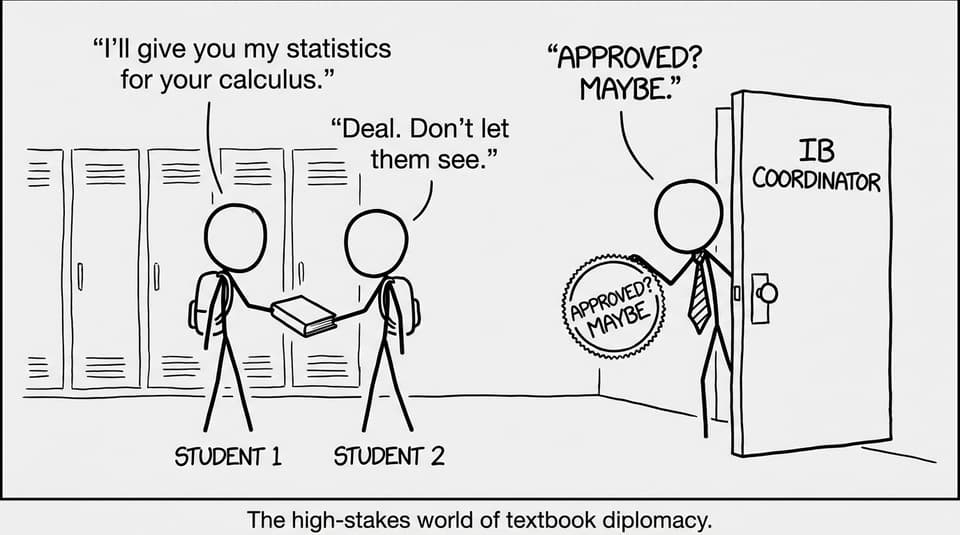
Yes, switching IB Math tracks mid-course is sometimes possible. But it’s not a simple “form change.” In most schools, the decision runs through your math teacher and your IB Coordinator, because they are the ones who must confirm you can finish the syllabus and be assessed fairly.
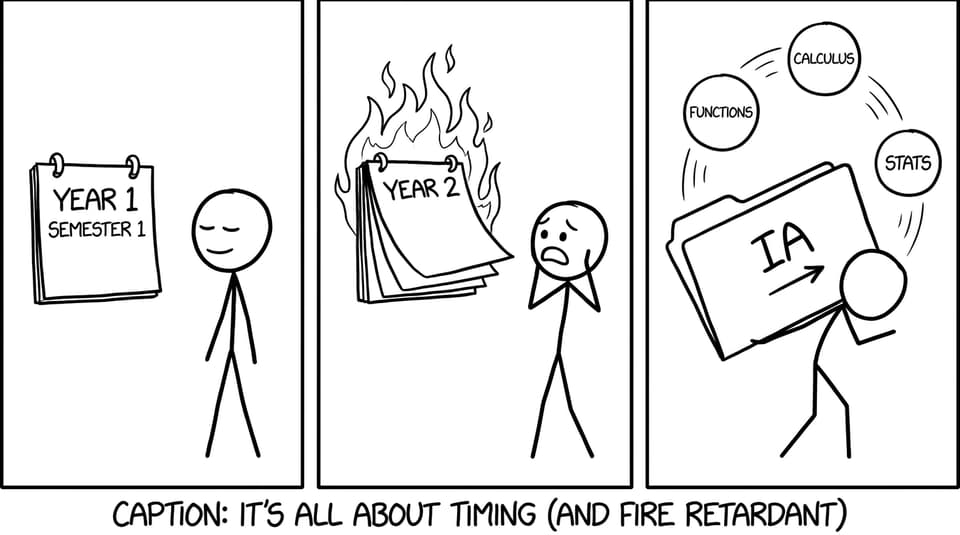
A useful rule of thumb: the IB is structured to allow schools flexibility, but it’s not designed for late pivots. The longer you wait, the more the switch becomes a catch-up project plus regular coursework plus exam prep.
When switching IB Math is feasible (and when it’s risky)
Usually feasible
Switching IB Math is most realistic when:
-
You’re in the first semester of Year 1
-
Your class has not diverged too far into track-specific units
-
Your IA topic is not locked in
-
Your teacher believes your fundamentals transfer well
Usually risky
Switching IB Math becomes risky when:
-
You’ve started Year 2
-
You’re close to internal deadlines or major mock windows
-
Your IA draft is already submitted (or close)
-
You’re switching into a track where you’re missing multiple core foundations (for example, moving into AA without strong algebra)
How switching affects the Math IA (this is the part people underestimate)
Your Math IA isn’t just “math writing.” It’s assessed against expectations that align with your chosen course. That means a mid-course IB Math switch can force one of three outcomes:
-
Keep the same IA with adjustments (best case)
-
Reframe the same idea so it fits the new emphasis
-
Restart the IA because the old one no longer matches the syllabus focus
This is why switching early matters. The more time you’ve invested in the exploration, the more expensive the switch becomes.
RevisionDojo can help you sanity-check your direction using AI Chat and grading support, especially if you’re trying to decide whether an IA can be adapted. The goal is not perfection on day one; it’s choosing a path you can finish confidently.
A practical switching plan (student-tested, parent-approved)
Meet your coordinator with specifics
Walk in with evidence: recent grades, the reason for switching, and a timeline. “I’m struggling” is a feeling. “I’m missing prerequisite algebra for AA and I have a plan to fix it” is a proposal.
Compare the syllabi by topic, not by vibes
Use a side-by-side breakdown to identify what you’ve already covered and what you’d need to learn. This article helps you do it quickly: IB Math AA vs AI Syllabus Differences: Clear Breakdown.
Build a catch-up sprint using targeted practice
When you switch IB Math, you don’t need to “relearn everything.” You need to close the highest-leverage gaps first.
A good loop looks like:
-
Learn the concept with concise Study Notes and Flashcards
-
Drill it with the Questionbank
-
Check understanding with AI Chat explanations
-
Simulate pressure using Mock Exams and timed sets
You can anchor your practice using RevisionDojo’s dedicated hubs for IB Math AA resources and topic-specific practice like Math AA Calculus Questionbank.
If you’re switching toward AI, focus on topic practice aligned to modeling and data skills, such as Math AI Number and Algebra Questionbank.
Use exam-style rehearsal, not just homework
Switching IB Math is stressful partly because time feels scarce. Structured rehearsal gives time a shape.
RevisionDojo’s IB Predicted Papers can act like full-length checkpoints, and Math AI Predicted Papers help you test whether your switch is translating into exam performance.
For revision strategy that works in both tracks, see How to Revise IB Math AA and AI Effectively.
Pros and cons of switching IB Math AI and AA
Pros
-
Better alignment with university goals
-
A course that fits your thinking style (which often improves confidence fast)
-
Higher long-term ceiling, especially if the switch removes a mismatch
Cons
-
A compressed catch-up workload
-
Potential IA rewrite
-
The risk of losing momentum right when consistency matters
Switching IB Math is not automatically a mistake. But switching without a plan usually is.
Closing: make the switch with structure, not panic
Switching between IB Math AI and AA mid-course is possible, but it’s rarely casual. The earlier you decide, the more it feels like a smart correction. The later you decide, the more it feels like carrying two courses at once.
If you’re considering a switch, treat it like an engineering problem: clarify constraints (university requirements), measure your gaps (topic checklist), then execute a plan (targeted practice + timed rehearsal). RevisionDojo is built for that exact workflow, with Study Notes, Flashcards, AI Chat, Grading tools, a deep Questionbank, Predicted Papers, Mock Exams, a Coursework Library, and Tutors when you need a human voice.
Whatever you choose, commit to one track of IB Math, then make your revision so consistent it stops being dramatic.