
If you are an IB student who wants a medical seat in India, you have probably felt the strange split-screen life: on one side, IB internal deadlines and IA drafts; on the other, the NEET calendar quietly approaching.
The fear is rarely about hard work. It is about uncertainty. Am I even eligible? Will my IB subjects count? Do I need extra paperwork? And most importantly: How do I prepare without burning out?
This guide answers those questions plainly, then gives you a preparation framework that fits the reality of IB life.
Quick checklist: IB to NEET in one page
Use this checklist before you go deep:
-
You can sit NEET as an IB student if you meet subject requirements.
-
Core subjects typically expected: Physics, Chemistry, Biology/Biotechnology, and English.
-
You must meet age and nationality criteria.
-
Some institutions may ask for an AIU equivalency certificate.
-
NEET is aligned to NCERT Class 11 and 12 content, so an IB student must bridge syllabus gaps.
-
Your best strategy is a two-track plan: keep IB stable, and build a NEET-specific drill loop.
If you need a central place to keep that loop consistent, start with RevisionDojo for IB and build around one reliable system.
Can IB students appear for NEET?
Yes, IB students can appear for NEET as long as they satisfy the eligibility conditions set by the relevant authorities and institutions.
The confusion usually comes from the word “equivalent.” The IB Diploma Programme is international, while NEET is an Indian entrance exam rooted in the NCERT framework. But equivalence is not the same as similarity. You do not need your IB course to be identical to NCERT. You need it to be recognized as meeting the subject and level expectations.
That is why eligibility is less about your school label and more about your subject choices and documentation.
NEET eligibility for IB students: what to verify early
Educational qualification and subject requirements
To appear for NEET, you generally need to have studied science subjects that match what medical admissions require.
For most IB Diploma students, the key is this: your transcript should clearly show that you completed (or will complete) the diploma with the required subjects.
Most commonly expected subjects include:
-
Physics
-
Chemistry
-
Biology or Biotechnology
-
English
Practical tip for an IB student: confirm your subject combination early in DP1, not late in DP2. Changing subjects late is expensive in time and stress.
Equivalency certificate (AIU)
Some universities and regulatory bodies may ask IB students for an equivalency certificate from the Association of Indian Universities (AIU). Think of this as a translation document for your qualification: it tells Indian institutions that your IB diploma meets their benchmark.
Not every situation requires it, but it appears often enough that it is worth planning for. If you might need it, start the process early. Administrative timelines and exam timelines do not respect each other.
Age and nationality criteria
NEET eligibility also includes age and nationality rules. Commonly referenced requirements include:
-
Minimum age: 17 years by December 31 of the year of admission
-
Upper age limit often referenced: 25 years (general) and 30 years (reserved categories)
-
Eligible nationalities can include Indian citizens, NRIs, OCI, PIO, and foreign nationals
Because policies can shift, treat this as a “confirm from official notification” item, not a rumor-based decision. The job of an IB student here is simple: verify early, document clearly, avoid last-minute panic.
The biggest challenge: NEET is NCERT-shaped, IB is skills-shaped
NEET rewards coverage, recall, and speed. The IB rewards explanation, reasoning, and structured writing. Neither is better. They just pay different currencies.
An IB student usually has two advantages:
-
You can handle unfamiliar problems because you are trained to think.
-
You can learn independently because you have survived long rubrics and bigger projects.
But you also face two predictable gaps:
-
NCERT-specific phrasing and fact patterns
-
High-volume objective practice under time pressure
How to prepare for NEET as an IB student (without sacrificing IB)
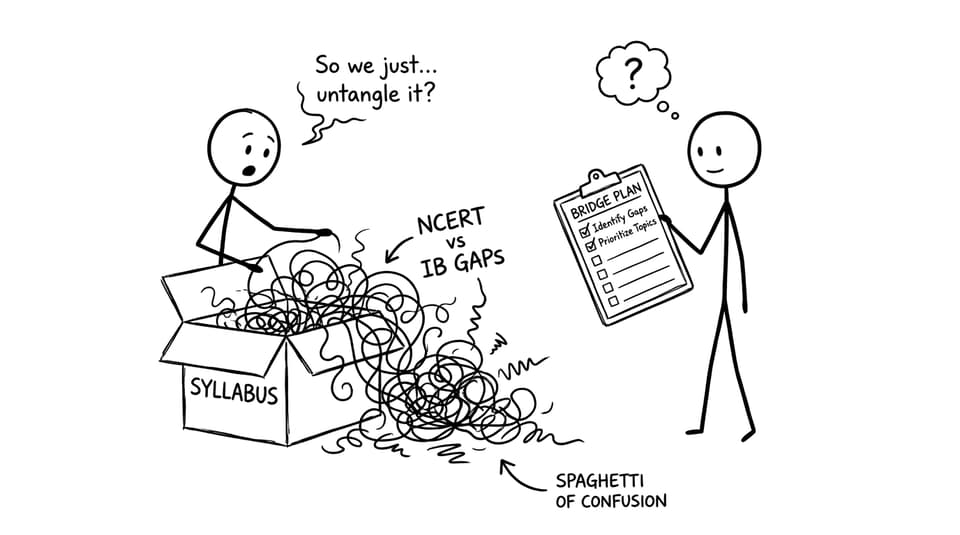
Build a “bridge map” between IB and NEET
Start by comparing:
-
What your IB syllabus covers deeply
-
What NEET expects you to recall quickly
Then make a bridge map with three columns:
-
Already covered in IB (revise + drill)
-
Partially covered (patch + drill)
-
Not covered (learn from scratch + drill)
This is where a tight study system matters. Use IB-aligned learning tools to stay stable in school, and create targeted practice blocks for the NEET-specific gaps.
For your IB science foundation, you can anchor your week inside RevisionDojo subject hubs like IB Biology Resources and IB Chemistry Resources. Even if NEET is the goal, your day-to-day reality is still IB exams, IB tests, and IB deadlines.
Use NCERT-focused materials, but practice like an IB student
NCERT textbooks are widely treated as essential for NEET. For an IB student, the trick is not to “read more.” It is to “convert to retrieval.”
A practical loop:
-
Read a small NCERT chunk (20-30 minutes)
-
Turn headings into questions
-
Answer without looking
-
Then immediately do timed questions on that topic
This is exactly how top IB performers study too: they use active recall, not passive highlighting.
To reinforce your exam loop mindset, borrow ideas from How to Study for IB Exams: Step-by-Step Guide and The Ultimate Guide to Revision for IB Students.
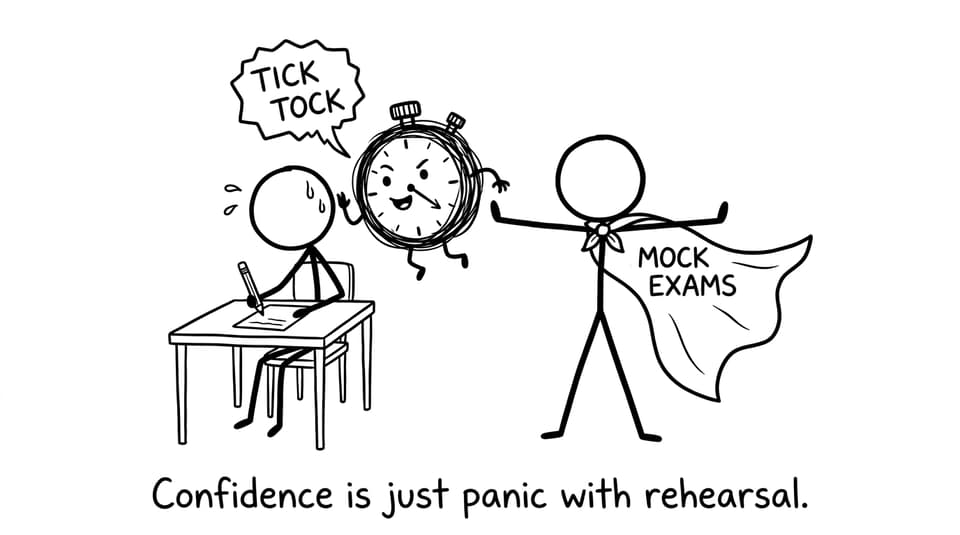
Train timing early (because timing is a skill)
NEET rewards speed. Many IB students underestimate how much speed is trained, not inherent.
Add one timed session per week from the start:
-
30-45 minutes of objective questions
-
strict timer
-
immediate review
Then scale it up slowly.
If you want to build “exam calm” as an IB student, you need rehearsal. That is why RevisionDojo leans into Mock Exams and Predicted Papers as a habit, not a last-minute event. Explore IB Predicted Papers and the strategy behind them in IB Predicted vs Specimen Papers: What They Mean.
Use AI support like a tutor, not a shortcut
When you are balancing IB and NEET, your biggest enemy is wasted time: getting stuck for 40 minutes on a doubt you could resolve in 4.
Use AI Chat like you would use a calm teacher after class:
-
Ask for a step-by-step explanation
-
Ask for common trap patterns
-
Ask for a mini-quiz to confirm you actually learned it
On RevisionDojo, that support shows up across the platform: AI Chat for doubts, Grading tools for feedback loops, a Coursework Library for IA clarity, and Tutors when you want human strategy on top of practice.
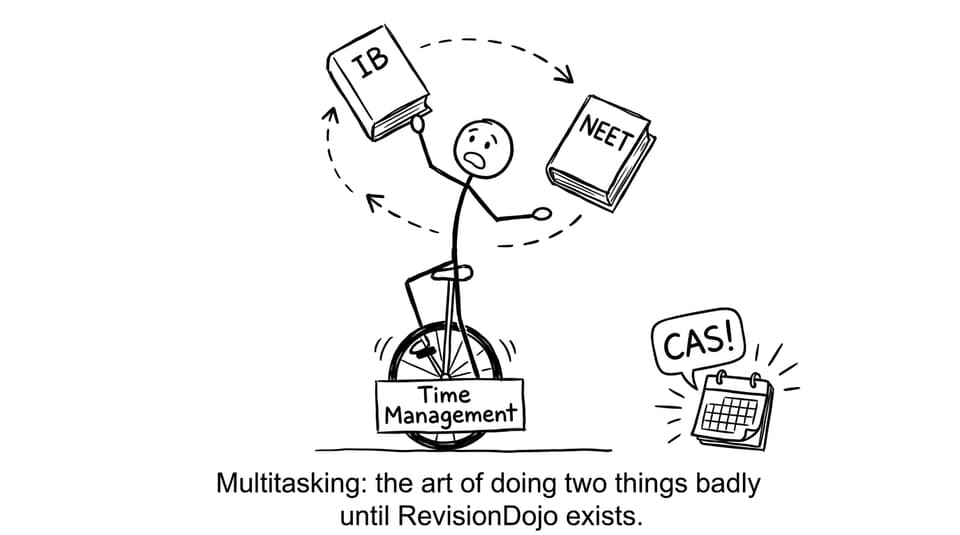
Balancing IB deadlines, CAS, and NEET prep
The students who pull this off are rarely the most intense. They are the most repeatable.
A sustainable weekly pattern for an IB student:
-
5 days/week: 45-75 minutes NEET-focused practice (small, consistent)
-
2 days/week: longer IB blocks (IA, labs, essay-based subjects)
-
1 day/week: a timed mock-style session
And one rule that sounds boring but works: do not let NEET prep become an excuse to neglect IB coursework. Your predicted performance, internal assessment quality, and daily learning still matter.
If you need a sanity-check on how top scorers structure revision, read How 45-Point IB Students Prepare for Exams and keep your routine calm, not dramatic.
Closing: make the IB-to-NEET path calmer, not harder
Yes, IB students can appear for NEET. The real question is whether you can make the path feel stable while you do it.
Eligibility is mostly paperwork and subject alignment. Preparation is mostly rhythm: small daily recall, targeted practice, and timed rehearsal. If you build that rhythm now, NEET stops feeling like a second life and starts feeling like a system you can run.
If you want one home base for that system, use RevisionDojo: Study Notes to get clear, Flashcards to remember, Questionbank to drill, AI Chat to unblock doubts fast, Mock Exams and Predicted Papers to rehearse under pressure, plus Grading tools, a Coursework Library, and Tutors when you need deeper feedback. Your IB workload is already heavy. Your tools should make it lighter.