

The question every tired student asks
Somewhere around the third deadline in the same week, you start to wonder if reality has a grading rubric.
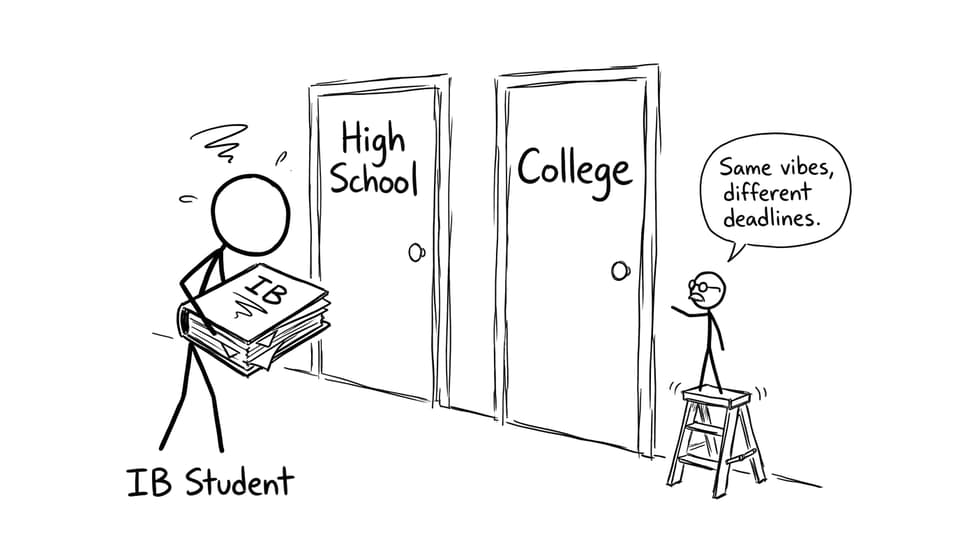
One teacher wants a timed essay. Another wants a lab write-up. Someone mentions TOK like it’s a casual conversation topic, and you still have CAS reflections to log. At that moment, the question stops being philosophical and becomes practical: are IB classes college level or is this just what high school feels like when it takes itself seriously?
This guide breaks down what “college level” really means, where IB matches it (and where it doesn’t), and how you can use that knowledge to prepare for exams without burning out.
Quick checklist: what “college level” usually means
Use this as a fast diagnostic. A course tends to feel college level when it includes most of the following:
-
Concept depth: fewer topics, but more thinking per topic
-
Independent learning: you’re expected to fill gaps on your own
-
Long-form assessment: extended writing, investigations, projects
-
Marking criteria: success depends on meeting specific standards, not “trying hard”
-
Time management pressure: fewer reminders, bigger consequences
Many IB classes hit four or five of these at once, which is why they feel different from typical high school courses.
What makes IB feel college level (in the real, daily sense)
College isn’t “hard” in just one way. It’s hard because it asks you to act like an adult learner: you plan, you pace, you interpret expectations, and you defend your thinking. In that sense, IB often trains the exact muscles that make college manageable.
IB has a university-style assessment culture
A big part of “college level” is not the content itself, but the assessment style.
In IB, marks usually come from whether you:
-
use precise terminology,
-
follow command terms correctly,
-
structure answers in the way examiners reward,
-
and show reasoning, not just memory.
That’s closer to how many university departments grade than people expect. The feeling of “I studied a lot but still lost marks” is common in both places, becausebecause performance is measured against criteria, not effort.
To train that skill deliberately, build your revision around feedback loops, not rereading. RevisionDojo’s Questionbank is designed for that exact purpose: practice questions, mark-scheme-aligned expectations, and fast correction.
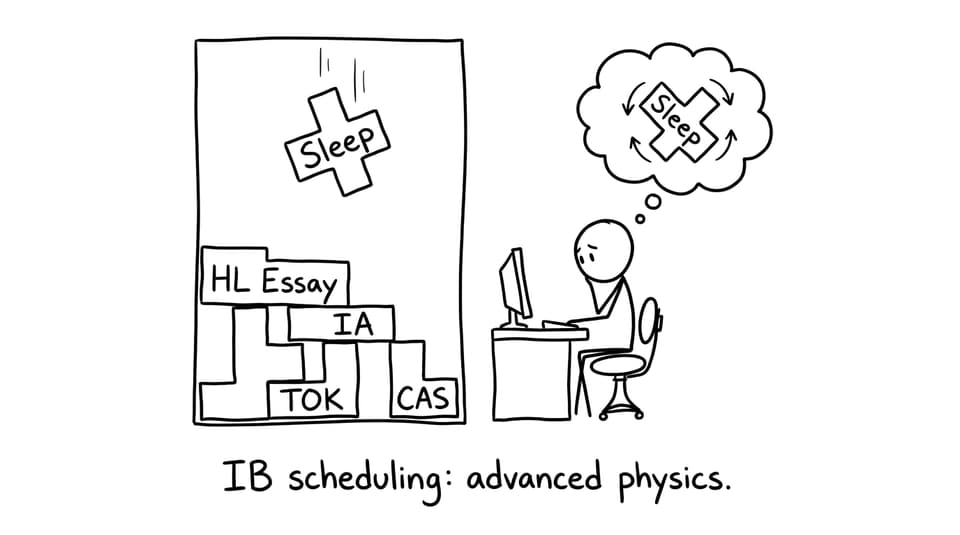
IB workload is closer to “multiple courses at once”
College students often juggle four or five classes, each with its own rhythm. IB mimics that experience early. The pressure isn’t just difficulty; it’s concurrency.
You’re not only learning content. You’re managing:
-
different subject demands,
-
overlapping deadlines,
-
and varied assessment types.
This is why time management becomes a skill, not a personality trait.
If you want a practical system for the crunch period, use RevisionDojo’s guide: IB: How to Study in the Last 24 Hours (No Panic). It’s a calm plan for when everything is loud.
IB builds academic writing and research habits early
One of the most “college-like” experiences in IB isn’t an exam at all. It’s research.
The Extended Essay and many internal assessments force you to do what university students do constantly:
-
narrow a question,
-
select evidence,
-
justify methods,
-
and communicate clearly under constraints.
This is why IB students often arrive at college already knowing how to survive the blank page.
RevisionDojo’s Extended Essay Guides can help you make that process less mystical: structure, criteria, and what strong choices look like.
Where IB is not the same as college (and why that matters)
Saying IB is “college level” can be true and still misleading. There are important differences, and noticing them helps you prepare smarter.
College often has more specialization
In IB, you balance breadth and depth at the same time. In university, the balance changes. Early college can be broad, but you quickly move toward specialization: fewer subjects, more intensity per subject.
So yes, IB can match introductory college courses in depth. But a second-year university course in a major subject can become more technical, more independent, and more demanding than most IB syllabi.
College rewards self-direction even more
IB is rigorous, but it’s still high school in one crucial way: you’re surrounded by scaffolding. You have teachers who remind you, a timetable that structures your week, and a school that monitors progress.
College expects you to create that structure yourself.
The best way to prepare is to practice being “self-managed” now:
-
plan your week on Sunday,
-
set minimum daily tasks,
-
and review mistakes the same day.
For practical organization habits, RevisionDojo’s Organization Hacks for Your IB Notes and Materials is a good reset.
A student-focused comparison: content vs skills
Students often ask if IB content is literally the same as college content. Sometimes it overlaps. Often it doesn’t. But the more useful comparison is skill-based.
The “college level” skills IB teaches well
IB is especially strong at training:
-
analytical reading and writing
-
exam technique with command terms
-
research planning and evidence selection
-
reflection and argument evaluation (TOK)
-
long-term time management
If you build your revision around these skills, exams feel less like a memory contest and more like a performance you can rehearse.
A good rehearsal loop looks like:
-
clarify the concept quickly,
-
practice the skill under time,
-
get feedback,
-
repeat on the exact weakness.
RevisionDojo makes that loop smoother with connected tools: Study Notes, Flashcards, AI Chat, Grading tools, Predicted Papers, Mock Exams, a Coursework Library, plus Tutors when you need a human voice.
For example, you can refresh a topic using Digital IB Study Notes, then immediately apply it using the IB Question Bank guide.
How to use this insight for exam prep (without spiraling)
If IB is college-like, the best response isn’t panic. It’s strategy.
Build exam confidence like a university student would
University students improve by doing fewer things, better. You can do the same in IB:
-
Use notes to get clear quickly, not to feel busy.
-
Use questions to expose the gap.
-
Use feedback to build a personal “mistake rulebook.”
If you’re heading into mock season, this guide pairs well with that mindset: How to Study for IB Mocks (Without Burning Out).
Train the exam experience, not just the content
Many students revise content for weeks, then sit a full paper once and feel shocked by timing.
Fix that by scheduling regular full-paper practice using realistic resources. RevisionDojo’s IB Predicted Papers are built to simulate real exam structure and pressure, so you can practice pacing and decision-making.
If you’re unsure how to use them properly, read: IB Predicted vs Specimen Papers: What They Mean.
The real answer: IB is college-like, and that’s the point
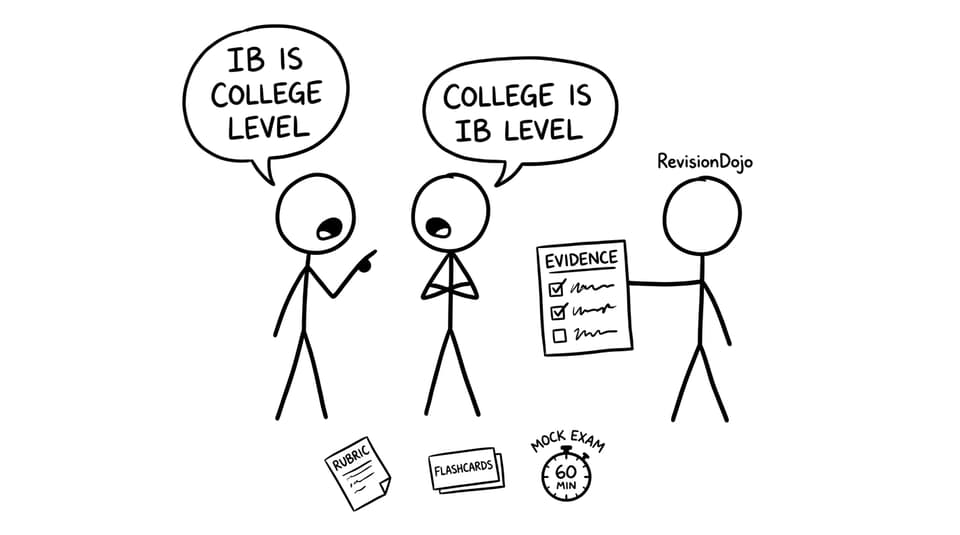
So, are IB classes college level? In many practical ways, yes: the workload, the criteria-based marking, the writing, the research, and the expectation that you think instead of repeat.
But the more useful takeaway is this: IB isn’t trying to turn you into a college student overnight. It’s trying to make college feel less like a cliff and more like a step.
If you want that step to feel steadier, build your revision system now. Use RevisionDojo to run the full loop: Questionbank, Study Notes, Flashcards, AI Chat, Grading tools, Predicted Papers, Mock Exams, the Coursework Library, and Tutors, so your next IB exam feels rehearsed, not improvised.