



If you have ever watched a classmate refresh an application portal like it is a heart monitor, you already understand the strange power of IB predicted grades. They are not your final results. But for many universities, they are the version of you that gets judged first.
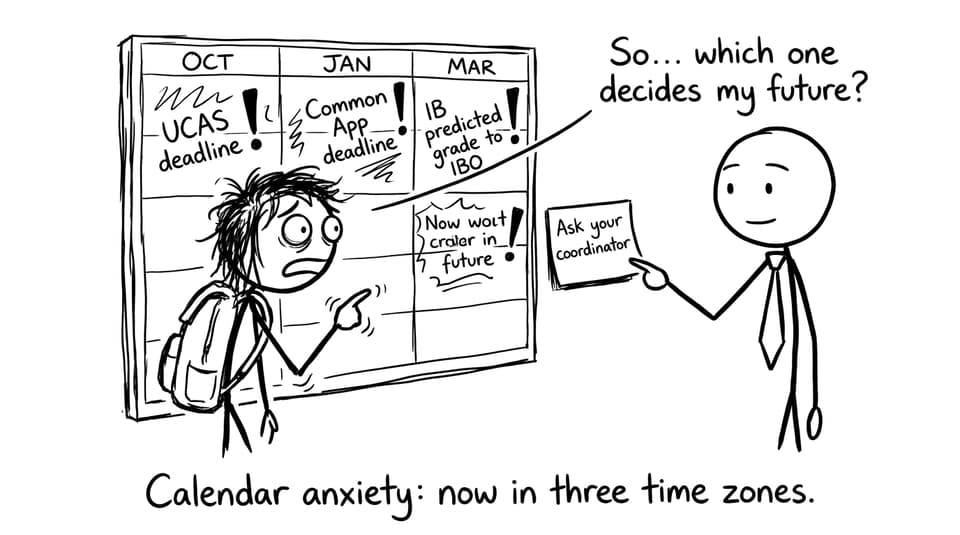
The stressful part is that IB predicted grades move through multiple timelines at once: your school’s internal deadline, your university application deadline, and the separate date schools send predictions to the IB Organization. Mix those up, and you can end up working hard in the wrong week.
What are IB predicted grades (and why they matter)?
IB predicted grades are teacher estimates of the scores you are likely to achieve in each subject (plus core components such as TOK and the Extended Essay). They are based on the evidence your teachers have in front of them: class tests, coursework progress, participation, and especially mock exam performance.
Universities use IB predicted grades to:
-
Evaluate academic readiness before final exams
-
Make conditional offers in systems where decisions happen early
-
Compare applicants using a standardized framework across subjects
If you want a deeper breakdown of how these grades are formed, it helps to read IB Predicted Grades: Interpret Them and Improve Fast.
Quick checklist: the predicted grade timeline to track
Keep this simple IB checklist somewhere visible:
-
Your school’s internal “finalize predicted grades” date
-
Your university application submission deadline (UCAS/Common App/portals)
-
Whether your school allows updates after mocks
-
The IB Organization predicted grade upload date (separate from university submissions)
That separation is the big idea. Most confusion comes from assuming there is one universal IB predicted grade deadline.
When are IB predicted grades submitted to universities?
In most schools, IB predicted grades are finalized in DP2, typically between September and October, because that timing fits early university deadlines. But the exact submission moment depends on where (and how) you apply.
Common university windows for IB predicted grades
These are the typical patterns students see:
-
UK (UCAS): predictions must be ready before UCAS submission deadlines (mid-October for Oxbridge/medicine routes, late January for many other programs).
-
US (Common App and similar): predictions usually appear in counselor reports or transcripts, often sent October through December for early rounds.
-
Canada: many applications peak around January to February, though some universities may request academic updates earlier.
-
Australia: for some pathways, applications and academic documents can be reviewed earlier in the year (often August to October).
-
Europe: timelines vary widely; some systems lean more heavily on final results, while others still want predicted performance.
To understand how schools actually set these predictions, see When and How Are Predicted Grades Predicted in IB?.
The separate IB Organization predicted grade deadline
Schools also submit predicted grades to the IB Organization by:
-
April 20 for the May examination session
-
October 20 for the November examination session
This is real and important for IB administration, but it is not automatically the same thing as “submitted to universities.” Treat it as a different track on the same railway.
Who submits IB predicted grades (and what you control)
You usually do not submit IB predicted grades yourself. They are typically sent by your school counselor or IB coordinator through systems like UCAS, the Common App counselor portal, or a university’s direct application platform.
What you do control is the quality and recency of the evidence behind the prediction. That is why mock exams, timed writing, and strong coursework drafts can matter more than one-off homework grades.
What if your predicted grades feel too low?
An underrated truth in IB: predictions often reflect what is provable, not what is possible.
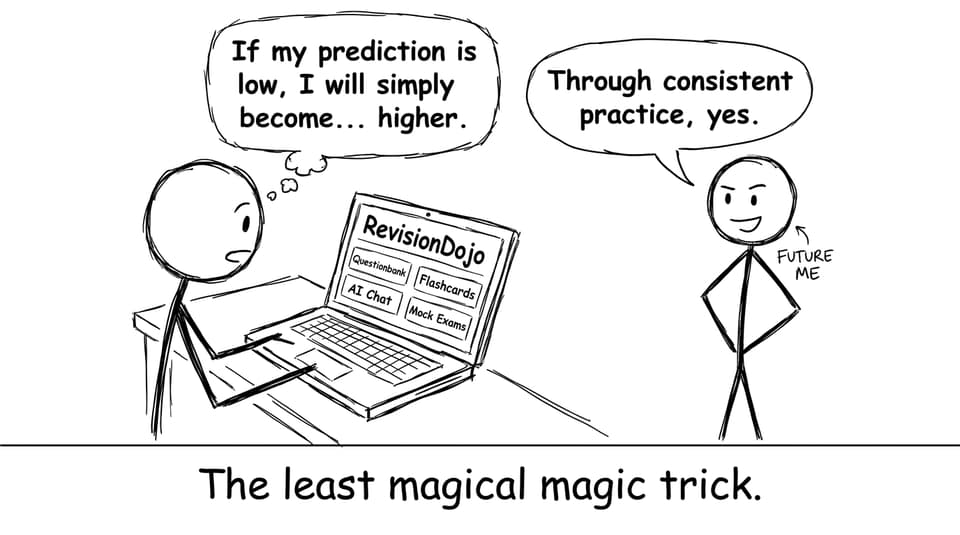
If your prediction is lower than you hoped, treat it like data. Ask your teacher (politely, early, and specifically) what evidence drove the number and what upcoming assessments could still shift it. Then build an “evidence loop”: practice, feedback, correction, retest.
A practical starting point:
-
Use RevisionDojo’s Questionbank to drill weak subtopics with exam-style questions.
-
Patch confusion quickly using RevisionDojo Flashcards for daily recall.
-
Add realism with IB Predicted Papers and weekly timed sessions.
For a calm recovery plan, read IB Predicted Grades Don’t Define You (Here’s What Does) and IB Predicted Grades Missed? What to Do Next.
How RevisionDojo helps you plan around IB predicted grade deadlines
Planning improves when you can see your progress clearly. RevisionDojo is designed for exactly that kind of IB loop: clarity, practice, feedback, repeat.
Students use RevisionDojo to:
-
Practice targeted skills with the Questionbank
-
Learn faster with syllabus-aligned Study Notes and Flashcards
-
Get unstuck with AI Chat
-
Train stamina with Mock Exams and Predicted Papers
-
Improve coursework using Grading tools and the Coursework Library
-
Get personalized support from Tutors when one subject becomes the bottleneck
If you want to translate your current marks into a realistic overall picture, try the IB Grade Calculator and compare it to your target offers.
Conclusion: treat IB predicted grades like a schedule, not a surprise
IB predicted grades are not a single date. They are a chain of deadlines that starts inside your school and ends inside a university portal, with a separate administrative submission to the IB Organization later on.
Track your school’s timeline, align your revision to produce better evidence before predictions lock, and use RevisionDojo to run a clean improvement loop with Questionbank practice, Flashcards, AI Chat, Grading tools, Predicted Papers, Mock Exams, and support from Tutors when you need it. Your goal is not to guess the deadline. Your goal is to be ready before it arrives.