
A friend once told me they wanted a number that would “settle it.”
A single score that would end the group chat debates, silence the relatives, and make college admissions feel like a math problem instead of a story.
So they asked the question many high-achieving students quietly carry: what is more impressive: a 4.0 GPA or 45 points in IB?
The honest answer is annoying. It depends.
But the useful answer is empowering: if you understand how colleges read GPA and how they interpret a top IB score, you can make your academics (and your application) tell a clearer story.
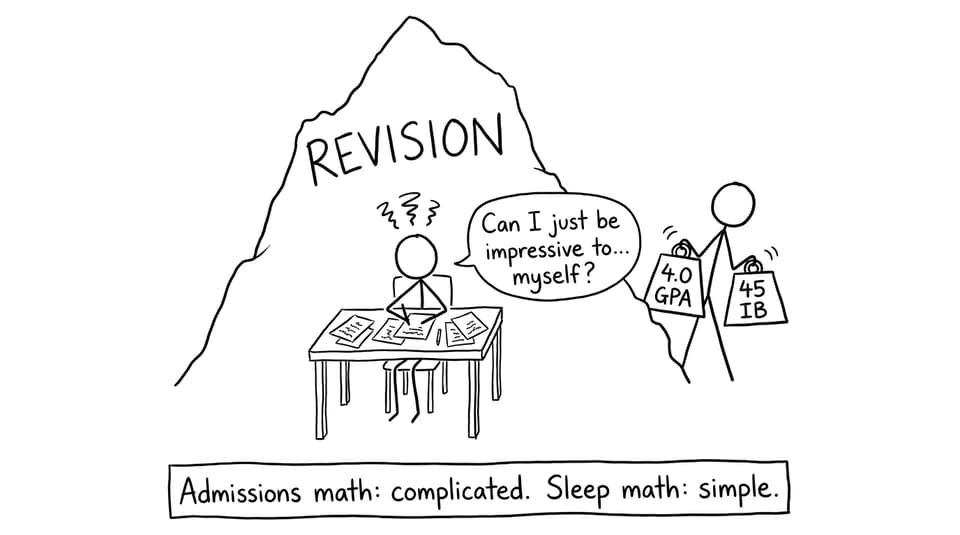
Quick checklist: what admissions actually compare
Before we argue “which is better,” pin down what universities typically look for:
-
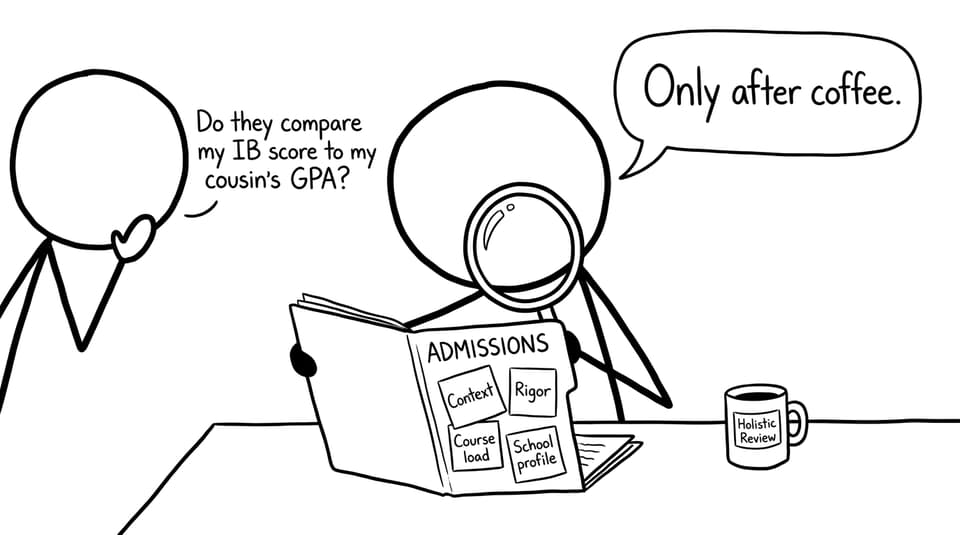
Context: school profile, grading policy, course offerings, and grade distribution
-
Rigor: the difficulty of what you chose (and what was available)
-
Consistency: strong performance over time, not one lucky streak
-
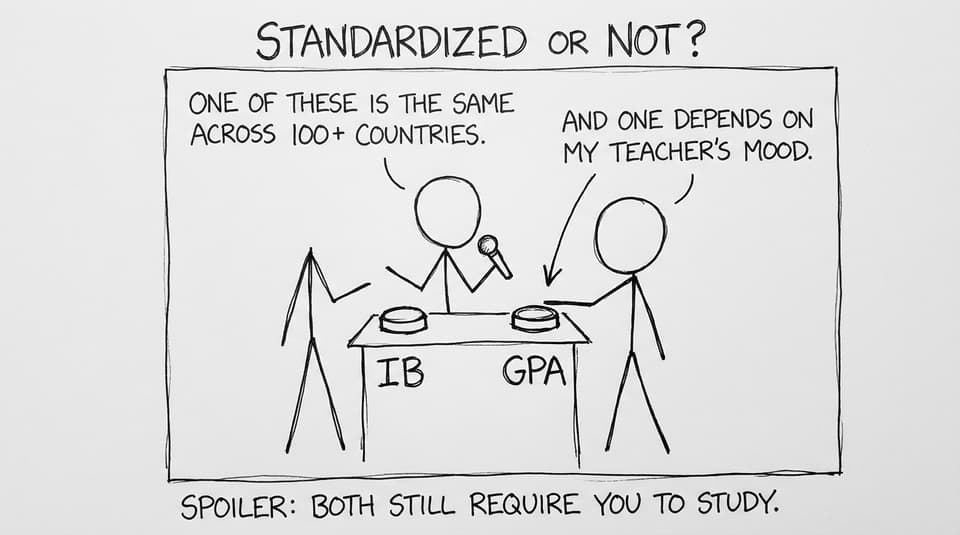
Standardization: externally assessed signals that travel across schools
-
Evidence of skill: writing, analysis, time management, and intellectual independence (hello, IB core)
If you keep this checklist in mind, the 4.0 vs 45 debate becomes less emotional and more strategic.
What a 4.0 GPA really means (and what it doesn’t)
A 4.0 GPA usually means straight A’s on an unweighted scale. In many US high schools, it’s the highest possible number.
The catch is that GPA is a local language. A 4.0 at one school can reflect a very different reality than a 4.0 at another.
Weighted vs unweighted: why “4.0” can hide the real story
-
Unweighted GPA treats classes the same: A = 4.0, B = 3.0, etc.
-
Weighted GPA adds extra points for harder classes (honors/AP/IB), so an A might be 5.0 in a weighted system.
This is why admissions officers don’t just read the number. They read the transcript: course difficulty, trend over time, and how you performed relative to what your school offers.
In other words, a 4.0 is impressive, but it’s not automatically comparable across schools.
What a 45 in IB means (and why it’s so rare)
In the IB Diploma Programme, 45 is the maximum score:
-
42 points from six subjects (each graded 1 to 7)
-
3 bonus points from TOK and the Extended Essay
Unlike GPA, the IB score is designed to be understood globally. A 7 in one country is meant to represent the same standard in another.
How rare is a 45 in IB?
A 45 is extremely rare, commonly described as achieved by fewer than 1% of IB candidates worldwide. And even when a student is brilliant, the program is built to make perfection hard: multiple subjects, multiple assessment types, and multiple deadlines that collide.
That rarity is part of the signal.
IB vs GPA: the rigor question colleges care about
If you ask admissions staff what they want, they usually don’t say “the biggest number.” They say they want evidence you can handle their workload.
Breadth and depth
A GPA system can vary widely. Some students protect a 4.0 by choosing less demanding classes. Others earn a 4.0 while stacking the hardest courses available.
In IB, breadth is mandatory: six subjects across required groups, plus TOK, the EE (a 4,000-word research essay), and CAS. Even strong students feel the weight of doing many difficult things at once.
Assessment style: why IB feels like training for college
GPA often includes a lot of teacher-made assessments: quizzes, homework, participation, unit tests.
IB leans heavily on external exams and standardized rubrics, with internal assessments, essays, and orals that require sustained thinking. That combination tends to translate well into college expectations: writing under constraints, defending ideas, and managing long projects.
If you want to practice that exam-style thinking efficiently, RevisionDojo’s Questionbank is built for IB rhythm: targeted topics, realistic questions, and feedback loops.
So which is more impressive for college admissions?
Here’s the simplest framing:
-
A 4.0 GPA often signals consistency.
-
A 45 in IB signals elite performance in a standardized, rigorous program.
But colleges rarely choose one metric in isolation.
They contextualize.
A 4.0 with the strongest course load available (including IB Higher Levels) can be just as compelling as a very high IB total.
Meanwhile, a near-perfect IB score can carry special weight for international comparison because it’s already standardized.
What to do if you’re an IB student aiming high
If you’re preparing for IB exams, your goal isn’t to “beat” GPA students. Your goal is to make your achievements legible and repeatable.
Build a scoreboard you control
Try this weekly loop:
-
Learn one weak topic using Digital IB Study Notes
-
Convert key ideas into recall using Study Notes and flashcard habits
-
Drill exam technique with the Comprehensive IB Question Bank guide
-
Add timed pressure using IB Predicted Papers (practice papers, not official materials)
If you like having everything in one workflow, the RevisionDojo app for IB exam prep connects Study Notes, Flashcards, Questionbank practice, AI Chat, grading, and mock-style rehearsal.
Don’t ignore the “core” points
A quiet truth about IB is that many students chase 7s and then lose bonus points in TOK/EE because the work feels different.
Treat TOK and the EE like high-leverage components, because they are.
Start with RevisionDojo’s IB Extended Essay guide hub, and if TOK writing is what slows you down, use Structuring for Success in IB TOK Essays to make the criteria feel concrete.
Conclusion: the impressive part is what the number proves
A 4.0 GPA is impressive when it proves sustained excellence in a demanding context. A 45 in IB is impressive because it proves rare, standardized mastery across a broad and rigorous program.
But for you, as an IB student preparing for exams, the more practical question is: what can you do this week that makes your final score predictable?
Build the loop: Study Notes for clarity, Flashcards for recall, Questionbank for exam technique, AI Chat and Grading tools for fast feedback, then Predicted Papers and Mock Exams for stamina. RevisionDojo was built to make that loop simple, so your IB performance becomes something you can trust, not something you hope for.