


If you ask five students whether IB is harder than AP, you will get six answers, because the word “hard” hides a more interesting question: hard in what way?
Some courses are hard because the content is dense. Others are hard because the calendar never stops. The IB Diploma Programme often feels like the second kind: not one big mountain, but a whole range you cross while carrying your other responsibilities.
Below is a complete comparison designed for IB students preparing for exams, with practical takeaways you can use immediately.
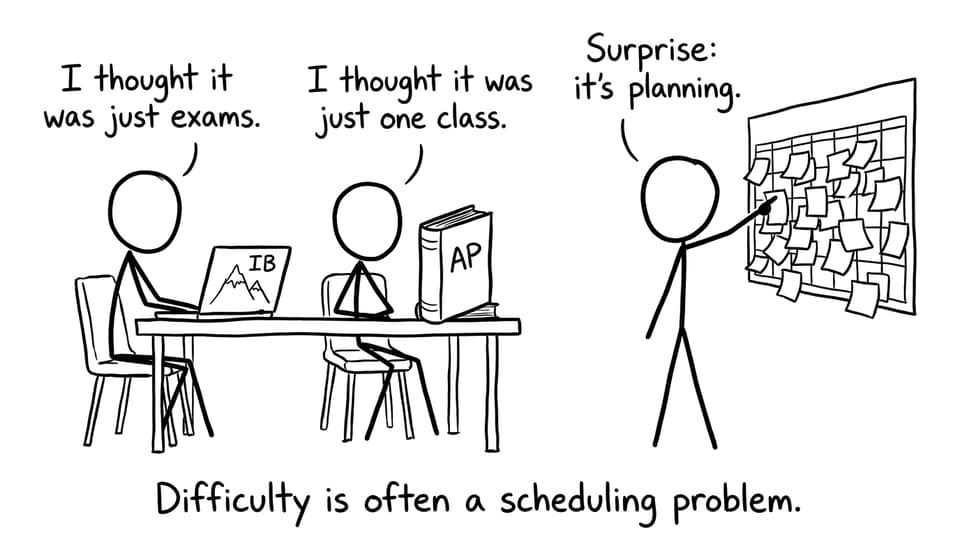
IB vs AP: a quick checklist
Use this as a fast filter before we go deeper:
-
If you want one cohesive program with research, reflection, and service built in, you’re describing IB.
-
If you want pick-and-choose rigor by course, you’re describing AP.
-
If your stress comes from juggling deadlines across subjects, IB often feels harder.
-
If your stress comes from one high-stakes exam in a single subject, AP can feel harder.
For a strong exam routine inside the IB workload, the most repeatable loop is: notes -> recall -> questions -> review. RevisionDojo is built around that exact loop with Study Notes, Flashcards, and a Questionbank you can run daily. See: RevisionDojo App: The Smarter Way to Prep for IB Exams.
What the IB Diploma Programme asks you to carry
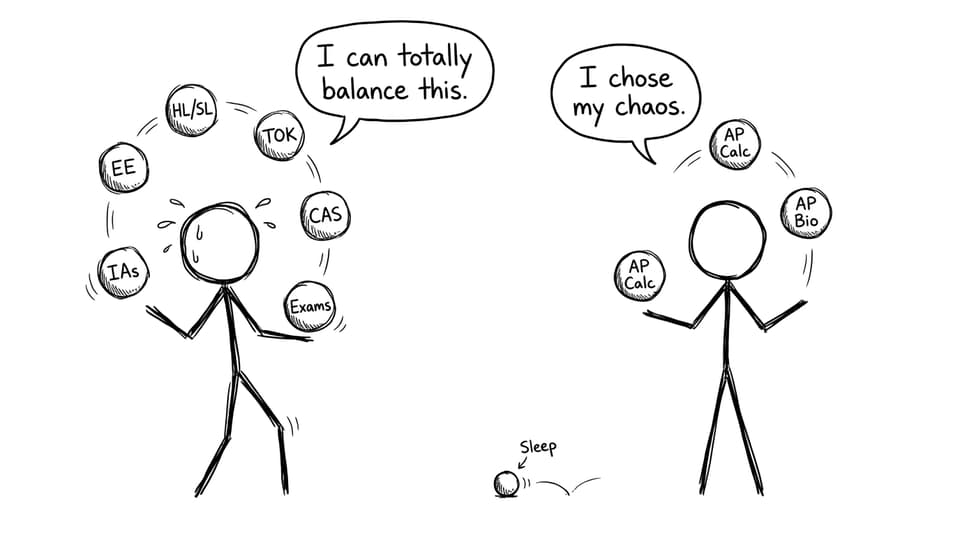
The IB Diploma Programme is a two-year curriculum with six subjects plus core components: TOK, the Extended Essay, and CAS. The important point is not the list; it’s the overlap. You are studying for exams while also producing assessed work that has its own rubrics and timelines.
That’s why many students say IB feels “always on.” Even in weeks when you are not doing heavy exam prep, something still needs drafting, reflecting, polishing, or submitting.
If coursework pressure is eating your headspace, it helps to see what strong work looks like. RevisionDojo’s IB Coursework Examples: IA, EE and TOK Exemplars and IB Internal Assessment Guides reduce the guesswork.
Why AP can feel simpler (and why it can still be intense)
AP courses, created by the College Board, are individual subjects. You can take one AP class, or stack several. There’s no required TOK-style interdisciplinary component and no built-in research essay requirement across the whole program.
That modularity is why AP often feels more controllable: you can specialize early, focus on your strengths, and design a schedule that fits your life.
But “simpler structure” does not always mean “easier.” A student taking several APs at once may face a brutal spring exam season. The difference is that AP pressure tends to spike, while IB pressure tends to simmer.
Assessments: what makes IB feel harder than AP
For many students, IB is harder because assessment is more varied and more continuous.
IB assessments: exams plus internal work
In IB, you typically face written exams, plus internal assessments (IAs), plus components like the Extended Essay (4,000 words) and TOK tasks that reward careful thinking and clear argument.
This variety is fair, but it’s demanding. You are not only learning content; you are learning formats: how to write to a rubric, how to handle command terms, how to build evidence, and how to manage time across papers.
To prepare efficiently, do not “revise everything equally.” Train like the exam actually works. A good start is: Is 1 Month Enough to Study for IB Exams?.
AP assessments: exam-centric and standardized
Most AP courses culminate in a single exam with multiple-choice and free-response components. There is less ongoing assessed coursework required by the program itself.
That can reduce long-term stress, but it increases the weight of exam technique. If you struggle on timed writing days, AP can feel unforgiving.
Workload and time: the hidden definition of “hard”
Here is the honest comparison: IB tends to be harder to organize, while AP can be harder to cram.
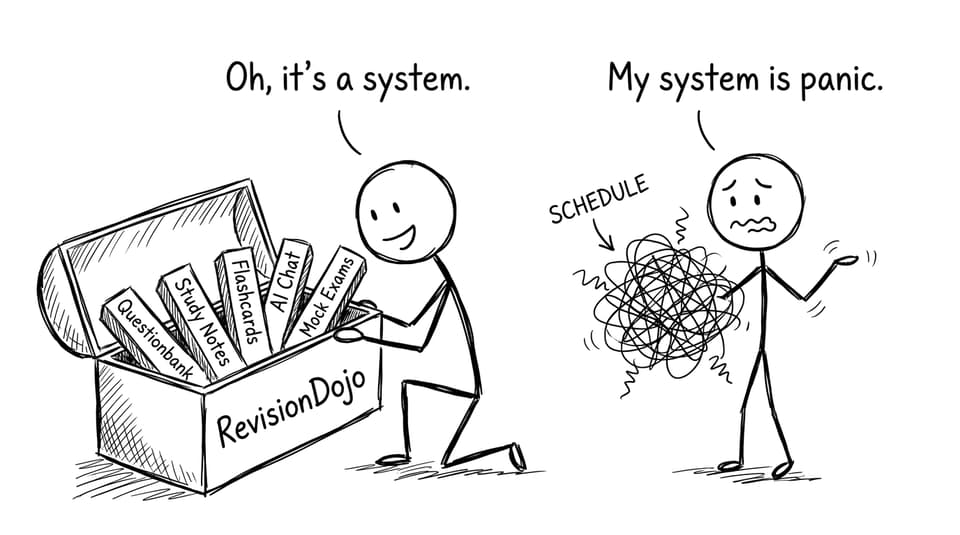
The IB student who wins is rarely the most naturally gifted. It’s usually the one who builds a system early, then repeats it when life gets noisy.
A calm system looks like this:
-
10-15 minutes daily: IB Flashcards with Spaced Repetition (SRS)
-
25-45 minutes: targeted practice from a Questionbank (topic-filtered)
-
10 minutes: review mistakes and write “error rules”
-
Weekly: timed practice with Mock Exams and Predicted Papers
If you need a reset, read: IB: I Study All Day but Remember Nothing and You’re Not Lazy and Your IB Study Method Is Broken.
College credit and recognition: what matters for you right now
Universities respect both pathways. AP often converts more directly into course credit at many institutions, while IB credit policies commonly depend on Higher Level choices and final scores.
But for an IB student preparing for exams, the more useful point is this: admissions officers tend to notice sustained rigor. The Diploma Programme signals breadth, workload management, and academic independence.
That is why your best move is not to debate difficulty endlessly. It is to show you can perform under the actual IB rules.
Conclusion: the best way to make IB feel easier
So, is IB harder than AP? Often, yes, because IB is not just a set of classes. It’s a system of deadlines, formats, and expectations that keeps running even when you are tired.
But that is also the good news: you can make IB feel lighter by making it more predictable. Build one repeatable loop using RevisionDojo’s Questionbank, Study Notes, Flashcards, AI Chat, Grading tools, Predicted Papers, Mock Exams, Coursework Library, and Tutors, and let your plan do the heavy lifting when motivation doesn’t.
If you want one next step, start with: How to Study for IB Mocks (Without Burning Out).