


If you have ever stared at your subject choices thinking, “Which one is going to hurt less?”, you are not alone. The real question is not whether IB Psychology or Global Politics is “harder” in some universal way, but what kind of hard each subject asks you to get good at. One rewards precision with studies and method. The other rewards judgement with concepts and real-world evidence.
The quick checklist: what usually makes a subject feel “hard”
Use this fast filter before you decide:
-
Memory load: how much you must recall accurately under time pressure
-
Writing demands: how structured your essays must be
-
Evidence style: studies and research methods vs case studies and current events
-
Assessment stress: the internal assessment format and how “technical” it feels
-
Consistency: whether marks come from clear steps or subjective judgement
IB Psychology vs Global Politics: the core difficulty difference
Why IB Psychology often feels harder
For many students, IB Psychology feels harder because the subject is picky in a quiet way. You are expected to use the right study, the right explanation, and the right evaluation, quickly. The syllabus pushes you toward scientific thinking: research methods, ethical considerations, and critical evaluation of evidence.
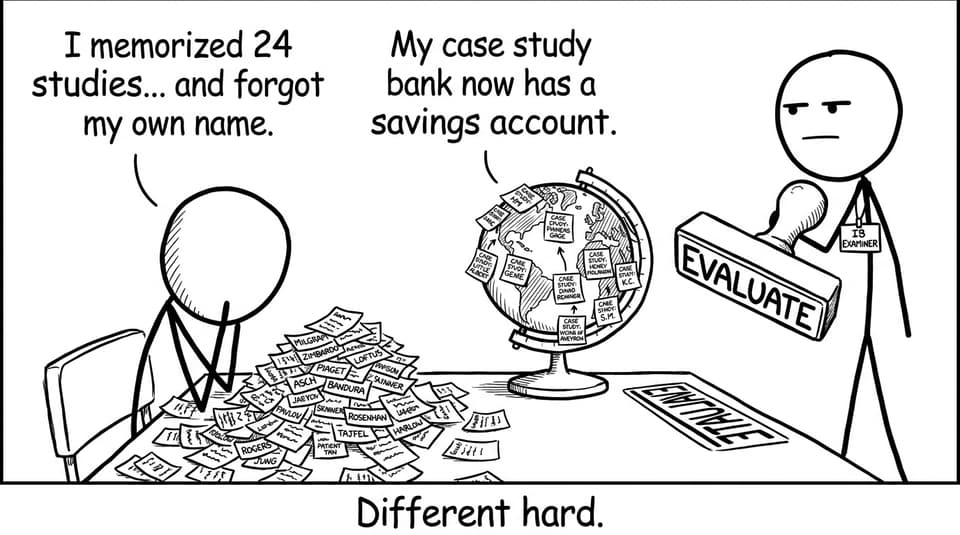
In exams, it can feel like you are carrying a backpack full of named researchers, aims, procedures, and results. If your recall slips, your argument often collapses with it.
If you want a clear starting point, the IB Psychology hub organizes topics, Study Notes, and Flashcards into a single path.
Why Global Politics can feel easier (but not “easy”)
Global Politics tends to feel more flexible. Concepts like sovereignty, power, legitimacy, and human rights can be applied across many examples, and good answers often come from how well you connect ideas to evidence.
But the difficulty shows up differently: you must stay current, select relevant examples, and argue with balance. A weak case study choice can drag down an otherwise decent essay.
To see how strong evidence works here, read How to Use Case Studies in IB Global Politics and keep your revision anchored in the IB Global Politics hub.
Assessment comparison: what you are really being tested on
IB Psychology assessment pressure points
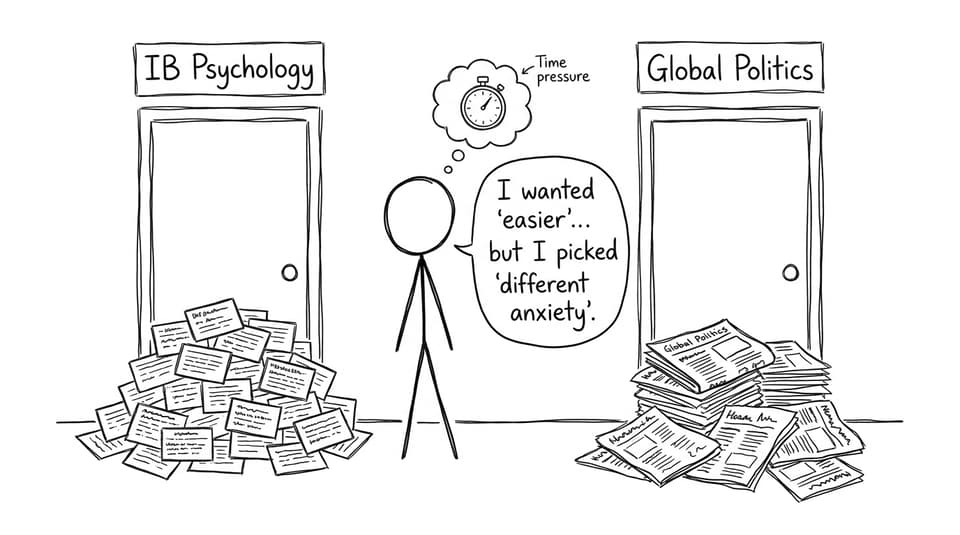
IB Psychology assessments tend to be memorization-heavy, but not in a simple way. You are memorizing to use material: explain a theory, support with a study, then evaluate limitations. At HL, the technical demands increase further.
RevisionDojo helps you practice that exact loop with Questionbank drills and feedback, plus targeted resources like IB Psychology Paper 3 and topic pages such as IB Psychology Personal Relationships.
Global Politics assessment pressure points
Global Politics leans into argument and application. You are rewarded for taking a concept, applying it to a real situation, and then showing nuance. Many students find the internal assessment more approachable because it is rooted in engagement and reflection rather than experimental design.
If you are revising, How to Revise Effectively for IB Global Politics pairs well with focused topic work like Peace and Conflict.
How to revise both subjects without burning out
A practical rule: whichever subject you choose, do not confuse reading with readiness.
-
For IB Psychology, build active recall with RevisionDojo Flashcards and then prove it under pressure using the IB Question Bank guide.
-
For Global Politics, build a flexible case study bank and practise planning essays fast, then tighten your writing with concept-led revision.
When you need exam realism, use RevisionDojo Predicted Papers to rehearse timing and decision-making, then patch weaknesses with Questionbank sets.
FAQ
Is IB Psychology harder than Global Politics at HL?
Often, yes, and the reason is usually the precision burden. IB Psychology HL expects you to handle research methods, write tightly structured responses, and deploy studies with accurate detail. Under exam conditions, that combination creates stress even for strong students. Global Politics HL can still be demanding, but students often experience more flexibility in the evidence they choose. That flexibility can make it feel “easier,” even though high marks still require sharp evaluation. If you like clean structure and evidence rules, IB Psychology may feel manageable despite being heavy.
What skills matter most for IB Psychology exams?
The core skill is not just memory, but usable memory. In IB Psychology, you must recall a study and immediately link it to the command term and theory in the question. Then you need evaluation: limitations, ethical issues, alternative explanations, or methodology critique. Strong students also write with a repeatable structure, so their thinking stays calm under time pressure. This is why practicing with targeted tools matters: Study Notes for clarity, Flashcards for recall, and Questionbank practice for exam behavior. If you want a structured starting point, use Understanding IB Psychology: A Comprehensive Guide.
How do I choose between IB Psychology and Global Politics?
Choose based on the type of effort you can repeat for months. If you enjoy scientific reasoning, clear frameworks, and you do not mind drilling studies until they feel automatic, IB Psychology is usually a good fit. If you enjoy debate, current affairs, and building arguments from concepts plus examples, Global Politics often feels more natural. Also consider your internal assessment preference: experimental-style investigation versus engagement and reflection. The safest approach is to test-drive both: do a short Questionbank set in each subject and see which kind of “hard” you tolerate better. On RevisionDojo, you can compare the subject hubs directly: IB Psychology vs IB Global Politics.
Conclusion: which subject is harder?
For most students, IB Psychology is usually harder because it demands high-accuracy recall and evaluation of research under time pressure. Global Politics can feel smoother because examples are more flexible, but the best answers still require sharp concepts and judgement.
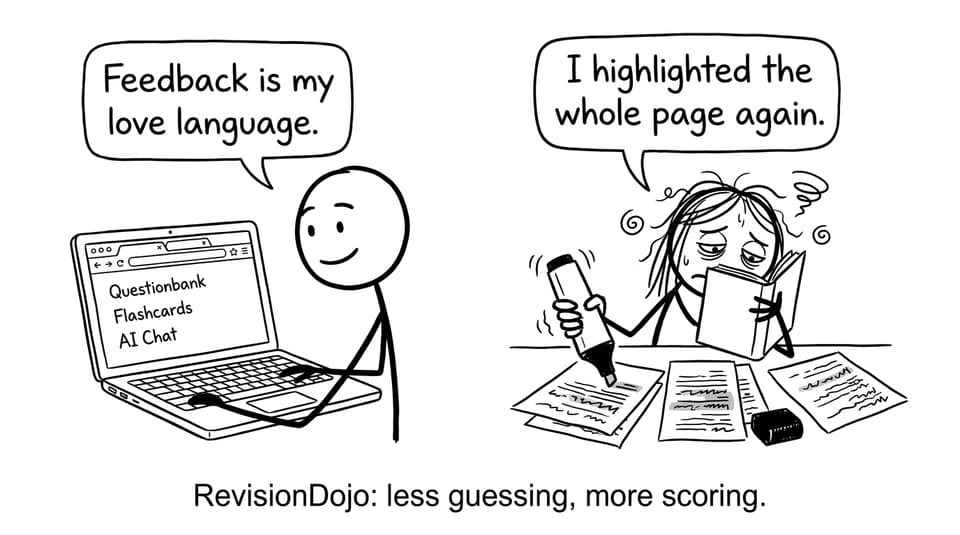
Whichever you choose, make the work feel lighter by making practice more realistic: RevisionDojo brings Study Notes, Flashcards, Questionbank, AI Chat, Grading tools, Predicted Papers, Mock Exams, a Coursework Library, and Tutors into one place, so your revision stops being guesswork and starts becoming progress, especially in IB Psychology.